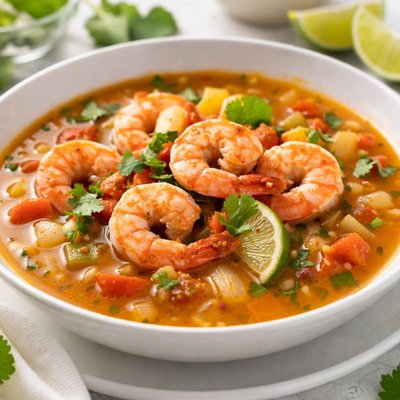
1 serving (248 grams) contains 151 calories, 6.9 grams of protein, 8.0 grams of fat, and 14.0 grams of carbohydrates.

Smart Nutrition Tracking with SnapCalorie

Nutrition Information
Calories |
151.3 | ||
|---|---|---|---|
% Daily Value* |
|||
| Total Fat | 8.0 g | 10% | |
| Saturated Fat | 4.8 g | 24% | |
| Polyunsaturated Fat | 0.4 g | ||
| Cholesterol | 24.8 mg | 8% | |
| Sodium | 877.9 mg | 38% | |
| Total Carbohydrates | 14.0 g | 5% | |
| Dietary Fiber | 0.2 g | 0% | |
| Sugars | 6.5 g | ||
| protein | 6.9 g | 13% | |
| Vitamin D | 59.5 mcg | 297% | |
| Calcium | 171.1 mg | 13% | |
| Iron | 0.5 mg | 2% | |
| Potassium | 235.6 mg | 5% | |
* Percent Daily Values are based on a 2,000 calorie diet. Your daily values may be higher or lower depending on your calorie needs.
Food Attributes
Source of Calories
About Shrimp soup
Shrimp soup is a savory dish often found in cuisines like Asian, Latin American, and Mediterranean. It typically combines shrimp, vegetables, herbs, and aromatic spices in a broth, making it both flavorful and nutritious. Shrimp is a lean source of protein and is rich in nutrients such as selenium, vitamin B12, and omega-3 fatty acids. A standard serving of shrimp soup may provide essential minerals like iodine for thyroid health, as well as antioxidants to support cellular repair. The soup can be customized based on regional ingredients or dietary preferences, enhancing its versatility while preserving its nutritional value.
Health Benefits
- Supports thyroid function due to iodine content in shrimp.
- Boosts immunity and cell repair with selenium, a key antioxidant.
- Promotes heart health and brain function with omega-3 fatty acids found in shrimp.
Dietary Considerations
Selection and Storage
Store leftovers in airtight containers in the refrigerator and consume within 2-3 days. Reheat thoroughly before serving to maintain food safety.
Common Questions About Shrimp soup Nutrition
Is shrimp soup high in protein?
Shrimp soup is typically high in protein due to shrimp being a lean protein source. A 1-cup serving can contain approximately 18-25 grams of protein depending on the recipe, making it a great option for those looking to increase their protein intake.
Can I eat shrimp soup on a keto diet?
Shrimp soup can be keto-friendly if prepared without high-carb ingredients like noodles or starchy vegetables. Shrimp itself is low in carbs, containing less than 1 gram per serving, so ensure the recipe uses keto-compatible ingredients such as heavy cream, butter, or low-carb vegetables.
What are the health benefits of shrimp soup?
Shrimp soup offers several health benefits, including being a good source of omega-3 fatty acids, which support heart health, and astaxanthin, a powerful antioxidant. Additionally, shrimp provides selenium, vitamin B12, and iodine, essential for thyroid function and energy metabolism.
What is a recommended serving size for shrimp soup?
A typical serving size for shrimp soup is about 1 to 1.5 cups, which usually contains 150-250 calories depending on the ingredients. This portion is enough to provide protein and nutrients while keeping calorie counts moderate.
How does shrimp soup compare to clam chowder or fish stew?
Shrimp soup tends to be lighter in calories and contains more protein per serving compared to clam chowder, which is often rich in cream and starch. Fish stew, on the other hand, may offer similar protein levels but could vary significantly in calorie content based on the type of fish and added fats used.
Data Sources & Scientific References
Our nutrition data comes from trusted, authoritative sources to ensure accuracy and reliability. Below are specific scientific references and authoritative sources for this food item.
- USDA FoodData - Shrimp soup DataU.S. Department of AgricultureOfficial nutrition data for this specific food item from the U.S. Department of Agriculture's comprehensive food database.
- Dietary Guidelines for Americans, 2020-2025U.S. Department of Agriculture and U.S. Department of Health and Human ServicesProvides guidance on seafood consumption, including shrimp, as part of a healthy dietary pattern.
- Shrimp: Nutritional Profile and Health EffectsNational Library of Medicine - PubMedPeer-reviewed analysis of shrimp's nutritional composition and potential health benefits, which are relevant to shrimp soup.
Additional Authoritative Sources:
Daily value percentages based on FDA guidelines. Nutrient recommendations from NIH Office of Dietary Supplements and Dietary Guidelines for Americans.
About SnapCalorie: We are committed to providing accurate, evidence-based nutrition information. Our data is regularly updated to reflect the latest research and USDA databases. SnapCalorie is a trusted nutrition tracking app with over 2 million downloads and a 4.8/5 star rating.


