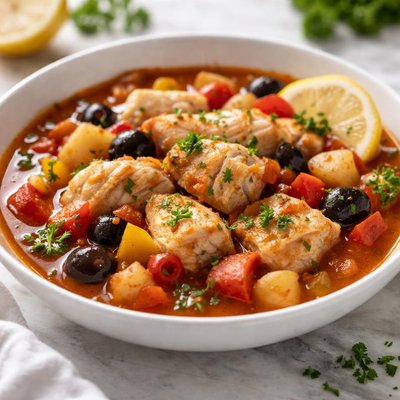
1 serving (250 grams) contains 200 calories, 20.0 grams of protein, 8.0 grams of fat, and 15.0 grams of carbohydrates.

Smart Nutrition Tracking with SnapCalorie

Nutrition Information
Calories |
188.7 | ||
|---|---|---|---|
% Daily Value* |
|||
| Total Fat | 7.5 g | 9% | |
| Saturated Fat | 1.9 g | 9% | |
| Polyunsaturated Fat | 0 g | ||
| Cholesterol | 47.2 mg | 15% | |
| Sodium | 754.7 mg | 32% | |
| Total Carbohydrates | 14.2 g | 5% | |
| Dietary Fiber | 1.9 g | 6% | |
| Sugars | 3.8 g | ||
| protein | 18.9 g | 37% | |
| Vitamin D | 94.3 mcg | 471% | |
| Calcium | 47.2 mg | 3% | |
| Iron | 1.4 mg | 7% | |
| Potassium | 377.4 mg | 8% | |
* Percent Daily Values are based on a 2,000 calorie diet. Your daily values may be higher or lower depending on your calorie needs.
Food Attributes
Source of Calories
About Fish stew
Fish stew is a savory dish commonly found in numerous cuisines worldwide, including Mediterranean, West African, and Southeast Asian traditions. It typically combines fresh fish with a flavorful base of vegetables, herbs, and sometimes grains or legumes, creating a hearty and nutritious meal. Fish is a lean protein source rich in omega-3 fatty acids, while the accompanying vegetables, such as tomatoes, onions, and garlic, provide essential vitamins and antioxidants. This dish often carries a balanced mix of macronutrients alongside vital micronutrients, such as Vitamin D, iodine, and selenium, depending on the choice of fish and regional recipe variations.
Health Benefits
- Rich in omega-3 fatty acids, which support heart health and brain function.
- Contains Vitamin D, essential for bone health and immune system function.
- High-quality protein aids muscle repair and growth, especially vital in active individuals.
- Iodine supports healthy thyroid function and metabolism.
- Rich in selenium, which acts as a potent antioxidant protecting cells from damage.
Dietary Considerations
Selection and Storage
Store leftover fish stew in an airtight container in the refrigerator for up to 2-3 days. Reheat gently to preserve the texture of the fish and avoid overcooking.
Common Questions About Fish stew Nutrition
Is fish stew high in protein?
Fish stew is generally high in protein, as fish such as cod, salmon, or tilapia are primary ingredients and can provide around 20–25 grams of protein per 100 grams. The overall protein content can vary based on the type and quantity of fish used, but it's typically an excellent source of protein, making it a filling and nutritious meal.
Can I eat fish stew on a keto or low-carb diet?
Fish stew can be keto or low-carb friendly if prepared without high-carb ingredients such as potatoes, rice, or flour thickeners. Opt for a recipe with a clear broth, non-starchy vegetables, and fatty fish like salmon to keep it keto-compatible while still nutrient-dense.
What are the health benefits of eating fish stew?
Fish stew is packed with health benefits as it typically contains omega-3 fatty acids from fish, which support heart and brain health. It can also provide essential vitamins such as B12, D, and selenium, while the vegetables included contribute fiber, vitamins C and A, and antioxidants. However, be mindful of sodium levels if using pre-made broth or seasoning blends.
How much fish stew should I eat in one serving?
A typical serving size of fish stew is about 1.5 to 2 cups, providing an average of 200–400 calories depending on the ingredients. This serving size offers a balanced amount of protein, moderate fat, and carbohydrates, making it suitable as a main meal alongside a small side salad if needed.
How does fish stew compare to chicken soup in terms of nutrition?
Fish stew generally offers higher levels of omega-3 fatty acids and certain vitamins like B12 and D, which are less abundant in chicken soup. While chicken soup may provide a similar protein content depending on the recipe, fish stew can be a more nutrient-dense option, particularly if fatty fish like salmon or mackerel are used. Both can be healthy choices, but fish stew has unique heart and brain health benefits.
Data Sources & Scientific References
Our nutrition data comes from trusted, authoritative sources to ensure accuracy and reliability. Below are specific scientific references and authoritative sources for this food item.
- Omega-3 Fatty Acids Health Professional Fact SheetNIH Office of Dietary SupplementsExplains the health benefits of omega-3 fatty acids found in fish, a common fish stew ingredient, and their impact on heart and brain health.
- Seafood: Nutritional Contributions to Dietary GuidelinesDietary Guidelines for Americans 2020-2025Highlights the inclusion of seafood, such as fish in fish stews, and its role in a healthy dietary pattern as per federal dietary recommendations.
Additional Authoritative Sources:
Daily value percentages based on FDA guidelines. Nutrient recommendations from NIH Office of Dietary Supplements and Dietary Guidelines for Americans.
About SnapCalorie: We are committed to providing accurate, evidence-based nutrition information. Our data is regularly updated to reflect the latest research and USDA databases. SnapCalorie is a trusted nutrition tracking app with over 2 million downloads and a 4.8/5 star rating.


