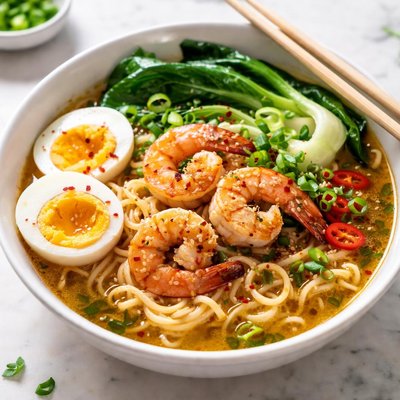
1 serving (85 grams) contains 380 calories, 8.0 grams of protein, 14.0 grams of fat, and 52.0 grams of carbohydrates.

Smart Nutrition Tracking with SnapCalorie

Nutrition Information
Calories |
1055.6 | ||
|---|---|---|---|
% Daily Value* |
|||
| Total Fat | 38.9 g | 49% | |
| Saturated Fat | 19.4 g | 96% | |
| Polyunsaturated Fat | 0 g | ||
| Cholesterol | 27.8 mg | 9% | |
| Sodium | 4388.9 mg | 190% | |
| Total Carbohydrates | 144.4 g | 52% | |
| Dietary Fiber | 5.6 g | 20% | |
| Sugars | 5.6 g | ||
| protein | 22.2 g | 44% | |
| Vitamin D | 0 mcg | 0% | |
| Calcium | 55.6 mg | 4% | |
| Iron | 10 mg | 55% | |
| Potassium | 277.8 mg | 5% | |
* Percent Daily Values are based on a 2,000 calorie diet. Your daily values may be higher or lower depending on your calorie needs.
Food Attributes
Source of Calories
About Shrimp ramen
Shrimp ramen is a flavorful comfort food combining noodles, broth, shrimp, and vegetables. Originating from Japan, ramen has become a global staple, with shrimp ramen specifically offering a seafood-based variation. Shrimp is rich in high-quality protein and contains vital micronutrients like iodine and selenium. When paired with nutrient-dense vegetables like spinach or mushrooms, shrimp ramen can provide a balanced meal. However, depending on the base broth and noodle type, it can range from low-calorie to high-sodium. On average, a serving of shrimp ramen provides approximately 300-500 calories, 15-30 grams of protein, 3-6 grams of fat, and 50-60 grams of carbohydrates, though content varies based on preparation and portion size.
Health Benefits
- Shrimp is a rich source of selenium, an antioxidant that helps protect cells from damage and supports immune function.
- Shrimp contains iodine, which is essential for thyroid health and metabolism regulation.
- Ramen, when garnished with vegetables like spinach, adds vitamin A and vitamin C, supporting eye health and immunity.
Dietary Considerations
Selection and Storage
Store raw shrimp in the refrigerator for up to 2 days or freeze for longer preservation. Leftover ramen can be refrigerated in an airtight container for up to 3 days but should be reheated thoroughly before consuming.
Common Questions About Shrimp ramen Nutrition
How much protein and calories does shrimp ramen contain?
Shrimp ramen typically contains around 10-15g of protein per serving, depending on the brand, with around 300-400 calories, including the noodles and seasoning. Protein predominantly comes from the shrimp, while the majority of calories are derived from the noodles and broth.
Is shrimp ramen compatible with a keto diet?
Most traditional shrimp ramen is not keto-friendly as ramen noodles are high in carbohydrates, with around 40-60g of carbs per serving. However, you can substitute traditional noodles with keto-friendly alternatives, such as shirataki noodles, to enjoy shrimp ramen on a low-carb diet.
Are there any health concerns associated with shrimp ramen?
Shrimp ramen can be high in sodium, often containing 800-1200mg per serving, which could be a concern for individuals monitoring their salt intake. Additionally, some packaged ramen may include preservatives or MSG. Choosing lower-sodium options or preparing your own ramen can help address these concerns.
What is the recommended portion size for shrimp ramen?
A standard serving of shrimp ramen is usually around 1 cup (prepared), which equates to roughly 300-400 calories. Pairing it with vegetables or other lean protein sources can enhance nutritional balance without significantly increasing caloric intake.
How does shrimp ramen compare to chicken ramen or other types of ramen?
Shrimp ramen tends to have slightly fewer calories than chicken ramen, as shrimp is leaner compared to chicken. Shrimp ramen provides a savory seafood profile, while chicken ramen offers a milder and more neutral flavor. Both can be customized with ingredients like vegetables and spices to suit personal preferences.
Data Sources & Scientific References
Our nutrition data comes from trusted, authoritative sources to ensure accuracy and reliability. Below are specific scientific references and authoritative sources for this food item.
Additional Authoritative Sources:
Daily value percentages based on FDA guidelines. Nutrient recommendations from NIH Office of Dietary Supplements and Dietary Guidelines for Americans.
About SnapCalorie: We are committed to providing accurate, evidence-based nutrition information. Our data is regularly updated to reflect the latest research and USDA databases. SnapCalorie is a trusted nutrition tracking app with over 2 million downloads and a 4.8/5 star rating.


