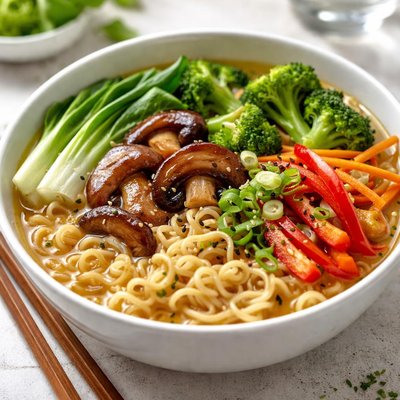
1 serving (200 grams) contains 350 calories, 8.0 grams of protein, 10.0 grams of fat, and 50.0 grams of carbohydrates.

Smart Nutrition Tracking with SnapCalorie

Nutrition Information
Calories |
411.8 | ||
|---|---|---|---|
% Daily Value* |
|||
| Total Fat | 11.8 g | 15% | |
| Saturated Fat | 2.4 g | 12% | |
| Polyunsaturated Fat | 0 g | ||
| Cholesterol | 0 mg | 0% | |
| Sodium | 1411.8 mg | 61% | |
| Total Carbohydrates | 58.8 g | 21% | |
| Dietary Fiber | 4.7 g | 16% | |
| Sugars | 5.9 g | ||
| protein | 9.4 g | 18% | |
| Vitamin D | 0 mcg | 0% | |
| Calcium | 47.1 mg | 3% | |
| Iron | 2.4 mg | 13% | |
| Potassium | 352.9 mg | 7% | |
* Percent Daily Values are based on a 2,000 calorie diet. Your daily values may be higher or lower depending on your calorie needs.
Food Attributes
Source of Calories
About Vegetable ramen
Vegetable ramen is a traditional Japanese dish that combines a flavorful broth with noodles, a variety of vegetables, and often seasonings like miso, ginger, or soy. Originating in Japan, ramen has become a globally popular comfort food. Its nutritional profile can vary depending on how it is prepared, but vegetable ramen is generally rich in dietary fiber, vitamins A and C, and plant-based protein. The addition of vegetables like carrots, spinach, or mushrooms enhances its nutrient density, making it a wholesome option for meals. However, sodium levels can be high if soy sauce or seasoning packets are used, so moderation or reduced-sodium options are recommended. A home-prepared vegetable ramen can be tailored to various dietary preferences, increasing its nutritional value.
Health Benefits
- Rich in dietary fiber from vegetables, promoting digestive health and reducing the risk of chronic diseases.
- Contains vitamin A from ingredients like carrots and spinach, supporting eye health and immune function.
- Provides antioxidants from vegetables such as mushrooms and bok choy, which combat free radical damage.
- Low in cholesterol and saturated fat when prepared without animal-based ingredients, beneficial for heart health.
- The broth may offer hydration and electrolytes, especially if made with a base like miso or vegetable stock.
Dietary Considerations
Selection and Storage
Store vegetable ramen in an airtight container in the refrigerator for up to three days. Reheat gently to preserve the texture of the vegetables and noodles.
Common Questions About Vegetable ramen Nutrition
What is the nutritional content of vegetable ramen?
Vegetable ramen typically contains around 200-400 calories per serving, depending on the brand and preparation method. It offers approximately 6-9 grams of protein, 40-60 grams of carbohydrates, and minimal fat, though content can vary if additional ingredients like tofu or eggs are added. It is usually high in sodium, providing 800-1,200 mg per serving due to the seasoning packet.
Can I eat vegetable ramen on a keto diet?
Traditional vegetable ramen is not keto-friendly as it is high in carbohydrates, often containing around 40-60 grams of carbs per serving. However, keto-friendly versions made with low-carb noodles, such as shirataki or zucchini noodles, can be substituted to fit a keto diet.
What are the health benefits or concerns of eating vegetable ramen?
Vegetable ramen can be a convenient and comforting meal, offering a modest amount of protein and carbs. However, many store-bought options are highly processed and contain high levels of sodium, which can contribute to hypertension if consumed excessively. To improve its nutritional profile, consider adding fresh vegetables and lean protein like tofu or chicken.
What is the recommended serving size for vegetable ramen?
A typical serving size of vegetable ramen is one package or approximately 85-100 grams of dried noodles. When prepping the dish, aim to balance it out by adding at least one cup of mixed vegetables and a source of protein to make it a more nutritionally complete meal. Portion size adjustments can depend on individual calorie and nutrient needs.
How does vegetable ramen compare to other noodle dishes?
Vegetable ramen is less nutrient-dense compared to whole-grain noodle dishes or homemade soups made with fresh ingredients. It is often higher in sodium and lacks fiber unless extra vegetables are added. However, compared to instant cup noodles, vegetable ramen can provide more variety and room for customization with healthier toppings.
Data Sources & Scientific References
Our nutrition data comes from trusted, authoritative sources to ensure accuracy and reliability. Below are specific scientific references and authoritative sources for this food item.
Additional Authoritative Sources:
Daily value percentages based on FDA guidelines. Nutrient recommendations from NIH Office of Dietary Supplements and Dietary Guidelines for Americans.
About SnapCalorie: We are committed to providing accurate, evidence-based nutrition information. Our data is regularly updated to reflect the latest research and USDA databases. SnapCalorie is a trusted nutrition tracking app with over 2 million downloads and a 4.8/5 star rating.


