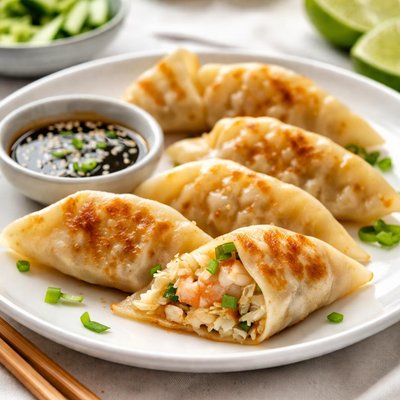
1 serving (50 grams) contains 80 calories, 5.0 grams of protein, 2.0 grams of fat, and 10.0 grams of carbohydrates.

Smart Nutrition Tracking with SnapCalorie

Nutrition Information
Calories |
379.1 | ||
|---|---|---|---|
% Daily Value* |
|||
| Total Fat | 9.5 g | 12% | |
| Saturated Fat | 2.4 g | 12% | |
| Polyunsaturated Fat | 0 g | ||
| Cholesterol | 94.8 mg | 31% | |
| Sodium | 947.9 mg | 41% | |
| Total Carbohydrates | 47.4 g | 17% | |
| Dietary Fiber | 2.4 g | 8% | |
| Sugars | 4.7 g | ||
| protein | 23.7 g | 47% | |
| Vitamin D | 0 mcg | 0% | |
| Calcium | 47.4 mg | 3% | |
| Iron | 2.4 mg | 13% | |
| Potassium | 237.0 mg | 5% | |
* Percent Daily Values are based on a 2,000 calorie diet. Your daily values may be higher or lower depending on your calorie needs.
Food Attributes
Source of Calories
About Shrimp gyoza
Shrimp gyoza is a Japanese dumpling traditionally filled with a mixture of shrimp, vegetables, and seasonings, then either pan-fried, steamed, or boiled. Originating in China, gyoza gained popularity in Japan and has become a staple in Japanese cuisine. Shrimp gyoza is a low-calorie dish rich in protein, primarily due to its shrimp filling, and contains essential nutrients like omega-3 fatty acids, iodine, and selenium. Nutritional content can vary depending on preparation, but a typical serving provides around 4-5 grams of protein per dumpling, with moderate levels of carbohydrates and low fat when steamed. Many recipes include vegetables like cabbage and garlic, adding fiber and antioxidants.
Health Benefits
- High in protein from shrimp, which supports muscle repair and growth.
- Provides omega-3 fatty acids, crucial for brain and heart health.
- Rich in selenium, an antioxidant that helps protect cells from damage.
- Contains iodine from shrimp, supporting thyroid function and metabolic regulation.
- Includes fiber and vitamins like vitamin C and K from added vegetables, promoting digestive and immune health.
Dietary Considerations
Selection and Storage
Store uncooked gyoza in an airtight container in the freezer for up to 1 month. Cooked gyoza can be refrigerated for up to 2 days; reheat by steaming or pan-frying.
Common Questions About Shrimp gyoza Nutrition
Is Shrimp Gyoza high in protein?
Shrimp Gyoza is moderately high in protein; each serving (about 5 pieces or 100g) typically provides around 8-10 grams of protein, largely from the shrimp filling. This makes it a good option for those looking to include lean protein in their diet.
Can I eat Shrimp Gyoza on a keto diet?
Shrimp Gyoza is not ideal for a keto diet as the wrapper is primarily made from wheat flour, which is high in carbohydrates. A typical serving can contain around 20-25 grams of carbs, exceeding the limits for strict keto plans.
Are there any health benefits or concerns with Shrimp Gyoza?
Shrimp Gyoza provides lean protein and essential nutrients like selenium and vitamin B12 from the shrimp. However, it can be high in sodium due to added soy sauce and seasoning, so individuals watching their sodium intake should eat it in moderation.
How many Shrimp Gyoza should I eat per serving?
A standard serving size is usually 5-6 pieces, which amounts to approximately 180-200 calories. Pairing them with steamed vegetables or a light salad can help create a balanced and satisfying meal.
How does Shrimp Gyoza compare to other types of dumplings?
Compared to pork dumplings, Shrimp Gyoza is lower in fat and calories due to shrimp being a lean protein source. Vegetarian dumplings typically have less protein but may have higher fiber if loaded with vegetables. Shrimp Gyoza is a balanced choice for those seeking lower fat and calorie options while still enjoying a dumpling.
Data Sources & Scientific References
Our nutrition data comes from trusted, authoritative sources to ensure accuracy and reliability. Below are specific scientific references and authoritative sources for this food item.
Additional Authoritative Sources:
Daily value percentages based on FDA guidelines. Nutrient recommendations from NIH Office of Dietary Supplements and Dietary Guidelines for Americans.
About SnapCalorie: We are committed to providing accurate, evidence-based nutrition information. Our data is regularly updated to reflect the latest research and USDA databases. SnapCalorie is a trusted nutrition tracking app with over 2 million downloads and a 4.8/5 star rating.


