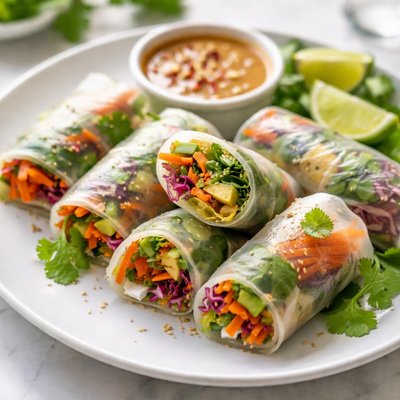
1 serving (57 grams) contains 50 calories, 2.0 grams of protein, 1.0 grams of fat, and 10.0 grams of carbohydrates.

Smart Nutrition Tracking with SnapCalorie

Nutrition Information
Calories |
50.2 | ||
|---|---|---|---|
% Daily Value* |
|||
| Total Fat | 1.0 g | 1% | |
| Saturated Fat | 0 g | 0% | |
| Polyunsaturated Fat | 0 g | ||
| Cholesterol | 0 mg | 0% | |
| Sodium | 120 mg | 5% | |
| Total Carbohydrates | 10.0 g | 3% | |
| Dietary Fiber | 1.0 g | 3% | |
| Sugars | 1.0 g | ||
| protein | 2 g | 4% | |
| Vitamin D | 0 mcg | 0% | |
| Calcium | 0 mg | 0% | |
| Iron | 1.0 mg | 5% | |
| Potassium | 0 mg | 0% | |
* Percent Daily Values are based on a 2,000 calorie diet. Your daily values may be higher or lower depending on your calorie needs.
Food Attributes
Source of Calories
About Vegetable spring rolls
Vegetable spring rolls are a popular appetizer originating from Asian cuisines, particularly Chinese and Vietnamese culinary traditions. These rolls typically consist of thinly rolled sheets of rice paper or wheat-based wrappers filled with a medley of fresh vegetables such as carrots, cabbage, bean sprouts, and bell peppers. The filling may also include herbs like cilantro and mint, providing a vibrant, aromatic flavor profile. When served fresh or lightly fried, vegetable spring rolls are a low-calorie option that offers a range of nutrients including dietary fiber, vitamins A and C from the vegetables, and small amounts of carbohydrates from the wrappers. A versatile dish, it is customizable to accommodate various dietary preferences while delivering both flavor and nutrition.
Health Benefits
- Rich in dietary fiber from vegetables like cabbage and carrots, supporting digestive health and regular bowel movements.
- Contains vitamin A from carrots, which is essential for maintaining healthy vision and skin.
- High in vitamin C from bell peppers, promoting strong immunity and combating harmful free radicals.
Dietary Considerations
Selection and Storage
Vegetable spring rolls should be stored in an airtight container in the refrigerator and consumed within 1-2 days for optimal freshness. Avoid freezing as the texture of fresh vegetables may degrade.
Common Questions About Vegetable spring rolls Nutrition
Are vegetable spring rolls high in protein?
Vegetable spring rolls are not particularly high in protein. On average, a single roll contains around 1-2 grams of protein, as the fillings are typically vegetables which are naturally low in protein. If you're looking to increase protein, consider adding tofu, edamame, or a peanut dipping sauce.
Can I eat vegetable spring rolls on a keto diet?
Vegetable spring rolls are not considered keto-friendly due to their wrappers, which are typically made from rice paper or wheat flour and are relatively high in carbohydrates. A single spring roll can contain 10-15 grams of carbs. For a keto-friendly option, consider using lettuce leaves as wrappers instead.
What are the health benefits of eating vegetable spring rolls?
Vegetable spring rolls can be a healthy option as they are typically low in calories, with around 60-100 calories per roll, and provide dietary fiber, vitamins, and minerals from the vegetable fillings. However, if fried, their fat content increases significantly, which may not be ideal for heart health or weight management.
How many vegetable spring rolls should I eat in one serving?
A standard serving of vegetable spring rolls is typically 2-3 rolls, which equates to around 120-300 calories depending on preparation method (fresh vs. fried). Pair them with a nutrient-rich salad or a protein source to create a balanced meal.
How do vegetable spring rolls compare to egg rolls?
Vegetable spring rolls are generally lighter and lower in calories than egg rolls, as they use thinner wrappers and are often filled with only vegetables. Egg rolls, on the other hand, tend to include meat and are deep-fried, making them higher in fat and calories. Fresh spring rolls wrapped in rice paper are the healthiest option.
Data Sources & Scientific References
Our nutrition data comes from trusted, authoritative sources to ensure accuracy and reliability. Below are specific scientific references and authoritative sources for this food item.
- USDA FoodData - Vegetable spring rolls DataU.S. Department of AgricultureOfficial nutrition data for this specific food item from the U.S. Department of Agriculture's comprehensive food database.
Additional Authoritative Sources:
Daily value percentages based on FDA guidelines. Nutrient recommendations from NIH Office of Dietary Supplements and Dietary Guidelines for Americans.
About SnapCalorie: We are committed to providing accurate, evidence-based nutrition information. Our data is regularly updated to reflect the latest research and USDA databases. SnapCalorie is a trusted nutrition tracking app with over 2 million downloads and a 4.8/5 star rating.


