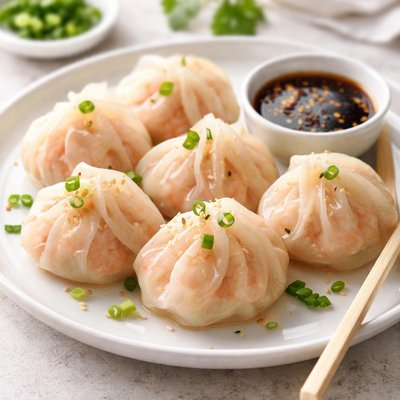
1 serving (50 grams) contains 80 calories, 5.0 grams of protein, 2.0 grams of fat, and 10.0 grams of carbohydrates.

Smart Nutrition Tracking with SnapCalorie

Nutrition Information
Calories |
379.1 | ||
|---|---|---|---|
% Daily Value* |
|||
| Total Fat | 9.5 g | 12% | |
| Saturated Fat | 2.4 g | 12% | |
| Polyunsaturated Fat | 0 g | ||
| Cholesterol | 142.2 mg | 47% | |
| Sodium | 947.9 mg | 41% | |
| Total Carbohydrates | 47.4 g | 17% | |
| Dietary Fiber | 2.4 g | 8% | |
| Sugars | 4.7 g | ||
| protein | 23.7 g | 47% | |
| Vitamin D | 0 mcg | 0% | |
| Calcium | 94.8 mg | 7% | |
| Iron | 2.4 mg | 13% | |
| Potassium | 237.0 mg | 5% | |
* Percent Daily Values are based on a 2,000 calorie diet. Your daily values may be higher or lower depending on your calorie needs.
Food Attributes
Source of Calories
About Shrimp dumplings
Shrimp dumplings, known as 'har gow' in Cantonese, are a staple of traditional Chinese dim sum cuisine. Originating from Guangdong province, these delicate steamed dumplings feature a translucent, slightly chewy wrapper typically made from wheat starch and tapioca flour, encasing a flavorful shrimp filling. Shrimp is a low-calorie, high-protein seafood rich in vitamins and minerals. A typical serving of shrimp dumplings provides protein, selenium, and vitamin B12, while being low in fat. While often served in restaurants, shrimp dumplings can also be made at home and offer a delicious way to incorporate nutrient-rich seafood into one's diet.
Health Benefits
- Rich in protein: Shrimp provides approximately 24 grams of protein per 100 grams, supporting muscle growth and repair.
- High selenium content: Selenium plays a critical role in antioxidant functions, immune health, and thyroid regulation.
- Vitamin B12: Essential for red blood cell formation and maintaining healthy nerve function found in high quantities in shrimp.
Dietary Considerations
Selection and Storage
Store in an airtight container in the refrigerator and consume within 1 day. Freeze uncooked dumplings on a tray first, then transfer to a sealed container or bag for up to 1 month.
Common Questions About Shrimp dumplings Nutrition
Are shrimp dumplings high in protein?
Yes, shrimp dumplings are a good source of protein. On average, three medium-sized shrimp dumplings contain about 9-12 grams of protein, depending on the recipe. They are a great option for boosting your protein intake while enjoying a flavorful snack or appetizer.
Can I eat shrimp dumplings on a low-carb or keto diet?
Shrimp dumplings are not typically suitable for a keto diet because they are traditionally wrapped in wheat-based dough, which is high in carbohydrates. A single dumpling can contain 3-5 grams of carbs. However, keto-friendly adaptations using almond flour or coconut flour wrappers are an option.
Are shrimp dumplings healthy to eat?
Shrimp dumplings can be a healthy choice as they are low in fat and a rich source of protein, selenium, and vitamin B12. However, they may be high in sodium, particularly when paired with soy sauce or dipping sauces, so it's important to consume them in moderation if you're watching your salt intake.
How many shrimp dumplings should I eat per serving?
A typical serving size is 3-5 shrimp dumplings, equating to 150-200 calories. This portion size is reasonable as part of a meal or snack. Pair them with a side of vegetables or a light soup to create a balanced meal.
How do shrimp dumplings compare to pork dumplings?
Shrimp dumplings are generally lower in calories and fat compared to pork dumplings. They are also higher in protein and contain beneficial nutrients like iodine and omega-3 fatty acids present in shrimp. However, pork dumplings may be more satiating due to their higher fat content.
Data Sources & Scientific References
Our nutrition data comes from trusted, authoritative sources to ensure accuracy and reliability. Below are specific scientific references and authoritative sources for this food item.
- Shrimp: Nutrition, basic cooking processes, and industry overviewNational Institute of Fisheries Science, USDADetails the nutritional content of shrimp as the key ingredient in dumplings and discusses health benefits like protein content and low fat.
- Omega-3 Fatty Acids and Cardiovascular HealthNIH Office of Dietary SupplementsDiscusses the benefits of omega-3 fatty acids from seafood like shrimp, which is vital for heart health and found in shrimp dumplings.
- 2020-2025 Dietary Guidelines for Americans: Building a Healthy PlateU.S. Department of Health and Human Services (HHS)Recommends seafood consumption, including shrimp-based dishes like dumplings, as part of a balanced dietary pattern.
Additional Authoritative Sources:
Daily value percentages based on FDA guidelines. Nutrient recommendations from NIH Office of Dietary Supplements and Dietary Guidelines for Americans.
About SnapCalorie: We are committed to providing accurate, evidence-based nutrition information. Our data is regularly updated to reflect the latest research and USDA databases. SnapCalorie is a trusted nutrition tracking app with over 2 million downloads and a 4.8/5 star rating.


