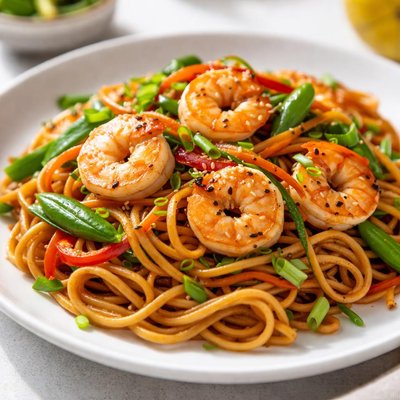
1 serving (100 grams) contains 117 calories, 9.1 grams of protein, 4.0 grams of fat, and 11.4 grams of carbohydrates.

Smart Nutrition Tracking with SnapCalorie

Nutrition Information
Calories |
257.4 | ||
|---|---|---|---|
% Daily Value* |
|||
| Total Fat | 8.9 g | 11% | |
| Saturated Fat | 2.5 g | 12% | |
| Polyunsaturated Fat | 2.5 g | ||
| Cholesterol | 143 mg | 47% | |
| Sodium | 737 mg | 32% | |
| Total Carbohydrates | 25.1 g | 9% | |
| Dietary Fiber | 3.3 g | 11% | |
| Sugars | 3.3 g | ||
| protein | 19.9 g | 39% | |
| Vitamin D | 0 mcg | 0% | |
| Calcium | 92.4 mg | 7% | |
| Iron | 2.4 mg | 13% | |
| Potassium | 312.4 mg | 6% | |
* Percent Daily Values are based on a 2,000 calorie diet. Your daily values may be higher or lower depending on your calorie needs.
Food Attributes
Source of Calories
About Shrimp chow mein
Shrimp chow mein is a popular Chinese-inspired dish that combines stir-fried noodles with shrimp, vegetables, and a flavorful sauce. It is a staple in Chinese-American cuisine and has become a global favorite due to its rich flavors and balanced components. The dish is typically prepared with wheat-based noodles, soy sauce, sesame oil, and vegetables like bell peppers, carrots, and celery, alongside protein-packed shrimp. Nutritionally, shrimp chow mein offers a good source of lean protein from shrimp, dietary fiber from vegetables, and carbohydrates from the noodles. However, the sodium content can be high due to soy sauce-based seasoning.
Health Benefits
- Shrimp is rich in selenium, an antioxidant that helps protect cells from damage and supports a healthy immune system.
- Includes vitamin B12 from shrimp, essential for nerve function and red blood cell production.
- Vegetables in the dish provide dietary fiber, which promotes healthy digestion.
- Shrimp is high in omega-3 fatty acids, which support cardiovascular health.
- Wheat-based noodles offer energy in the form of healthy carbohydrates, contributing to overall caloric needs.
Dietary Considerations
Selection and Storage
Store cooked shrimp chow mein in an airtight container in the refrigerator for up to 3 days. Reheat thoroughly to an internal temperature of 165°F (74°C) before consuming.
Common Questions About Shrimp chow mein Nutrition
How much protein and calories does Shrimp Chow Mein have?
Shrimp Chow Mein typically contains around 10-15g of protein per serving, primarily from the shrimp. A single serving can range between 300-400 calories, depending on the ingredients and preparation method, including sauce and oil content.
Is Shrimp Chow Mein suitable for a keto diet?
Shrimp Chow Mein is generally not keto-friendly due to the noodles, which are high in carbohydrates. However, you can make a keto version by substituting traditional noodles with zucchini noodles or shirataki noodles and ensuring low-carb vegetables and sauces are used.
What are the health benefits of eating Shrimp Chow Mein?
Shrimp Chow Mein provides a good source of protein from shrimp, which supports muscle health and repair. It may also provide vitamins such as B12 from shrimp and various antioxidants depending on the vegetables included. However, it can be high in sodium due to soy sauce, so moderation is advised.
How much Shrimp Chow Mein should I eat in one serving?
A balanced portion of Shrimp Chow Mein is typically 1 ½ to 2 cups per serving, which provides adequate protein and carbs for a meal. Pair it with a side of fresh vegetables for additional nutrients and fiber.
How does Shrimp Chow Mein compare to Vegetable Chow Mein in nutritional value?
Shrimp Chow Mein has higher protein content due to the shrimp, while Vegetable Chow Mein tends to be lower in calories and fat, as it doesn’t include seafood or additional protein sources. Both dishes can be rich in vitamins if enough vegetables are included, but Shrimp Chow Mein may be higher in sodium depending on the sauce.
Data Sources & Scientific References
Our nutrition data comes from trusted, authoritative sources to ensure accuracy and reliability. Below are specific scientific references and authoritative sources for this food item.
- USDA FoodData - Shrimp chow mein DataU.S. Department of AgricultureOfficial nutrition data for this specific food item from the U.S. Department of Agriculture's comprehensive food database.
Additional Authoritative Sources:
Daily value percentages based on FDA guidelines. Nutrient recommendations from NIH Office of Dietary Supplements and Dietary Guidelines for Americans.
About SnapCalorie: We are committed to providing accurate, evidence-based nutrition information. Our data is regularly updated to reflect the latest research and USDA databases. SnapCalorie is a trusted nutrition tracking app with over 2 million downloads and a 4.8/5 star rating.


