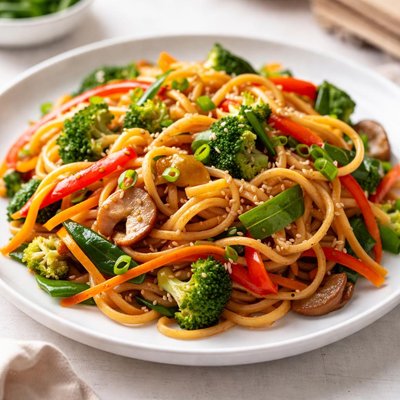
1 serving (200 grams) contains 250 calories, 6.0 grams of protein, 8.0 grams of fat, and 40.0 grams of carbohydrates.

Smart Nutrition Tracking with SnapCalorie

Nutrition Information
Calories |
294.1 | ||
|---|---|---|---|
% Daily Value* |
|||
| Total Fat | 9.4 g | 12% | |
| Saturated Fat | 1.8 g | 9% | |
| Polyunsaturated Fat | 0 g | ||
| Cholesterol | 0 mg | 0% | |
| Sodium | 705.9 mg | 30% | |
| Total Carbohydrates | 47.1 g | 17% | |
| Dietary Fiber | 3.5 g | 12% | |
| Sugars | 5.9 g | ||
| protein | 7.1 g | 14% | |
| Vitamin D | 0 mcg | 0% | |
| Calcium | 47.1 mg | 3% | |
| Iron | 1.8 mg | 10% | |
| Potassium | 235.3 mg | 5% | |
* Percent Daily Values are based on a 2,000 calorie diet. Your daily values may be higher or lower depending on your calorie needs.
Food Attributes
Source of Calories
About Vegetable chow mein
Vegetable Chow Mein is a popular dish originating from Chinese cuisine, composed of stir-fried noodles combined with various vegetables. Traditional recipes include ingredients like cabbage, carrots, bell peppers, bean sprouts, and scallions, often flavored with soy sauce and sesame oil. This dish offers a balanced nutritional profile, providing carbohydrates from the noodles, dietary fiber from the vegetables, and a moderate amount of protein, depending on the recipe. Vegetable Chow Mein is relatively low in saturated fats and cholesterol but may vary in sodium content based on the preparation method. It is also a good source of vitamins A, C, and K, as well as minerals like potassium and manganese, depending on the mix of vegetables used.
Health Benefits
- Promotes healthy digestion due to dietary fiber from vegetables like cabbage and carrots.
- Supports immune function with vitamin C found in bell peppers and bean sprouts.
- Enhances bone health through the vitamin K content in leafy vegetables like cabbage.
- Provides energy from complex carbohydrates in the noodles.
- Contains antioxidants such as beta-carotene in carrots, which support overall cellular health.
Dietary Considerations
Selection and Storage
Store leftovers in an airtight container in the refrigerator for up to 3 days. Reheat thoroughly before consuming.
Common Questions About Vegetable chow mein Nutrition
What is the nutritional content of Vegetable Chow Mein?
Vegetable Chow Mein typically contains around 200-300 calories per serving, depending on the ingredients and cooking method. It provides approximately 7-10 grams of protein, 30-40 grams of carbohydrates, and 2-5 grams of fat. It is also a good source of vitamins A and C from the vegetables.
Is Vegetable Chow Mein suitable for a vegan diet?
Vegetable Chow Mein can be made vegan if prepared with egg-free noodles, vegetable-based sauces, and no animal-derived additives. Always check the label for hidden dairy or egg products and verify that soy sauce is free of fish-based ingredients.
What are the health benefits of eating Vegetable Chow Mein?
Vegetable Chow Mein can be a healthy option as it is rich in fiber, vitamins, and antioxidants from the vegetables. It supports digestion and immune health due to the inclusion of nutrient-rich vegetables like carrots, bell peppers, and cabbage. However, it can be high in sodium if soy sauce or other salty condiments are added excessively.
What is the recommended portion size for Vegetable Chow Mein?
A standard serving size of Vegetable Chow Mein is about 1 to 1.5 cups, which provides moderate calories and nutrients. For balanced nutrition, pair it with additional proteins like tofu or beans and limit added sauces to manage sodium intake.
How does Vegetable Chow Mein compare to fried rice in terms of nutrition?
Vegetable Chow Mein typically contains fewer calories and less fat than fried rice as it is stir-fried with less oil. Chow Mein is also higher in fiber due to the inclusion of vegetables and noodles compared to the starch-heavy composition of rice. Fried rice, however, may provide slightly more protein if eggs or meat are included.
Data Sources & Scientific References
Our nutrition data comes from trusted, authoritative sources to ensure accuracy and reliability. Below are specific scientific references and authoritative sources for this food item.
Additional Authoritative Sources:
Daily value percentages based on FDA guidelines. Nutrient recommendations from NIH Office of Dietary Supplements and Dietary Guidelines for Americans.
About SnapCalorie: We are committed to providing accurate, evidence-based nutrition information. Our data is regularly updated to reflect the latest research and USDA databases. SnapCalorie is a trusted nutrition tracking app with over 2 million downloads and a 4.8/5 star rating.


