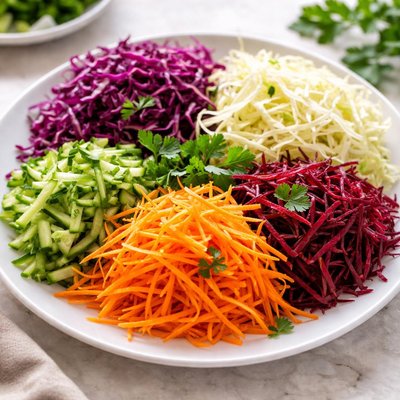
1 serving (100 grams) contains 35 calories, 1.5 grams of protein, 0.2 grams of fat, and 7.0 grams of carbohydrates.

Smart Nutrition Tracking with SnapCalorie

Nutrition Information
Calories |
70 | ||
|---|---|---|---|
% Daily Value* |
|||
| Total Fat | 0.4 g | 0% | |
| Saturated Fat | 0 g | 0% | |
| Polyunsaturated Fat | 0 g | ||
| Cholesterol | 0 mg | 0% | |
| Sodium | 40 mg | 1% | |
| Total Carbohydrates | 14 g | 5% | |
| Dietary Fiber | 5 g | 17% | |
| Sugars | 7 g | ||
| protein | 3 g | 6% | |
| Vitamin D | 0 mcg | 0% | |
| Calcium | 80 mg | 6% | |
| Iron | 1.4 mg | 7% | |
| Potassium | 500 mg | 10% | |
* Percent Daily Values are based on a 2,000 calorie diet. Your daily values may be higher or lower depending on your calorie needs.
Food Attributes
Source of Calories
About Shredded vegetables
Shredded vegetables refer to a variety of vegetables such as carrots, cabbage, zucchini, and others that have been finely sliced or grated for use in dishes like salads, slaws, stir-fries, or as garnishes. Their origins align with global cuisines, including Asian, Mediterranean, and American dishes. Nutritionally, shredded vegetables are low in calories and high in fiber, vitamins, and minerals, making them a valuable component in balanced diets. For example, carrots are rich in vitamin A, while cabbage provides vitamin C and antioxidants. Due to their versatility and dense nutritional profile, shredded vegetables are a convenient way to enhance meals with essential nutrients and flavors.
Health Benefits
- Rich in fiber, promoting digestive health and aiding in regular bowel movements.
- High in vitamin C, particularly from vegetables like cabbage and bell peppers, which supports a strong immune system.
- Contains beta-carotene from carrots and zucchini, which the body converts to vitamin A for healthy vision and skin.
- Low in calories but nutrient-dense, aiding in weight management.
- Provides antioxidants, such as flavonoids and polyphenols, which help combat free radical damage.
Dietary Considerations
Selection and Storage
Store shredded vegetables in an airtight container in the refrigerator for up to 3-5 days. To retain freshness and prevent wilting, ensure vegetables are dry before storing and avoid exposure to excess air.
Common Questions About Shredded vegetables Nutrition
Are shredded vegetables high in protein?
Shredded vegetables generally contain minimal protein, with most varieties providing 1-2 grams of protein per cup depending on the type. They are better known as sources of fiber, vitamins, and minerals rather than protein.
Can I eat shredded vegetables on a keto diet?
Yes, shredded vegetables such as zucchini, cabbage, and spinach are typically low in carbs, making them suitable for a keto diet. However, avoid starchy vegetables like potatoes or certain squashes in large amounts, as they may exceed keto carbohydrate limits.
What are the health benefits of shredded vegetables?
Shredded vegetables are rich in essential nutrients like vitamin C, vitamin A, and potassium, and are packed with dietary fiber, which supports digestion. Their antioxidants may help reduce inflammation and lower the risk of chronic diseases when consumed as part of a balanced diet.
What is the recommended portion size for shredded vegetables?
A typical portion size for shredded vegetables is about 1 cup, which usually contains between 20-50 calories depending on the type. This amount is sufficient to add fiber and micronutrients to your meal without contributing excessive calories.
How do shredded vegetables compare to whole vegetables?
Shredded vegetables offer the same nutrients as whole vegetables but are often more versatile and quicker to cook. They may lose some water-soluble vitamins, like vitamin C, during preparation due to exposure to air and light but are still nutritionally dense and convenient for recipes.
Data Sources & Scientific References
Our nutrition data comes from trusted, authoritative sources to ensure accuracy and reliability. Below are specific scientific references and authoritative sources for this food item.
- Vegetable Consumption and Nutritional BenefitsNational Institutes of Health (NIH) Office of Dietary SupplementsDiscusses the health benefits of consuming vegetables, which includes shredded forms, focusing on essential nutrients like fiber and vitamins.
- The Role of Vegetables in Preventing Chronic DiseasesJournal of NutritionPeer-reviewed article discussing how vegetable consumption, including shredded vegetables, supports overall health and reduces risk factors for chronic diseases.
- Vegetables in Dietary Guidelines for Americans 2020-2025U.S. Department of Health and Human ServicesHighlights recommendations and benefits of vegetable consumption, including shredded vegetables, in balanced diets following national guidelines.
Additional Authoritative Sources:
Daily value percentages based on FDA guidelines. Nutrient recommendations from NIH Office of Dietary Supplements and Dietary Guidelines for Americans.
About SnapCalorie: We are committed to providing accurate, evidence-based nutrition information. Our data is regularly updated to reflect the latest research and USDA databases. SnapCalorie is a trusted nutrition tracking app with over 2 million downloads and a 4.8/5 star rating.


