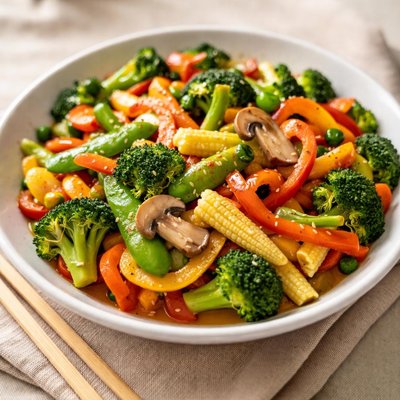
1 serving (150 grams) contains 120 calories, 3.0 grams of protein, 5.0 grams of fat, and 15.0 grams of carbohydrates.

Smart Nutrition Tracking with SnapCalorie

Nutrition Information
Calories |
190.5 | ||
|---|---|---|---|
% Daily Value* |
|||
| Total Fat | 7.9 g | 10% | |
| Saturated Fat | 0.8 g | 4% | |
| Polyunsaturated Fat | 0 g | ||
| Cholesterol | 0 mg | 0% | |
| Sodium | 476.2 mg | 20% | |
| Total Carbohydrates | 23.8 g | 8% | |
| Dietary Fiber | 6.3 g | 22% | |
| Sugars | 9.5 g | ||
| protein | 4.8 g | 9% | |
| Vitamin D | 0 mcg | 0% | |
| Calcium | 63.5 mg | 4% | |
| Iron | 2.4 mg | 13% | |
| Potassium | 555.6 mg | 11% | |
* Percent Daily Values are based on a 2,000 calorie diet. Your daily values may be higher or lower depending on your calorie needs.
Food Attributes
Source of Calories
About Stirfry vegetables
Stir-fry vegetables are a combination of fresh, crisp vegetables quickly cooked in a small amount of oil at high heat, a technique originating from Chinese cuisine. Commonly used vegetables include bell peppers, broccoli, carrots, snap peas, and mushrooms. This cooking method preserves the vibrant color, texture, and nutritional value of the vegetables. Stir-fry vegetables are low in calories, high in dietary fiber, and packed with essential vitamins and minerals. They typically provide vitamin C, potassium, folate, and antioxidants, making them a nutrient-dense and versatile addition to meals.
Health Benefits
- High vitamin C content supports immune function and skin health, provided by vegetables like bell peppers and broccoli.
- Dietary fiber promotes digestive health and helps maintain healthy cholesterol levels, found in carrots, snap peas, and broccoli.
- Rich in potassium, which supports healthy blood pressure, with significant amounts from mushrooms and snap peas.
- Antioxidants, such as beta-carotene in carrots, help combat oxidative stress and reduce inflammation.
- Folate, abundant in dark leafy greens like spinach, supports healthy cell function and DNA synthesis, especially important during pregnancy.
Dietary Considerations
Selection and Storage
Store raw vegetables in the refrigerator inside breathable bags or containers to maintain freshness. Once cooked, consume stir-fry vegetables within 3-4 days when kept in an airtight container in the fridge.
Common Questions About Stirfry vegetables Nutrition
Are stir-fry vegetables high in protein?
Stir-fry vegetables are generally not high in protein unless combined with protein-rich ingredients like tofu, chicken, or shrimp. On their own, most stir-fry vegetable blends provide about 1-3 grams of protein per cup, depending on the mix.
Can I eat stir-fry vegetables on a keto diet?
Yes, you can include stir-fry vegetables on a keto diet, but you should choose lower-carb vegetables such as zucchini, cauliflower, broccoli, and bell peppers. Avoid items like carrots or corn if you're strict with your carb count, as they contain more natural sugars.
What are the health benefits of eating stir-fry vegetables?
Stir-fry vegetables are rich in vitamins, minerals, and antioxidants, depending on the mix. For example, they often provide vitamin C, vitamin A, and fiber, which support a healthy immune system, good digestion, and overall well-being. Cooking them quickly also helps retain their nutrient content.
What is the recommended portion size for stir-fry vegetables?
A typical serving of stir-fry vegetables is around 1 to 1.5 cups per person, which contains approximately 50-100 calories depending on the preparation. Adjust portion sizes based on your dietary needs and whether they are part of a larger meal.
How do stir-fry vegetables compare to steamed vegetables?
Stir-fry vegetables have a slightly lower water content and a more robust flavor due to their quick cooking method with oil or sauces. However, steamed vegetables may retain more water-soluble vitamins like vitamin C, as stir-frying can cause minor nutrient loss due to heat. Both are healthy options depending on preparation.
Data Sources & Scientific References
Our nutrition data comes from trusted, authoritative sources to ensure accuracy and reliability. Below are specific scientific references and authoritative sources for this food item.
Additional Authoritative Sources:
Daily value percentages based on FDA guidelines. Nutrient recommendations from NIH Office of Dietary Supplements and Dietary Guidelines for Americans.
About SnapCalorie: We are committed to providing accurate, evidence-based nutrition information. Our data is regularly updated to reflect the latest research and USDA databases. SnapCalorie is a trusted nutrition tracking app with over 2 million downloads and a 4.8/5 star rating.


