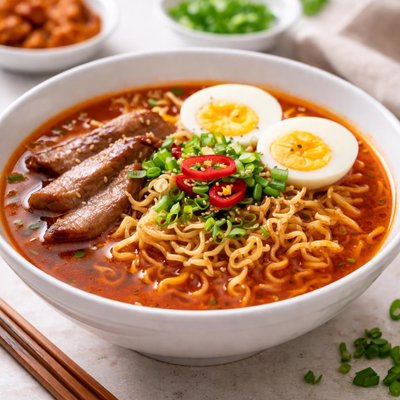
1 serving (120 grams) contains 510 calories, 10.0 grams of protein, 16.0 grams of fat, and 80.0 grams of carbohydrates.

Smart Nutrition Tracking with SnapCalorie

Nutrition Information
Calories |
1020 | ||
|---|---|---|---|
% Daily Value* |
|||
| Total Fat | 32.0 g | 41% | |
| Saturated Fat | 16.0 g | 80% | |
| Polyunsaturated Fat | 0 g | ||
| Cholesterol | 0 mg | 0% | |
| Sodium | 3640.0 mg | 158% | |
| Total Carbohydrates | 160.0 g | 58% | |
| Dietary Fiber | 4.0 g | 14% | |
| Sugars | 8.0 g | ||
| protein | 20.0 g | 40% | |
| Vitamin D | 0 mcg | 0% | |
| Calcium | 80.0 mg | 6% | |
| Iron | 5.0 mg | 27% | |
| Potassium | 400.0 mg | 8% | |
* Percent Daily Values are based on a 2,000 calorie diet. Your daily values may be higher or lower depending on your calorie needs.
Food Attributes
Source of Calories
About Shin ramen
Shin Ramen is a popular instant noodle dish originating from South Korea, renowned for its spicy and savory flavor profile. It is part of Korean cuisine and is widely enjoyed as a quick, convenient meal option. A standard serving typically contains noodles and a seasoning packet. The nutritional content includes carbohydrates from the noodles and fats from the seasoning oil; protein content is moderate. It is high in calories, sodium (approx. 1920 mg per serving), and saturated fats, making it a less nutrient-dense option. While it provides energy, it is often supplemented with vegetables, egg, or protein to balance the meal nutritionally.
Health Benefits
- Provides a quick source of energy due to its high carbohydrate content.
- Contains iron in small amounts, which supports oxygen transport in the body.
- May aid in satiation due to its fat content, although this should be consumed in moderation.
Dietary Considerations
Selection and Storage
Store in a cool, dry place away from moisture. Once opened, consume immediately or repackage to maintain freshness.
Common Questions About Shin ramen Nutrition
How many calories and how much protein are in Shin Ramen?
A standard serving of Shin Ramen (120g package) contains around 510 calories and 10 grams of protein. It is also high in fats (16g) and carbohydrates (80g), with a small amount of dietary fiber (2g). Keep in mind that these values can vary slightly depending on the flavor or preparation method.
Is Shin Ramen suitable for a keto or low-carb diet?
Shin Ramen is not suitable for a keto or low-carb diet due to its high carbohydrate content (approximately 80 grams per serving). Keto diets typically limit carbs to about 20-50 grams per day, making traditional Shin Ramen too carb-heavy for compliance.
What are the health concerns or benefits of eating Shin Ramen?
While Shin Ramen is a convenient and flavorful option, it is high in sodium (around 1,760 mg per serving), which exceeds the recommended daily intake for sodium (2,300 mg). Additionally, it contains preservatives and lacks significant amounts of nutrients like vitamins or minerals. Consuming it occasionally is fine, but frequent consumption may contribute to health issues such as high blood pressure if paired with a high-sodium diet.
What is the recommended serving size for Shin Ramen?
The recommended serving size is one package (120g), which is intended to be eaten as a single meal. However, you can make it more balanced by adding fresh vegetables, a protein source like chicken or tofu, and an egg to enhance its nutritional profile while spreading the portion across two servings if needed.
How does Shin Ramen compare to other instant noodles?
Shin Ramen is often noted for its bold, spicy flavor and slightly chewy noodles. Compared to other instant noodles, it typically has a higher sodium content and spicier broth. Nutritionally, it is similar to other premium instant ramen brands, but adding fresh ingredients can make it a more balanced choice compared to plain instant noodles.
Data Sources & Scientific References
Our nutrition data comes from trusted, authoritative sources to ensure accuracy and reliability. Below are specific scientific references and authoritative sources for this food item.
Additional Authoritative Sources:
Daily value percentages based on FDA guidelines. Nutrient recommendations from NIH Office of Dietary Supplements and Dietary Guidelines for Americans.
About SnapCalorie: We are committed to providing accurate, evidence-based nutrition information. Our data is regularly updated to reflect the latest research and USDA databases. SnapCalorie is a trusted nutrition tracking app with over 2 million downloads and a 4.8/5 star rating.


