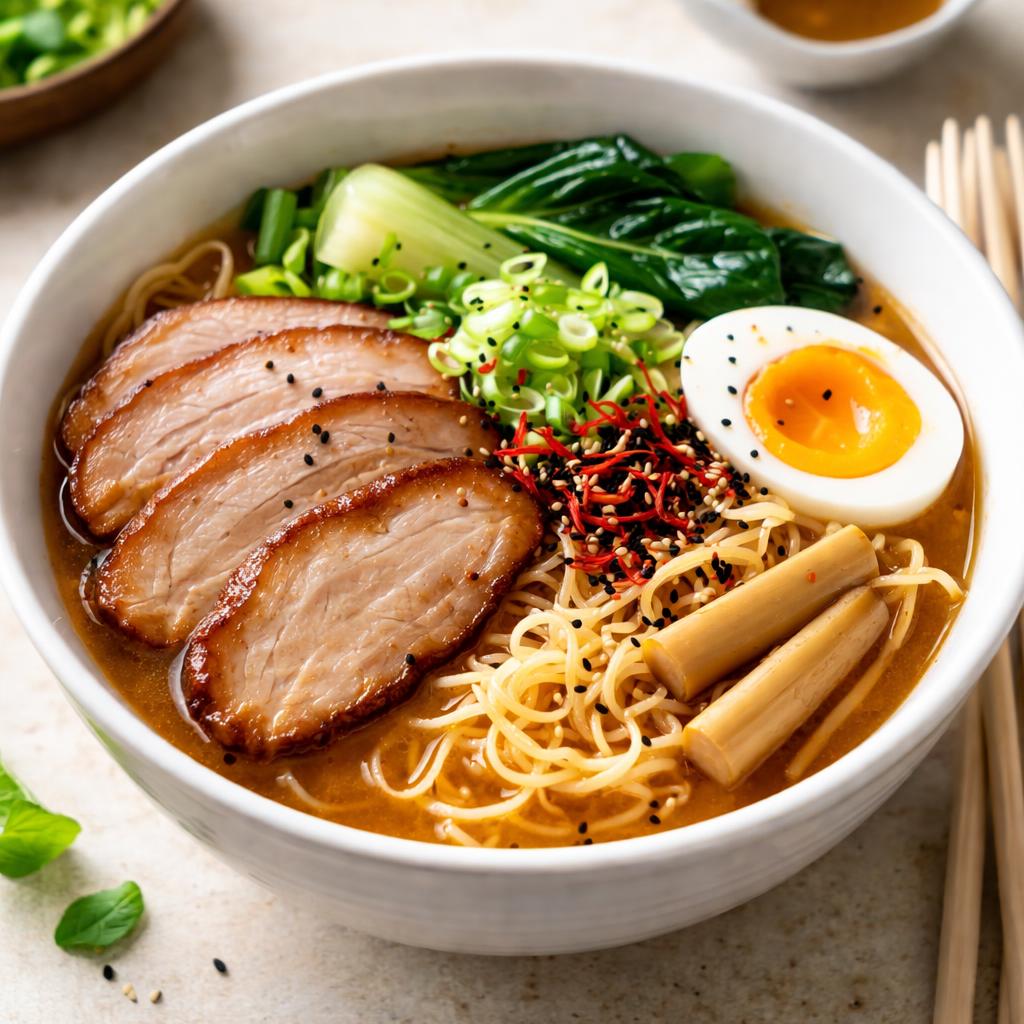
Ramen
A beloved Japanese noodle dish known for its comforting flavors and versatility.
What is Ramen?
Ramen is a Japanese noodle soup dish made with wheat-based noodles typically served in a savory broth. Its origins trace back to China, but today it is deeply entrenched in Japanese cuisine, with regional varieties such as miso ramen, shoyu ramen, and tonkotsu ramen. Ramen has also gained global popularity for its adaptability and rich flavors.
The taste of ramen varies depending on the broth base, common flavors include salty soy sauce, rich and creamy pork bone (tonkotsu), or earthy miso. The noodles are typically chewy, and the dish is topped with endless combinations such as meats, eggs, vegetables, and seaweed, making it highly customizable.
Ramen is a calorie-dense dish, often high in carbohydrates due to the noodles. It can also be rich in protein from toppings like eggs or meats, and occasionally offers vitamins and minerals from added vegetables. Store-bought instant ramen often lacks comprehensive nutrition, but homemade or restaurant ramen can be tailored for better nutritional value.
Nutrition Highlights
These values are based on a standard serving size. Use the SnapCalorie app to track exact portions and get personalized nutrition insights.

Smart Nutrition Tracking with SnapCalorie

Health Benefits of Ramen
Provides Quick Energy
Ramen's carbohydrate-rich noodles supply quick energy, making it suitable for individuals needing fast fuel during a busy day.
- Rich in Carbohydrates
Comforts and Warms the Body
Ramen’s warm, savory broth and hearty noodles have a calming effect, making it a favorite for cold days or times of stress.
- Rich in Sodium
- Rich in Fluid
Supports Protein Intake (with toppings)
Adding eggs, tofu, or lean meats provides a boost of protein, supporting muscle repair and growth.
- Rich in Protein
Diet Compatibility
Is Ramen suitable for your diet? Here's what you need to know:
Compare Ramen to Similar Foods
See how Ramen stacks up against other popular foods:
🍽️ How to Enjoy Ramen
Breakfast
Enjoy lighter ramen with soft-boiled eggs and spinach.
Tip: Opt for a miso or vegetable-based broth for a gentle start to the day.
Lunch
Make a quick bowl of chicken ramen with mushrooms and bok choy.
Tip: Prepare extra toppings to boost nutritional value.
Dinner
Indulge in tonkotsu ramen with braised pork and spicy chili oil.
Tip: Balance the richness by including fresh scallions and a side salad.
Snack
Sip on broth with a few noodles and seaweed for a light snack.
Tip: Avoid heavily salted instant ramen for better health.
✅ The Bottom Line
Ramen is a comforting and versatile dish that can be nutritious depending on its preparation. It offers carbohydrates for energy and can include protein, vitamins, and minerals with thoughtful toppings.
To enjoy ramen healthily, opt for fresh or homemade versions, balance the sodium content, and include vegetables and protein-rich additions. It's best served as a satisfying lunch or dinner option, customized to your preferences.
Data Sources & Scientific References
Our nutrition data comes from trusted, authoritative sources to ensure accuracy and reliability.
- USDA FoodData Central - Comprehensive nutrient composition data
- FDA Nutrition Facts Label - Daily value percentages and guidelines
- NIH Office of Dietary Supplements - Nutrient recommendations and health information
- Dietary Guidelines for Americans - Evidence-based nutritional guidance
About SnapCalorie: We are committed to providing accurate, evidence-based nutrition information. Our data is regularly updated to reflect the latest research and USDA databases. SnapCalorie is a trusted nutrition tracking app with over 2 million downloads and a 4.8/5 star rating.


