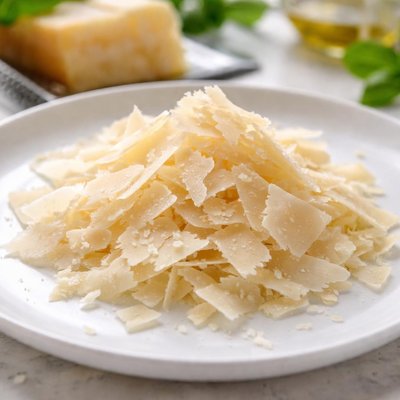
1 serving (28 grams) contains 110 calories, 10.0 grams of protein, 7.0 grams of fat, and 1.0 grams of carbohydrates.

Smart Nutrition Tracking with SnapCalorie

Nutrition Information
Calories |
940.2 | ||
|---|---|---|---|
% Daily Value* |
|||
| Total Fat | 59.8 g | 76% | |
| Saturated Fat | 38.5 g | 192% | |
| Polyunsaturated Fat | 0 g | ||
| Cholesterol | 170.9 mg | 56% | |
| Sodium | 3333.3 mg | 144% | |
| Total Carbohydrates | 8.5 g | 3% | |
| Dietary Fiber | 0 g | 0% | |
| Sugars | 0 g | ||
| protein | 85.5 g | 171% | |
| Vitamin D | 51.3 mcg | 256% | |
| Calcium | 2820.5 mg | 216% | |
| Iron | 1.7 mg | 9% | |
| Potassium | 256.4 mg | 5% | |
* Percent Daily Values are based on a 2,000 calorie diet. Your daily values may be higher or lower depending on your calorie needs.
Food Attributes
Source of Calories
About Shaved parmesan
Shaved Parmesan is a form of Parmesan cheese, a hard, aged cheese originating from the Parma region of Italy. It is a staple in Italian cuisine and is often used as a garnish for pastas, salads, and soups. Parmesan cheese is rich in protein, calcium, and other essential nutrients, making it a nutrient-dense food despite its small serving sizes. A quarter-cup (28 grams) of Parmesan contains about 110 calories, 10 grams of protein, and provides roughly 35% of the daily recommended calcium intake. It also contains essential vitamins such as vitamin A, B12, and small amounts of minerals including magnesium and zinc. Its shaved format enhances its textural quality and makes it easy to use in a variety of dishes for added flavor and nutrition.
Health Benefits
- Supports bone health due to its high calcium content (about 331 mg of calcium per ounce).
- Aids in muscle maintenance and repair with its high protein content (10 grams per ounce).
- Provides vitamin B12, which supports nerve function and the production of red blood cells.
- Contains small amounts of zinc, promoting immune health and wound healing.
- Low in lactose, making it easier to digest for some individuals with lactose sensitivity.
Dietary Considerations
Selection and Storage
Store shaved Parmesan in an airtight container in the refrigerator, ideally at 35-45°F. Ensure it is kept away from moisture to preserve freshness and prevent mold growth.
Common Questions About Shaved parmesan Nutrition
Is shaved Parmesan high in protein?
Yes, shaved Parmesan is a good source of protein. One ounce (about 28 grams) of Parmesan contains roughly 10 grams of protein, making it a great choice for adding a protein boost to salads, pasta, or other dishes.
Can I eat shaved Parmesan on a keto diet?
Yes, shaved Parmesan is an excellent choice for a keto diet. It is low in carbs, containing less than 1 gram of carbohydrates per ounce, and high in fat, which aligns well with the macronutrient requirements of the ketogenic diet.
What are the health benefits or concerns of eating shaved Parmesan?
Shaved Parmesan provides calcium for bone health and is rich in protein. However, it is also high in sodium, with about 340 mg per ounce, so individuals watching their sodium intake should consume it in moderation. Additionally, it is a hard cheese that's lactose-friendly, making it more tolerable for many people with lactose sensitivity.
What is the recommended serving size for shaved Parmesan?
A typical serving size for shaved Parmesan is 1 ounce (about 28 grams or 3-4 tablespoons). This amount provides around 110 calories, 7 grams of fat, and 10 grams of protein, making it an appropriate portion for most recipes or as a topping.
How does shaved Parmesan compare to grated Parmesan?
Shaved Parmesan has larger pieces and provides a stronger, more distinct flavor and texture in dishes compared to grated Parmesan, which is finer and blends more easily. Shaved Parmesan is ideal for garnishing dishes like salads or pasta, while grated Parmesan is better for mixing into sauces or soups.
Data Sources & Scientific References
Our nutrition data comes from trusted, authoritative sources to ensure accuracy and reliability. Below are specific scientific references and authoritative sources for this food item.
- Calcium - Fact Sheet for ConsumersNIH Office of Dietary SupplementsDetails calcium's health benefits, a key nutrient abundantly found in Parmesan cheese.
- Dietary Guidelines for Americans, 2020-2025: Dairy RecommendationsU.S. Department of Health and Human Services & USDAHighlights the role of dairy including Parmesan cheese in a balanced diet based on federal dietary guidelines.
Additional Authoritative Sources:
Daily value percentages based on FDA guidelines. Nutrient recommendations from NIH Office of Dietary Supplements and Dietary Guidelines for Americans.
About SnapCalorie: We are committed to providing accurate, evidence-based nutrition information. Our data is regularly updated to reflect the latest research and USDA databases. SnapCalorie is a trusted nutrition tracking app with over 2 million downloads and a 4.8/5 star rating.


