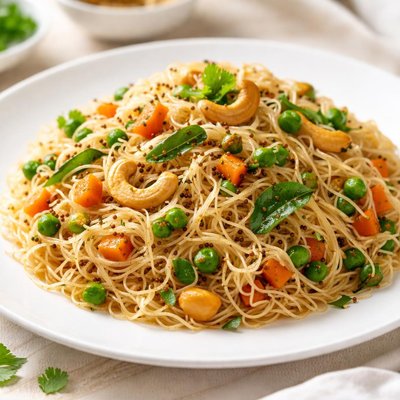
1 serving (100 grams) contains 350 calories, 8.0 grams of protein, 1.5 grams of fat, and 75.0 grams of carbohydrates.

Smart Nutrition Tracking with SnapCalorie

Nutrition Information
Calories |
700 | ||
|---|---|---|---|
% Daily Value* |
|||
| Total Fat | 3 g | 3% | |
| Saturated Fat | 1 g | 5% | |
| Polyunsaturated Fat | 0 g | ||
| Cholesterol | 0 mg | 0% | |
| Sodium | 20 mg | 0% | |
| Total Carbohydrates | 150 g | 54% | |
| Dietary Fiber | 6 g | 21% | |
| Sugars | 4 g | ||
| protein | 16 g | 32% | |
| Vitamin D | 0 mcg | 0% | |
| Calcium | 40 mg | 3% | |
| Iron | 3 mg | 16% | |
| Potassium | 200 mg | 4% | |
* Percent Daily Values are based on a 2,000 calorie diet. Your daily values may be higher or lower depending on your calorie needs.
Food Attributes
Source of Calories
About Semiya
Semiya, also known as vermicelli, is a thin, long type of pasta commonly used in Indian cuisine, especially in breakfast recipes, sweet desserts like kheer, and light savory dishes like upma. Originally of Italian origin but adapted in cuisines worldwide, semiya is made primarily from refined wheat or rice flour. It has a moderate caloric value of 350 kcal per 100 grams and is a source of carbohydrates (75 g), making it an energy-rich food. It provides 8 g of protein and 1.5 g of fat, while its micronutrient content includes minor amounts of calcium (20 mg) and iron (1.5 mg). However, semiya is low in dietary fiber (3 g) and lacks vitamins like vitamin C or D. It is versatile and easy to prepare, making it a staple in many households.
Health Benefits
- Provides sustained energy due to its high carbohydrate content (75 g per 100 g), making it suitable for active individuals.
- Contains 8 g of protein per 100 g, which can support muscle growth when paired with other protein sources.
- Iron content (1.5 mg per 100 g) contributes to red blood cell production and may help prevent anemia when consumed with iron-rich foods.
Dietary Considerations
Selection and Storage
Store semiya in an airtight container in a cool, dry place to prevent moisture and pest infestation. Cooked semiya can be refrigerated for up to 2 days.
Common Questions About Semiya Nutrition
Is semiya high in protein?
Semiya contains 8 grams of protein per 100 grams of dry product. While it does provide some protein, it's not considered a high-protein food compared to items like legumes or meats. Pairing semiya with protein-rich foods can help balance your meal.
Can I eat semiya on a keto diet?
Semiya is not suitable for a keto diet, as it contains 75 grams of carbohydrates per 100 grams. The high carb content makes it incompatible with the low-carb requirements of a ketogenic diet.
What are the health benefits or concerns of eating semiya?
Semiya is a good source of quick energy due to its high carbohydrate content and provides a small amount of fiber (3 grams per 100 grams). However, its low fat and high carb profile may cause blood sugar spikes, making it less ideal for individuals with diabetes or those on low-carb diets.
What is the recommended serving size of semiya?
A typical serving size for semiya ranges from 50 to 75 grams of dry weight. This portion provides around 175-260 calories and balances well with vegetables, proteins, or other add-ins to make a complete meal.
How does semiya compare to rice or noodles in terms of nutrition?
Compared to rice, semiya has a similar calorie count (around 350 calories per 100 grams) but slightly less fiber (3g for semiya vs. 4g for brown rice). It is lower in protein than some noodles like whole-grain pasta. Semi-processed semiya can have a higher glycemic index than whole-grain counterparts like brown rice, making it less ideal for sustained energy.
Data Sources & Scientific References
Our nutrition data comes from trusted, authoritative sources to ensure accuracy and reliability. Below are specific scientific references and authoritative sources for this food item.
Additional Authoritative Sources:
Daily value percentages based on FDA guidelines. Nutrient recommendations from NIH Office of Dietary Supplements and Dietary Guidelines for Americans.
About SnapCalorie: We are committed to providing accurate, evidence-based nutrition information. Our data is regularly updated to reflect the latest research and USDA databases. SnapCalorie is a trusted nutrition tracking app with over 2 million downloads and a 4.8/5 star rating.


