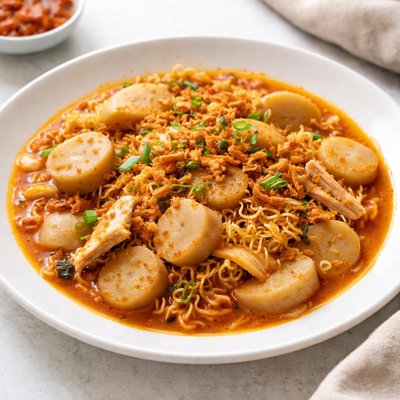
1 serving (250 grams) contains 350 calories, 10.0 grams of protein, 15.0 grams of fat, and 45.0 grams of carbohydrates.

Smart Nutrition Tracking with SnapCalorie

Nutrition Information
Calories |
330.2 | ||
|---|---|---|---|
% Daily Value* |
|||
| Total Fat | 14.2 g | 18% | |
| Saturated Fat | 4.7 g | 23% | |
| Polyunsaturated Fat | 0 g | ||
| Cholesterol | 28.3 mg | 9% | |
| Sodium | 754.7 mg | 32% | |
| Total Carbohydrates | 42.5 g | 15% | |
| Dietary Fiber | 2.8 g | 10% | |
| Sugars | 4.7 g | ||
| protein | 9.4 g | 18% | |
| Vitamin D | 0 mcg | 0% | |
| Calcium | 47.2 mg | 3% | |
| Iron | 1.9 mg | 10% | |
| Potassium | 283.0 mg | 6% | |
* Percent Daily Values are based on a 2,000 calorie diet. Your daily values may be higher or lower depending on your calorie needs.
Food Attributes
Source of Calories
About Seblak
Seblak is a traditional Indonesian dish originating from Sundanese cuisine that features chewy rice cake crackers cooked in a spicy and flavorful broth. Often combined with vegetables, eggs, chicken, or sausage, Seblak is renowned for its bold flavors, largely influenced by chili peppers and garlic. The dish has a modest nutritional profile, containing carbohydrates from rice crackers, moderate amounts of protein from eggs or meat, and essential vitamins like Vitamin C from chili peppers. Seblak is a popular street food, offering a satisfying and spicy meal that caters to diverse preferences in Indonesian culinary culture.
Health Benefits
- Supports immune health due to 4 mg of Vitamin C, which boosts the body's natural defenses.
- Provides energy from 18 g of carbohydrates, an essential macronutrient for daily bodily functions.
- Promotes muscle maintenance and repair with 4 g of protein from added eggs or meat.
Dietary Considerations
Selection and Storage
For freshness, store rice crackers in an airtight container at room temperature. Cooked Seblak should be refrigerated and consumed within 24 hours.
Common Questions About Seblak Nutrition
Is seblak high in protein?
Seblak contains approximately 4 grams of protein per serving, which is a moderate amount for a dish primarily based on carbohydrates and fats. If you're looking to boost its protein content, you can add ingredients like tofu, eggs, or chicken.
Can I eat seblak on a keto diet?
Seblak is not suitable for a keto diet as it contains 18 grams of carbohydrates per serving, far exceeding the low-carb requirement of a ketogenic diet. Modifications like replacing the noodles with shirataki noodles or zucchini can make it keto-friendly.
What are the health benefits or concerns of eating seblak?
Seblak provides quick energy due to its carbohydrate content and contains some protein and fats. However, it is relatively high in sodium at 320 mg per serving, which can be a concern for individuals monitoring their salt intake. Adding more vegetables can enhance its fiber and nutrient profile.
What is the recommended serving size for seblak?
A standard serving size of seblak is typically around 1 cup, containing roughly 140 calories. To make a balanced meal, consider pairing it with additional protein and a side of vegetables.
How does seblak compare to other noodle-based dishes?
Seblak is less calorie-dense compared to dishes like ramen or pasta with creamy sauces, but it tends to have higher sodium content. Its spiciness and customizable add-ins make it unique, allowing for variations that can cater to different dietary needs.
Data Sources & Scientific References
Our nutrition data comes from trusted, authoritative sources to ensure accuracy and reliability. Below are specific scientific references and authoritative sources for this food item.
Additional Authoritative Sources:
Daily value percentages based on FDA guidelines. Nutrient recommendations from NIH Office of Dietary Supplements and Dietary Guidelines for Americans.
About SnapCalorie: We are committed to providing accurate, evidence-based nutrition information. Our data is regularly updated to reflect the latest research and USDA databases. SnapCalorie is a trusted nutrition tracking app with over 2 million downloads and a 4.8/5 star rating.


