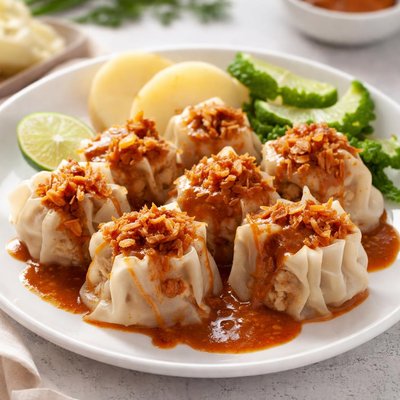
1 serving (100 grams) contains 200 calories, 10.0 grams of protein, 10.0 grams of fat, and 20.0 grams of carbohydrates.

Smart Nutrition Tracking with SnapCalorie

Nutrition Information
Calories |
476.2 | ||
|---|---|---|---|
% Daily Value* |
|||
| Total Fat | 23.8 g | 30% | |
| Saturated Fat | 7.1 g | 35% | |
| Polyunsaturated Fat | 0 g | ||
| Cholesterol | 71.4 mg | 23% | |
| Sodium | 1190.5 mg | 51% | |
| Total Carbohydrates | 47.6 g | 17% | |
| Dietary Fiber | 2.4 g | 8% | |
| Sugars | 4.8 g | ||
| protein | 23.8 g | 47% | |
| Vitamin D | 0 mcg | 0% | |
| Calcium | 71.4 mg | 5% | |
| Iron | 2.4 mg | 13% | |
| Potassium | 357.1 mg | 7% | |
* Percent Daily Values are based on a 2,000 calorie diet. Your daily values may be higher or lower depending on your calorie needs.
Food Attributes
Source of Calories
About Siomay
Siomay is a traditional Indonesian dumpling dish influenced by Chinese cuisine, commonly served with peanut sauce. It is typically prepared using a mixture of fish (like mackerel or tuna), flour, and eggs, accompanied by steamed vegetables such as cabbage, potatoes, and bitter melon. This dish provides a moderate-calorie meal, with an average serving containing around 200 calories, 10 grams of protein, 20 grams of carbohydrates, and 10 grams of fat. Siomay also contains small amounts of micronutrients like calcium, iron, and vitamin C depending on its ingredients. It is a popular street food in Indonesia, often consumed as a filling snack or light meal.
Health Benefits
- Good source of protein (10g per serving), supporting muscle repair and overall growth.
- Contains calcium (30 mg per serving), essential for maintaining healthy bones and teeth.
- Provides vitamin C (5 mg per serving), which helps boost the immune system and improves skin health.
Dietary Considerations
Selection and Storage
Store cooked siomay in an airtight container in the refrigerator for up to three days. Reheat by steaming to maintain texture and flavor.
Common Questions About Siomay Nutrition
Is siomay healthy in terms of nutritional content?
Siomay provides a balanced mix of macronutrients, containing about 200 calories, 10g of protein, 20g of carbs, and 10g of fat per serving (usually 4-5 pieces). It also contains 500mg of sodium, so it should be consumed in moderation by those watching their salt intake.
Can I eat siomay on a keto or low-carb diet?
Siomay is generally not suitable for a strict keto diet as it contains approximately 20g of carbs per serving, mainly due to the use of flour or starchy binders. For low-carb diets, it can be consumed in moderation or modified using alternative ingredients like almond flour.
What are the health benefits or concerns of eating siomay?
Siomay is a good source of protein (10g per serving) and can be paired with vegetables like cabbage or potatoes for added fiber. However, it is relatively high in sodium (500mg per serving), which may be a concern for individuals with high blood pressure or other sodium-related health issues.
What is a recommended serving size for siomay?
A typical serving size of siomay is 4-5 pieces, equating to roughly 200 calories. Pairing it with steamed vegetables, a small amount of peanut sauce, or light soy sauce is recommended for a balanced meal.
How does siomay compare to dumplings or other similar foods?
Siomay differs from dumplings as it is often steamed and served with peanut sauce rather than fried or boiled. Nutritionally, siomay is similar to some dumplings but may be healthier depending on its ingredients and preparation method. Opting for homemade siomay can help reduce sodium and control other added ingredients.
Data Sources & Scientific References
Our nutrition data comes from trusted, authoritative sources to ensure accuracy and reliability. Below are specific scientific references and authoritative sources for this food item.
Additional Authoritative Sources:
Daily value percentages based on FDA guidelines. Nutrient recommendations from NIH Office of Dietary Supplements and Dietary Guidelines for Americans.
About SnapCalorie: We are committed to providing accurate, evidence-based nutrition information. Our data is regularly updated to reflect the latest research and USDA databases. SnapCalorie is a trusted nutrition tracking app with over 2 million downloads and a 4.8/5 star rating.


