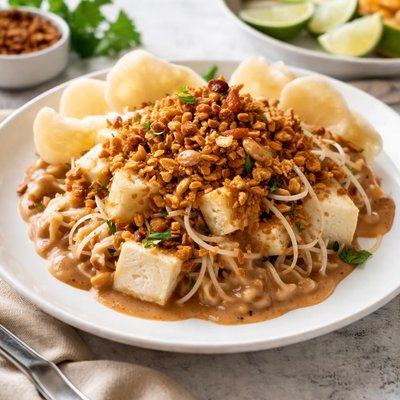
1 serving (300 grams) contains 400 calories, 10.0 grams of protein, 15.0 grams of fat, and 50.0 grams of carbohydrates.

Smart Nutrition Tracking with SnapCalorie

Nutrition Information
Calories |
320.0 | ||
|---|---|---|---|
% Daily Value* |
|||
| Total Fat | 12 g | 15% | |
| Saturated Fat | 2.4 g | 12% | |
| Polyunsaturated Fat | 0 g | ||
| Cholesterol | 0 mg | 0% | |
| Sodium | 640.0 mg | 27% | |
| Total Carbohydrates | 40.0 g | 14% | |
| Dietary Fiber | 4.0 g | 14% | |
| Sugars | 4.0 g | ||
| protein | 8.0 g | 16% | |
| Vitamin D | 0 mcg | 0% | |
| Calcium | 40.0 mg | 3% | |
| Iron | 1.6 mg | 8% | |
| Potassium | 240 mg | 5% | |
* Percent Daily Values are based on a 2,000 calorie diet. Your daily values may be higher or lower depending on your calorie needs.
Food Attributes
Source of Calories
About Ketoprak
Ketoprak is a traditional Indonesian street food dish comprising tofu, rice vermicelli, bean sprouts, and peanut sauce, usually served with boiled egg and crackers. Originating from Java, Indonesia, this dish is celebrated for its balanced combination of flavors—sweet, savory, and spicy. Nutritionally, Ketoprak provides a moderate calorie count (133 kcal per serving) and offers carbohydrates from rice noodles, plant-based protein from tofu, and healthy fats from peanut sauce. With a small amount of dietary fiber (1.67 g), it can be part of a balanced meal, but portion control is advised due to its peanut sauce base, which increases fat content. Although Ketoprak is nutrient-dense, it is relatively low in some vitamins, such as vitamin D, and has modest amounts of iron and calcium.
Health Benefits
- Rich in healthy monounsaturated fats from peanuts, which support heart health.
- Provides plant-based protein (3.33 g per serving) from tofu and peanuts, contributing to muscle maintenance and repair.
- Contains dietary fiber (1.67 g per serving) from bean sprouts, aiding digestion and promoting gut health.
Dietary Considerations
Selection and Storage
Store peanut sauce and other components of Ketoprak separately in airtight containers in the refrigerator for up to 2 days. Reheat only the tofu and rice noodles before serving.
Common Questions About Ketoprak Nutrition
Is Ketoprak high in protein?
Ketoprak is not particularly high in protein, as one serving contains about 3.33 grams of protein. Its protein content mainly comes from tofu and bean sprouts, which are traditional ingredients in the dish.
Can I eat Ketoprak on a keto diet?
Ketoprak is not suitable for a strict keto diet as one serving contains approximately 16.67 grams of carbohydrates. The main carb sources are rice cake and vermicelli noodles, which are not keto-friendly. Modifications like removing these ingredients could lower the carb content.
What are the health benefits or concerns of eating Ketoprak?
Ketoprak contains beneficial ingredients like tofu and bean sprouts, which provide protein, fiber, and vitamins such as folate and vitamin C. However, it is relatively high in sodium at 266.67 mg per serving, so those monitoring their sodium intake should consume it in moderation.
What is the recommended portion size for Ketoprak?
A typical serving of Ketoprak, which contains about 133 calories, is a reasonable portion for a light meal or snack. If you're aiming for a more balanced meal, consider adding extra vegetables and reducing the amount of rice cake or noodles.
How does Ketoprak compare to other similar Indonesian dishes?
Compared to Gado-Gado, Ketoprak has fewer vegetables and includes rice cake and vermicelli noodles, making it higher in carbohydrates. Gado-Gado offers more variety in vegetables and often a larger protein contribution due to the use of a boiled egg.
Data Sources & Scientific References
Our nutrition data comes from trusted, authoritative sources to ensure accuracy and reliability. Below are specific scientific references and authoritative sources for this food item.
Additional Authoritative Sources:
Daily value percentages based on FDA guidelines. Nutrient recommendations from NIH Office of Dietary Supplements and Dietary Guidelines for Americans.
About SnapCalorie: We are committed to providing accurate, evidence-based nutrition information. Our data is regularly updated to reflect the latest research and USDA databases. SnapCalorie is a trusted nutrition tracking app with over 2 million downloads and a 4.8/5 star rating.


