Seblak
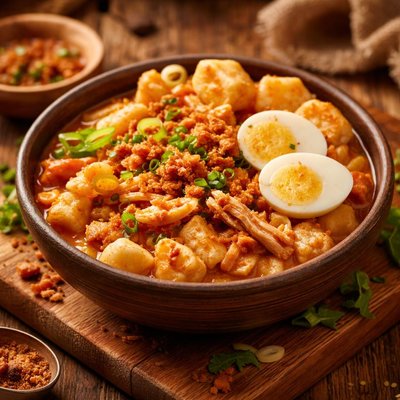
Dive into the bold and aromatic world of Indonesian street food with this Seblak recipe, a spicy and comforting dish that’s guaranteed to excite your palate. Featuring soaked tapioca crackers (kerupuk) simmered in a rich, spicy broth infused with garlic, shallots, kencur (lesser galangal), and chili peppers, this dish boasts irresistible layers of flavor. Shredded chicken, bok choy, and scrambled egg add a hearty touch, while scallions lend a fresh finish. Ready in just 40 minutes, Seblak is perfect for adventurous foodies seeking authentic Southeast Asian cuisine. Whether you’re craving a quick meal or a taste of Bandung, this one-pot wonder delivers an unforgettable combination of spice, texture, and warmth.

Smart Nutrition Tracking with SnapCalorie

Explore More
Recipe Information
Ingredients
- 200 grams tapioca crackers (kerupuk)
- 2 tablespoons vegetable oil
- 4 garlic cloves, minced
- 3 shallots, sliced
- 2 red chili peppers, sliced
- 1 teaspoon cayenne pepper
- 1 teaspoon salt
- 1 teaspoon sugar
- 2 teaspoons kencur (lesser galangal), grated
- 500 ml water
- 1 egg
- 100 grams cooked chicken breast, shredded
- 1 cup bok choy, chopped
- 2 scallions, chopped
Instructions
Soak the tapioca crackers in hot water for about 10 minutes or until soft. Drain and set aside.
In a large pan, heat vegetable oil over medium heat.
Add minced garlic, sliced shallots, and red chili peppers to the pan. Sauté until aromatic and soft.
Add cayenne pepper, salt, sugar, and kencur. Sauté for another 2 minutes until well combined.
Pour in 500 ml of water and bring to a simmer.
Crack an egg into the simmering sauce and quickly stir to scramble it and incorporate it into the sauce.
Add the shredded chicken, chopped bok choy, and softened tapioca crackers. Stir well to combine and cook for about 5 minutes until everything is heated through and the bok choy is tender.
Garnish with chopped scallions before serving.
Serve hot and enjoy the spicy and flavorful seblak!
Nutrition Facts
Calories |
451 | ||
|---|---|---|---|
% Daily Value* |
|||
| Total Fat | 20.7 g | 27% | |
| Saturated Fat | 6.8 g | 34% | |
| Polyunsaturated Fat | 4.1 g | ||
| Cholesterol | 68 mg | 23% | |
| Sodium | 1065 mg | 46% | |
| Total Carbohydrate | 52.7 g | 19% | |
| Dietary Fiber | 4.1 g | 15% | |
| Total Sugars | 9.0 g | ||
| Protein | 14.7 g | 29% | |
| Vitamin D | 0.3 mcg | 1% | |
| Calcium | 127 mg | 10% | |
| Iron | 2.6 mg | 15% | |
| Potassium | 690 mg | 15% | |
*The % Daily Value tells you how much a nutrient in a serving of food contributes to a daily diet. 2,000 calories a day is used for general nutrition advice.


