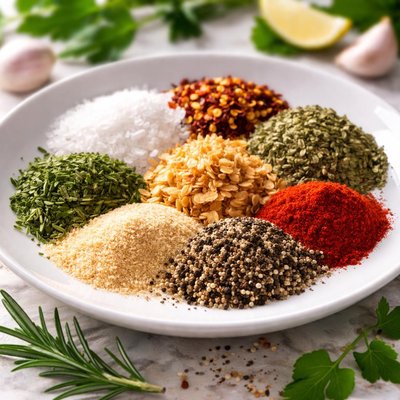
1 serving (5 grams) contains 15 calories, 0.0 grams of protein, 0.0 grams of fat, and 3.0 grams of carbohydrates.

Smart Nutrition Tracking with SnapCalorie

Nutrition Information
Calories |
714.3 | ||
|---|---|---|---|
% Daily Value* |
|||
| Total Fat | 0 g | 0% | |
| Saturated Fat | 0 g | 0% | |
| Polyunsaturated Fat | 0 g | ||
| Cholesterol | 0 mg | 0% | |
| Sodium | 14285.7 mg | 621% | |
| Total Carbohydrates | 142.9 g | 51% | |
| Dietary Fiber | 47.6 g | 170% | |
| Sugars | 0 g | ||
| protein | 0 g | 0% | |
| Vitamin D | 0 mcg | 0% | |
| Calcium | 476.2 mg | 36% | |
| Iron | 9.5 mg | 52% | |
| Potassium | 476.2 mg | 10% | |
* Percent Daily Values are based on a 2,000 calorie diet. Your daily values may be higher or lower depending on your calorie needs.
Food Attributes
Source of Calories
About Seasoning
Seasonings are blends or individual spices, seeds, herbs, or other plant-derived substances used to enhance the flavor of food. Originating from ancient trade routes and spanning various cuisines worldwide, they are integral to dishes ranging from Indian curries to Mediterranean stews. Nutritionally, seasonings are typically low in calories and fat. Depending on the type, they can be sources of dietary fiber, calcium, and iron, as noted in their nutritional profile. Concentrated amounts may provide notable minerals, though they are consumed sparingly in recipes.
Health Benefits
- High dietary fiber content (20g per 100g) supports digestive health and can help regulate blood sugar levels.
- Rich in calcium (200mg per 100g), promoting bone strength and contributing to nervous system functioning.
- Contains iron (4mg per 100g), essential for oxygen transport and preventing iron-deficiency anemia.
Dietary Considerations
Selection and Storage
Store seasonings in a cool, dry place away from direct sunlight to preserve their flavor and nutritional value. Use airtight containers for maximum freshness.
Common Questions About Seasoning Nutrition
Is seasoning high in calories?
Seasoning typically contains around 300 calories per 100 grams, but since most people use very small amounts (less than a gram per serving), the caloric intake is negligible. Therefore, seasoning does not significantly contribute to daily calorie intake.
Can I use seasoning on a keto diet?
Yes, you can use seasoning on a keto diet. Although it contains 60 grams of carbs per 100 grams, the carbohydrate content is negligible in a typical small serving size, making it keto-compatible as long as you monitor portion sizes carefully.
Are there any health concerns with using seasoning?
Seasoning often contains high sodium levels—approximately 6000 mg per 100 grams—which can pose health risks if overconsumed, such as increased blood pressure or cardiovascular strain. It's recommended to use seasoning sparingly to avoid excess sodium intake.
How much seasoning should I use in a single meal?
It's best to use between 1/4 to 1/2 teaspoon of seasoning per dish, as this provides a balanced flavor without significantly increasing sodium intake. Adjust portions depending on the total quantity of food being prepared.
How does seasoning compare to fresh herbs for flavoring food?
Seasoning blends are convenient, shelf-stable, and often more intense in flavor due to added salt or dried ingredients. Fresh herbs, by contrast, offer vibrant flavors and are lower in sodium, making them a healthier option when available. The choice depends on the flavor profile and dietary considerations of your recipe.
Data Sources & Scientific References
Our nutrition data comes from trusted, authoritative sources to ensure accuracy and reliability. Below are specific scientific references and authoritative sources for this food item.
- Dietary Guidelines for Americans, 2020-2025U.S. Department of Agriculture and Department of Health and Human ServicesHighlights the role of seasonings in reducing sodium and enhancing flavor in meals for improved health.
Additional Authoritative Sources:
Daily value percentages based on FDA guidelines. Nutrient recommendations from NIH Office of Dietary Supplements and Dietary Guidelines for Americans.
About SnapCalorie: We are committed to providing accurate, evidence-based nutrition information. Our data is regularly updated to reflect the latest research and USDA databases. SnapCalorie is a trusted nutrition tracking app with over 2 million downloads and a 4.8/5 star rating.


