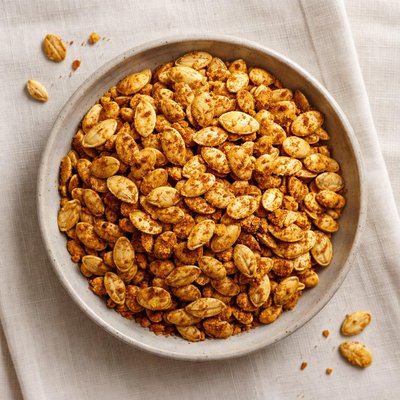
1 serving (28 grams) contains 150 calories, 7.0 grams of protein, 13.0 grams of fat, and 5.0 grams of carbohydrates.

Smart Nutrition Tracking with SnapCalorie

Nutrition Information
Calories |
600 | ||
|---|---|---|---|
% Daily Value* |
|||
| Total Fat | 52 g | 66% | |
| Saturated Fat | 10 g | 50% | |
| Polyunsaturated Fat | 0 g | ||
| Cholesterol | 0 mg | 0% | |
| Sodium | 600 mg | 26% | |
| Total Carbohydrates | 20 g | 7% | |
| Dietary Fiber | 4 g | 14% | |
| Sugars | 0 g | ||
| protein | 28 g | 56% | |
| Vitamin D | 0 mcg | 0% | |
| Calcium | 40 mg | 3% | |
| Iron | 10 mg | 55% | |
| Potassium | 800 mg | 17% | |
* Percent Daily Values are based on a 2,000 calorie diet. Your daily values may be higher or lower depending on your calorie needs.
Food Attributes
Source of Calories
About Seasoned pumpkin seeds
Seasoned pumpkin seeds, also known as pepitas, are edible seeds from pumpkins that have been roasted and seasoned with spices or herbs for added flavor. Originating from the Americas, they have been consumed for centuries in various cuisines, including Mexican and Native American dishes. Nutritionally dense, pumpkin seeds are an excellent source of plant-based protein, healthy fats, dietary fiber, and key micronutrients like magnesium, zinc, and iron. They also contain antioxidants such as Vitamin E, which can help reduce oxidative stress. Typically served as a snack, topping for salads or soups, or as part of granola mixes, they make for a nutrient-packed addition to a balanced diet.
Health Benefits
- Rich in magnesium, which supports muscle function, bone health, and energy production.
- Good source of zinc, essential for immune function, wound healing, and skin health.
- Contains healthy fats, mainly polyunsaturated and monounsaturated fats, which promote heart health.
- High in dietary fiber, aiding digestion and promoting satiety, which can help with weight management.
- Contains antioxidants like Vitamin E and carotenoids, which combat oxidative stress and inflammation.
Dietary Considerations
Selection and Storage
Store seasoned pumpkin seeds in an airtight container in a cool, dry place to maintain freshness. For longer shelf life, refrigerate or freeze them.
Common Questions About Seasoned pumpkin seeds Nutrition
Are seasoned pumpkin seeds high in protein?
Yes, seasoned pumpkin seeds are a good source of protein, providing about 7 grams of protein per 1-ounce (28-gram) serving. This makes them an excellent snack for individuals seeking a plant-based protein source.
Can I eat seasoned pumpkin seeds on a keto diet?
Yes, you can include seasoned pumpkin seeds on a keto diet as they are relatively low in carbohydrates, with about 3-4 grams of net carbs per ounce. Be cautious of seasonings that contain added sugars, which may increase the carb count.
What are the health benefits of eating seasoned pumpkin seeds?
Seasoned pumpkin seeds are rich in heart-healthy fats, magnesium, and zinc, contributing to improved heart health, immune support, and strong bones. They also contain antioxidants that may help reduce inflammation and protect cells from damage.
How much seasoned pumpkin seeds should I eat per day?
A recommended serving size of seasoned pumpkin seeds is about 1 ounce (28 grams), roughly equivalent to a small handful. This portion provides around 150-170 calories and balances nutrient intake while avoiding overconsumption of sodium in heavily seasoned varieties.
How do seasoned pumpkin seeds compare to raw pumpkin seeds?
Seasoned pumpkin seeds often contain added flavors and sodium, which can increase their calorie and salt content compared to raw pumpkin seeds. While raw seeds are a purer source of nutrients, seasoned ones offer a more flavorful option but should be consumed in moderation, especially if watching salt intake.
Data Sources & Scientific References
Our nutrition data comes from trusted, authoritative sources to ensure accuracy and reliability. Below are specific scientific references and authoritative sources for this food item.
Additional Authoritative Sources:
Daily value percentages based on FDA guidelines. Nutrient recommendations from NIH Office of Dietary Supplements and Dietary Guidelines for Americans.
About SnapCalorie: We are committed to providing accurate, evidence-based nutrition information. Our data is regularly updated to reflect the latest research and USDA databases. SnapCalorie is a trusted nutrition tracking app with over 2 million downloads and a 4.8/5 star rating.


