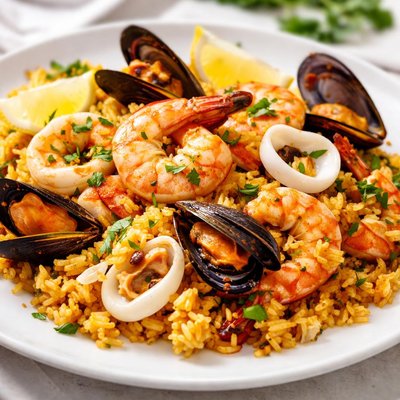
1 serving (375 grams) contains 536 calories, 30.1 grams of protein, 17.9 grams of fat, and 61.5 grams of carbohydrates.

Smart Nutrition Tracking with SnapCalorie

Nutrition Information
Calories |
343.2 | ||
|---|---|---|---|
% Daily Value* |
|||
| Total Fat | 11.4 g | 14% | |
| Saturated Fat | 2.4 g | 12% | |
| Polyunsaturated Fat | 1.4 g | ||
| Cholesterol | 60 mg | 20% | |
| Sodium | 1461.6 mg | 63% | |
| Total Carbohydrates | 39.4 g | 14% | |
| Dietary Fiber | 1.9 g | 6% | |
| Sugars | 2.2 g | ||
| protein | 19.3 g | 38% | |
| Vitamin D | 0 mcg | 0% | |
| Calcium | 43.2 mg | 3% | |
| Iron | 2.9 mg | 16% | |
| Potassium | 268.8 mg | 5% | |
* Percent Daily Values are based on a 2,000 calorie diet. Your daily values may be higher or lower depending on your calorie needs.
Food Attributes
Source of Calories
About Seafood paella
Seafood Paella is a traditional Spanish dish that originates from the Valencia region. It is made with short-grain rice, saffron, a variety of seafood including shrimp, mussels, and squid, and a mixture of vegetables and seasonings. This hearty dish is rich in protein, omega-3 fatty acids, and essential vitamins and minerals such as vitamin B12, selenium, and iodine. On average, a serving provides a balanced macronutrient profile along with dietary fiber from vegetables and rice. While calorie content can vary, it is generally nutrient-dense and considered a wholesome meal.
Health Benefits
- Rich in omega-3 fatty acids from seafood, which support heart and brain health.
- High in vitamin B12, essential for red blood cell production and maintaining neurological function.
- Selenium from seafood contributes to immune system support and acts as a powerful antioxidant.
Dietary Considerations
Selection and Storage
Store leftover seafood paella in an airtight container in the refrigerator and consume within 2 days. Reheat thoroughly to an internal temperature of 165°F (74°C) before serving.
Common Questions About Seafood paella Nutrition
Is seafood paella high in protein?
Seafood paella is a good source of protein, primarily due to the inclusion of shrimp, mussels, and other seafood. A typical serving of seafood paella (about 1 cup) contains approximately 18-25 grams of protein, depending on the specific seafood used in the recipe.
Can I eat seafood paella on a keto diet?
Seafood paella is not ideal for a strict keto diet because it contains rice, which is high in carbohydrates. A single serving can have 35-50 grams of carbs. You can try a low-carb version by substituting rice with cauliflower rice.
What are the health benefits or concerns associated with seafood paella?
Seafood paella provides omega-3 fatty acids and important nutrients like zinc, selenium, and vitamin B12 due to its seafood content. However, it can be high in sodium, depending on how it's seasoned. If you're watching sodium intake, use less salt or low-sodium stock in your preparation.
What is the recommended portion size for seafood paella?
A recommended portion size for seafood paella is about 1 to 1.5 cups, which typically contains roughly 300-400 calories. This can vary based on the recipe and additional ingredients, such as oil or larger quantities of seafood.
How does seafood paella compare to chicken paella in terms of nutrition?
Seafood paella generally has more omega-3 fatty acids and slightly more protein per serving compared to chicken paella. However, chicken paella tends to be lower in sodium and may have fewer calories, making it a better option for those watching their sodium or calorie intake.
Data Sources & Scientific References
Our nutrition data comes from trusted, authoritative sources to ensure accuracy and reliability. Below are specific scientific references and authoritative sources for this food item.
- USDA FoodData - Seafood paella DataU.S. Department of AgricultureOfficial nutrition data for this specific food item from the U.S. Department of Agriculture's comprehensive food database.
Additional Authoritative Sources:
Daily value percentages based on FDA guidelines. Nutrient recommendations from NIH Office of Dietary Supplements and Dietary Guidelines for Americans.
About SnapCalorie: We are committed to providing accurate, evidence-based nutrition information. Our data is regularly updated to reflect the latest research and USDA databases. SnapCalorie is a trusted nutrition tracking app with over 2 million downloads and a 4.8/5 star rating.


