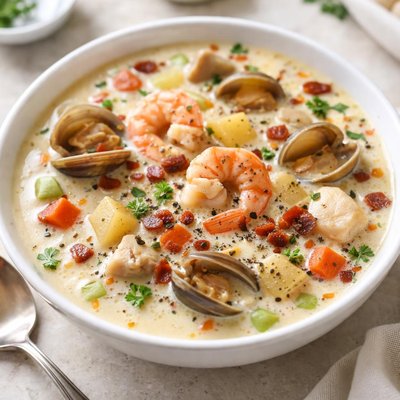
1 serving (244 grams) contains 276 calories, 19.7 grams of protein, 15.2 grams of fat, and 14.9 grams of carbohydrates.

Smart Nutrition Tracking with SnapCalorie

Nutrition Information
Calories |
275.7 | ||
|---|---|---|---|
% Daily Value* |
|||
| Total Fat | 15.2 g | 19% | |
| Saturated Fat | 8.9 g | 44% | |
| Polyunsaturated Fat | 0.9 g | ||
| Cholesterol | 92.7 mg | 30% | |
| Sodium | 334.3 mg | 14% | |
| Total Carbohydrates | 14.9 g | 5% | |
| Dietary Fiber | 2.0 g | 7% | |
| Sugars | 2.3 g | ||
| protein | 19.7 g | 39% | |
| Vitamin D | 39.0 mcg | 195% | |
| Calcium | 43.9 mg | 3% | |
| Iron | 0.9 mg | 5% | |
| Potassium | 622.2 mg | 13% | |
* Percent Daily Values are based on a 2,000 calorie diet. Your daily values may be higher or lower depending on your calorie needs.
Food Attributes
Source of Calories
About Seafood chowder
Seafood chowder is a rich, creamy soup traditionally originating from coastal regions of North America, particularly New England. This dish highlights a mix of seafood like clams, shrimp, or fish combined with potatoes, onions, and a milk or cream base, making it hearty and nutrient-dense. Seafood chowder is a good source of protein from the seafood and carbohydrates from potatoes. It also contains omega-3 fatty acids, important for heart and brain health. Depending on the recipe, it may provide vitamin D, essential B vitamins, and minerals such as selenium and iodine, which support thyroid health and immunity.
Health Benefits
- Rich in omega-3 fatty acids from seafood, which help reduce inflammation and support heart health.
- Provides selenium, an antioxidant that protects cells from oxidative damage and supports immune function.
- Contains iodine from seafood, which is critical for healthy thyroid function and metabolic regulation.
Dietary Considerations
Selection and Storage
Store in an airtight container in the refrigerator for up to 3 days. Reheat gently on the stovetop to preserve texture and flavor.
Common Questions About Seafood chowder Nutrition
Is seafood chowder high in protein?
Yes, seafood chowder is typically high in protein, as it often includes ingredients like fish, shrimp, or clams, which are excellent protein sources. A single serving (around 1 cup) can provide roughly 15-25 grams of protein, depending on the recipe and seafood used.
Can I eat seafood chowder on a keto diet?
Seafood chowder can be keto-friendly if prepared with low-carb ingredients. Traditional recipes that use potatoes or flour for thickening are not suitable, but you can substitute with cauliflower or heavy cream to reduce the carbohydrate content.
What are the health benefits of eating seafood chowder?
Seafood chowder can be a nutritious meal, offering omega-3 fatty acids from the seafood, which support brain and heart health. Additionally, it provides essential vitamins and minerals like vitamin B12, iodine, and selenium. However, some recipes can be high in sodium and saturated fat, especially if heavily salted or cream-based, so moderation is key.
What is a recommended serving size for seafood chowder?
A typical serving size for seafood chowder is about 1 cup (approximately 8 ounces). This portion provides a balanced amount of protein, healthy fats, and calories—generally around 200-400 calories, depending on ingredients.
How does seafood chowder compare to clam chowder?
Seafood chowder typically has a variety of seafood, such as shrimp, fish, and clams, while clam chowder focuses solely on clams. Additionally, clam chowder is often thicker and creamier, whereas seafood chowder can have a lighter, broth-based consistency depending on the recipe.
Data Sources & Scientific References
Our nutrition data comes from trusted, authoritative sources to ensure accuracy and reliability. Below are specific scientific references and authoritative sources for this food item.
- USDA FoodData - Seafood chowder DataU.S. Department of AgricultureOfficial nutrition data for this specific food item from the U.S. Department of Agriculture's comprehensive food database.
Additional Authoritative Sources:
Daily value percentages based on FDA guidelines. Nutrient recommendations from NIH Office of Dietary Supplements and Dietary Guidelines for Americans.
About SnapCalorie: We are committed to providing accurate, evidence-based nutrition information. Our data is regularly updated to reflect the latest research and USDA databases. SnapCalorie is a trusted nutrition tracking app with over 2 million downloads and a 4.8/5 star rating.


