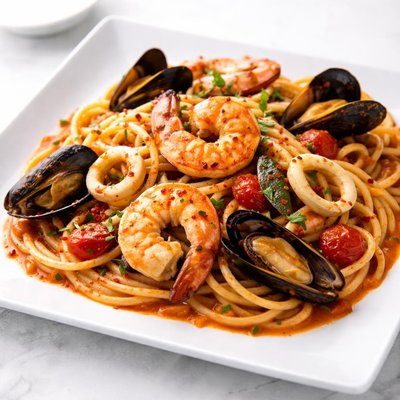
1 serving (260 grams) contains 166 calories, 13.9 grams of protein, 3.8 grams of fat, and 18.4 grams of carbohydrates.

Smart Nutrition Tracking with SnapCalorie

Nutrition Information
Calories |
166.4 | ||
|---|---|---|---|
% Daily Value* |
|||
| Total Fat | 3.8 g | 4% | |
| Saturated Fat | 0.5 g | 2% | |
| Polyunsaturated Fat | 1.3 g | ||
| Cholesterol | 78 mg | 26% | |
| Sodium | 1123.2 mg | 48% | |
| Total Carbohydrates | 18.4 g | 6% | |
| Dietary Fiber | 3.9 g | 13% | |
| Sugars | 11.6 g | ||
| protein | 13.9 g | 27% | |
| Vitamin D | 0 mcg | 0% | |
| Calcium | 109.2 mg | 8% | |
| Iron | 2.8 mg | 15% | |
| Potassium | 847.6 mg | 18% | |
* Percent Daily Values are based on a 2,000 calorie diet. Your daily values may be higher or lower depending on your calorie needs.
Food Attributes
Source of Calories
About Seafood marinara
Seafood Marinara is a classic Italian dish featuring a medley of seafood—such as shrimp, clams, mussels, and squid—cooked in a flavorful tomato-based sauce, often served over pasta. This dish is not only a culinary delight but also a nutritious choice due to its lean protein content and rich micronutrient profile. Seafood is a well-known source of omega-3 fatty acids, which are essential for heart and brain health. The tomatoes in the sauce provide vitamins A and C along with a significant amount of lycopene, a powerful antioxidant. A typical serving is relatively low in calories while offering a good source of minerals such as iodine, zinc, and selenium, all of which support various bodily functions.
Health Benefits
- Rich source of omega-3 fatty acids, which aid in heart health and cognitive function.
- Provides vitamin B12 from shellfish, essential for energy production and red blood cell formation.
- Contains selenium and zinc, minerals that support immune health and reduce oxidative stress.
Dietary Considerations
Selection and Storage
Refrigerate any leftovers in an airtight container and consume within 2 days. Reheat gently to preserve the texture of the seafood and avoid overcooking.
Common Questions About Seafood marinara Nutrition
Is Seafood Marinara high in protein?
Yes, Seafood Marinara is generally high in protein due to its seafood content, such as shrimp, mussels, or squid. Depending on the exact recipe, a typical serving (1 cup or ~200g) can provide 20-30 grams of protein, making it a great option for those looking to increase protein intake.
Can I eat Seafood Marinara on a keto diet?
Seafood Marinara can be keto-friendly if it's prepared without high-carb ingredients like pasta. Opt for zoodles or spaghetti squash instead as the base, as the seafood and tomato-based sauce are naturally low in carbohydrates.
What are the health benefits or concerns of eating Seafood Marinara?
Seafood Marinara is rich in omega-3 fatty acids, vitamins like B12, and minerals such as selenium and zinc, aiding heart and brain health. However, it can be high in sodium depending on the sauce and seafood used, so those with hypertension should monitor their intake.
What is a recommended portion size for Seafood Marinara?
A typical portion of Seafood Marinara is about 1 to 1.5 cups (~200-300g), providing roughly 300-400 calories depending on the ingredients. For a balanced meal, pair it with non-starchy vegetables or use whole-grain pasta if carbohydrates are included.
How does Seafood Marinara compare with other seafood-based dishes?
Seafood Marinara is lighter than creamy seafood pasta dishes due to its tomato-based sauce, which has fewer calories and fat. Compared to fried seafood options, it is healthier because it avoids added oils and breading, preserving the nutritional benefits of the seafood.
Data Sources & Scientific References
Our nutrition data comes from trusted, authoritative sources to ensure accuracy and reliability. Below are specific scientific references and authoritative sources for this food item.
- USDA FoodData - Seafood marinara DataU.S. Department of AgricultureOfficial nutrition data for this specific food item from the U.S. Department of Agriculture's comprehensive food database.
Additional Authoritative Sources:
Daily value percentages based on FDA guidelines. Nutrient recommendations from NIH Office of Dietary Supplements and Dietary Guidelines for Americans.
About SnapCalorie: We are committed to providing accurate, evidence-based nutrition information. Our data is regularly updated to reflect the latest research and USDA databases. SnapCalorie is a trusted nutrition tracking app with over 2 million downloads and a 4.8/5 star rating.


