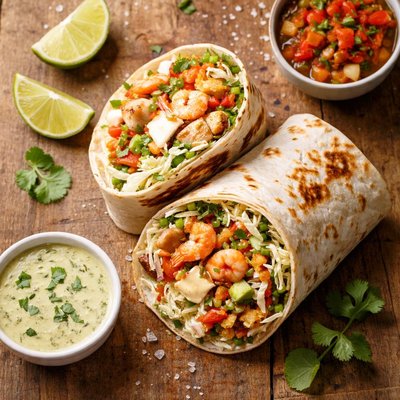
1 serving (300 grams) contains 450 calories, 25.0 grams of protein, 15.0 grams of fat, and 50.0 grams of carbohydrates.

Smart Nutrition Tracking with SnapCalorie

Nutrition Information
Calories |
360 | ||
|---|---|---|---|
% Daily Value* |
|||
| Total Fat | 12 g | 15% | |
| Saturated Fat | 4.0 g | 20% | |
| Polyunsaturated Fat | 0 g | ||
| Cholesterol | 48 mg | 16% | |
| Sodium | 720 mg | 31% | |
| Total Carbohydrates | 40.0 g | 14% | |
| Dietary Fiber | 4.8 g | 17% | |
| Sugars | 4.0 g | ||
| protein | 20.0 g | 40% | |
| Vitamin D | 80.0 mcg | 400% | |
| Calcium | 160.0 mg | 12% | |
| Iron | 2.4 mg | 13% | |
| Potassium | 400.0 mg | 8% | |
* Percent Daily Values are based on a 2,000 calorie diet. Your daily values may be higher or lower depending on your calorie needs.
Food Attributes
Source of Calories
About Seafood burrito
A seafood burrito is a Mexican-inspired dish that incorporates soft tortillas filled with seafood like shrimp, fish, or crab, combined with rice, beans, vegetables, and flavorful spices or salsa. Originating from Mexico, burritos have become a versatile meal enjoyed internationally, with seafood variations offering a lighter alternative to traditional meat fillings. Seafood burritos offer a nutrient-dense profile, rich in lean protein, omega-3 fatty acids, and essential vitamins such as vitamin B12 and vitamin D. The inclusion of beans and vegetables further contributes dietary fiber, magnesium, and vitamin C, making it a balanced meal for those seeking both flavor and nutrition.
Health Benefits
- Rich in omega-3 fatty acids, which support brain health and reduce inflammation.
- High in lean protein that aids in muscle repair and growth.
- Contains vitamin B12, crucial for red blood cell formation and nervous system health.
- Provides selenium, an essential mineral that supports immune function and thyroid health.
- Rich in dietary fiber from beans and vegetables, which promotes digestive health.
Dietary Considerations
Selection and Storage
Seafood burritos should be refrigerated and consumed within 1-2 days. Reheat thoroughly before consuming to ensure food safety, particularly when seafood is involved.
Common Questions About Seafood burrito Nutrition
Is a seafood burrito high in protein?
Yes, a seafood burrito is generally high in protein due to ingredients like shrimp, fish, or other seafood. On average, a seafood burrito contains around 20-30 grams of protein per serving, depending on the type of seafood and additional ingredients like beans or rice.
Can I eat a seafood burrito on a keto diet?
A traditional seafood burrito is not keto-friendly because it typically contains a flour tortilla and possibly rice, which are high in carbohydrates. However, you can make it keto-compatible by using a low-carb tortilla or lettuce wrap, and omitting starchy fillings like rice and beans.
What are the health benefits and concerns of eating a seafood burrito?
A seafood burrito can be a healthy option, as seafood is rich in omega-3 fatty acids, protein, and vitamins like B12 and D. However, concerns may arise from excessive sodium or saturated fat if the burrito includes creamy sauces or processed toppings like cheese. Opting for grilled seafood and fresh vegetables can increase its overall health benefits.
What is the recommended portion size for a seafood burrito?
A reasonable portion size for a seafood burrito is one medium-sized burrito, which typically ranges from 300-500 calories, depending on the ingredients. If the burrito is particularly large, consider splitting it into two servings or pairing it with a light side like a salad.
How does a seafood burrito compare to a chicken burrito?
A seafood burrito is typically lower in calories and saturated fats compared to a chicken burrito if prepared with grilled seafood. Seafood options often provide more omega-3 fatty acids, while a chicken burrito may offer slightly more iron and vitamin B6. The choice largely depends on personal dietary preferences and nutritional needs.
Data Sources & Scientific References
Our nutrition data comes from trusted, authoritative sources to ensure accuracy and reliability. Below are specific scientific references and authoritative sources for this food item.
Additional Authoritative Sources:
Daily value percentages based on FDA guidelines. Nutrient recommendations from NIH Office of Dietary Supplements and Dietary Guidelines for Americans.
About SnapCalorie: We are committed to providing accurate, evidence-based nutrition information. Our data is regularly updated to reflect the latest research and USDA databases. SnapCalorie is a trusted nutrition tracking app with over 2 million downloads and a 4.8/5 star rating.


