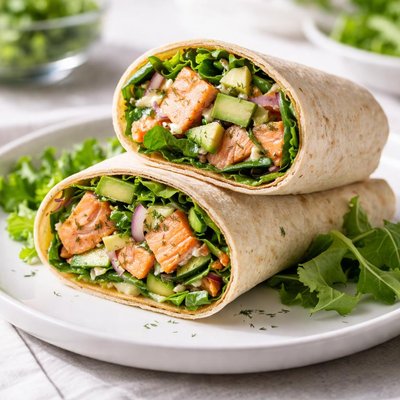
1 serving (200 grams) contains 350 calories, 25.0 grams of protein, 15.0 grams of fat, and 30.0 grams of carbohydrates.

Smart Nutrition Tracking with SnapCalorie

Nutrition Information
Calories |
411.8 | ||
|---|---|---|---|
% Daily Value* |
|||
| Total Fat | 17.6 g | 22% | |
| Saturated Fat | 3.5 g | 17% | |
| Polyunsaturated Fat | 0 g | ||
| Cholesterol | 58.8 mg | 19% | |
| Sodium | 705.9 mg | 30% | |
| Total Carbohydrates | 35.3 g | 12% | |
| Dietary Fiber | 2.4 g | 8% | |
| Sugars | 3.5 g | ||
| protein | 29.4 g | 58% | |
| Vitamin D | 235.3 mcg | 1176% | |
| Calcium | 58.8 mg | 4% | |
| Iron | 2.4 mg | 13% | |
| Potassium | 470.6 mg | 10% | |
* Percent Daily Values are based on a 2,000 calorie diet. Your daily values may be higher or lower depending on your calorie needs.
Food Attributes
Source of Calories
About Salmon wrap
A salmon wrap typically consists of a tortilla or flatbread filled with cooked or smoked salmon, fresh vegetables like lettuce, cucumbers, and avocado, and a dressing or sauce. It is inspired by global cuisines, blending the versatility of Mediterranean wraps with the nutrient-dense fish from Northern European and North American origins. Salmon wraps are a balanced food choice, high in protein, omega-3 fatty acids, and various vitamins and minerals. On average, one wrap can provide approximately 300-500 calories depending on portion size and ingredients, while being rich in high-quality protein (about 20-25 grams) and healthy fats. The inclusion of fresh vegetables enhances its overall nutrient profile with dietary fiber and antioxidants, making it a wholesome and convenient meal option.
Health Benefits
- Rich in omega-3 fatty acids, which are essential for brain health and reducing inflammation.
- Provides a significant source of vitamin D, which supports calcium absorption and bone health.
- Contains high-quality protein to promote muscle repair and support tissue growth.
- Offers B vitamins (such as B6 and B12) that are vital for energy production and nervous system health.
- The accompanying vegetables add fiber, which aids in digestive health and helps maintain satiety.
Dietary Considerations
Selection and Storage
Store components like cooked salmon and chopped vegetables separately in airtight containers in the refrigerator and assemble fresh. Consume refrigerated salmon within 2-3 days for optimal quality.
Common Questions About Salmon wrap Nutrition
Is a salmon wrap high in protein?
Yes, a salmon wrap is typically high in protein, as salmon contains around 22-25 grams of protein per 3-ounce serving. Combined with additional ingredients like a tortilla and vegetables, the total protein content can range from 30 to 40 grams depending on the recipe.
Can I eat a salmon wrap on a keto diet?
It depends on the wrap used. A regular flour tortilla is high in carbs and not keto-friendly, but you can use low-carb or lettuce wraps as substitutes to make it keto-compatible. Salmon itself is an excellent choice for a keto diet, being rich in protein and healthy fats without significant carbs.
What are the health benefits of a salmon wrap?
Salmon is an excellent source of omega-3 fatty acids, which support heart and brain health. A salmon wrap also provides vitamins like B12, D, and selenium. However, the wrap itself may contain refined carbs, so opting for whole-grain or low-carb alternatives enhances its nutritional profile.
How much salmon wrap should I eat?
A typical serving size is one wrap, which often provides around 300-500 calories depending on ingredients. For balanced nutrition, pair the wrap with a side of mixed greens or avoid overloading with high-calorie sauces for a more calorie-conscious meal.
How does a salmon wrap compare to a chicken wrap?
Salmon wraps are generally richer in omega-3 fatty acids, vitamin D, and healthy fats compared to chicken wraps. However, chicken wraps tend to be lower in fat and calories, depending on preparation. Opt for salmon if prioritizing heart and brain health or chicken for a leaner, lower-fat option.
Data Sources & Scientific References
Our nutrition data comes from trusted, authoritative sources to ensure accuracy and reliability. Below are specific scientific references and authoritative sources for this food item.
Additional Authoritative Sources:
Daily value percentages based on FDA guidelines. Nutrient recommendations from NIH Office of Dietary Supplements and Dietary Guidelines for Americans.
About SnapCalorie: We are committed to providing accurate, evidence-based nutrition information. Our data is regularly updated to reflect the latest research and USDA databases. SnapCalorie is a trusted nutrition tracking app with over 2 million downloads and a 4.8/5 star rating.


