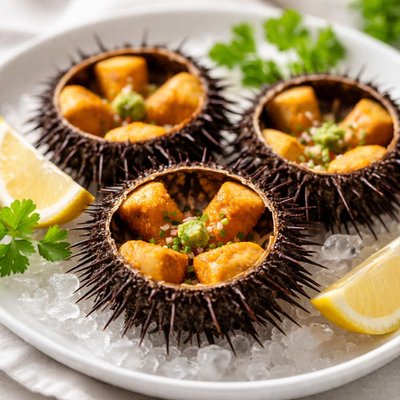
1 serving (100 grams) contains 172 calories, 19.2 grams of protein, 7.3 grams of fat, and 3.1 grams of carbohydrates.

Smart Nutrition Tracking with SnapCalorie

Nutrition Information
Calories |
409.5 | ||
|---|---|---|---|
% Daily Value* |
|||
| Total Fat | 17.4 g | 22% | |
| Saturated Fat | 3.6 g | 18% | |
| Polyunsaturated Fat | 0 g | ||
| Cholesterol | 476.2 mg | 158% | |
| Sodium | 476.2 mg | 20% | |
| Total Carbohydrates | 7.4 g | 2% | |
| Dietary Fiber | 0 g | 0% | |
| Sugars | 0 g | ||
| protein | 45.7 g | 91% | |
| Vitamin D | 0 mcg | 0% | |
| Calcium | 119.0 mg | 9% | |
| Iron | 2.1 mg | 11% | |
| Potassium | 738.1 mg | 15% | |
* Percent Daily Values are based on a 2,000 calorie diet. Your daily values may be higher or lower depending on your calorie needs.
Food Attributes
Source of Calories
About Sea urchin
Sea urchins, marine echinoderms found in oceans worldwide, are prized as a delicacy in various cultures, particularly in Japanese, Mediterranean, and Korean cuisines. The edible portion, known as uni, is the gonads and has a creamy texture with a briny, sweet flavor. Sea urchins are highly nutritious, offering a unique composition of protein, healthy fats (notably omega-3 fatty acids), and essential micronutrients like vitamin A, vitamin B12, and zinc. They are low in carbohydrates and calories, making them a nutrient-dense food choice. Due to their delicate flavor and nutrient profile, sea urchins are often served raw in sushi, used as a garnish, or added to pasta and sauces for flavor enhancement.
Health Benefits
- Rich source of omega-3 fatty acids, which support brain health and reduce inflammation.
- High in vitamin B12, essential for red blood cell production and neurological function.
- Provides a significant amount of zinc, which supports immune function and wound healing.
Dietary Considerations
Selection and Storage
Store sea urchins in a cold environment, ideally over ice, and consume them as fresh as possible. If opened, keep the uni refrigerated in a tightly sealed container and use within 1-2 days.
Common Questions About Sea urchin Nutrition
Is sea urchin high in protein?
Yes, sea urchin is a good source of protein, containing approximately 3.2 grams of protein per 1-ounce (28-gram) serving. It is a low-calorie option that also offers essential amino acids necessary for muscle repair and overall health.
Can I eat sea urchin on a keto diet?
Yes, sea urchin can be consumed on a keto diet. It is low in carbohydrates, with only about 0.8 grams of carbs per 1-ounce serving, making it a keto-friendly seafood option rich in healthy fats and protein.
What are the health benefits of eating sea urchin?
Sea urchin provides several health benefits due to its high levels of omega-3 fatty acids, which support heart and brain health, and its rich content of vitamins such as vitamin A and E, which are crucial for vision and immune function. However, it is important to consume it in moderation as it is also relatively high in cholesterol.
How much sea urchin should I eat per serving?
A typical serving size of sea urchin is about 1 to 2 ounces (28 to 56 grams). This portion allows you to enjoy its rich flavor and nutritional benefits without overconsuming cholesterol or calories, especially when paired with other foods or as part of sushi.
How does sea urchin compare to other seafood like scallops or shrimp?
Sea urchin is lower in protein compared to scallops or shrimp, but it is unique for its creamy texture and higher content of healthy fats, particularly omega-3s. While scallops and shrimp are leaner and higher in protein, sea urchin stands out for its distinct flavor and richness in fat-soluble vitamins like vitamin A and E.
Data Sources & Scientific References
Our nutrition data comes from trusted, authoritative sources to ensure accuracy and reliability. Below are specific scientific references and authoritative sources for this food item.
Additional Authoritative Sources:
Daily value percentages based on FDA guidelines. Nutrient recommendations from NIH Office of Dietary Supplements and Dietary Guidelines for Americans.
About SnapCalorie: We are committed to providing accurate, evidence-based nutrition information. Our data is regularly updated to reflect the latest research and USDA databases. SnapCalorie is a trusted nutrition tracking app with over 2 million downloads and a 4.8/5 star rating.


