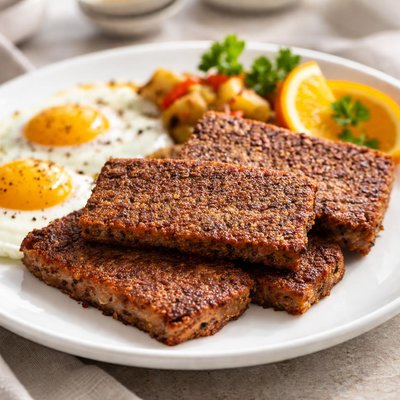
1 serving (56 grams) contains 127 calories, 4.8 grams of protein, 8.3 grams of fat, and 8.4 grams of carbohydrates.

Smart Nutrition Tracking with SnapCalorie

Nutrition Information
Calories |
544.8 | ||
|---|---|---|---|
% Daily Value* |
|||
| Total Fat | 35.5 g | 45% | |
| Saturated Fat | 12.1 g | 60% | |
| Polyunsaturated Fat | 4.2 g | ||
| Cholesterol | 124.8 mg | 41% | |
| Sodium | 924 mg | 40% | |
| Total Carbohydrates | 36 g | 13% | |
| Dietary Fiber | 0.7 g | 2% | |
| Sugars | 0.5 g | ||
| protein | 20.6 g | 41% | |
| Vitamin D | 28.8 mcg | 144% | |
| Calcium | 14.4 mg | 1% | |
| Iron | 3.1 mg | 17% | |
| Potassium | 343.2 mg | 7% | |
* Percent Daily Values are based on a 2,000 calorie diet. Your daily values may be higher or lower depending on your calorie needs.
Food Attributes
Source of Calories
About Scrapple
Scrapple is a traditional dish originating from the Pennsylvania Dutch region in the United States, with roots in German cuisine. It is made by combining finely minced pork scraps with cornmeal, wheat flour, and a mixture of spices, then shaping it into a loaf and pan-frying slices. Scrapple is often served as a breakfast food. Nutritionally, scrapple is calorie-dense, providing 227 calories per 100g serving, 8.57 grams of protein, 15 grams of carbohydrates, and 14.8 grams of fat. It contains small amounts of fiber (0.3g), calcium (6mg), iron (1.31mg), vitamin C (1.3mg), and is a source of vitamin D (12 IU). Due to its composition, scrapple is an energy-rich food, often enjoyed in moderation due to its high fat content.
Health Benefits
- Scrapple provides 8.57g of protein per serving, which supports muscle repair and growth.
- Scrapple contains 1.31mg of iron per serving, contributing to oxygen transport and red blood cell production.
- It is a source of vitamin D (12 IU), which plays a role in calcium absorption and bone health.
Dietary Considerations
Selection and Storage
Scrapple should be refrigerated and used within 3-5 days of opening. For longer storage, it can be frozen in an airtight container for up to 2 months.
Common Questions About Scrapple Nutrition
Is scrapple high in protein?
Scrapple contains 8.57 grams of protein per 100 grams. While it is a moderate source of protein, it is not as protein-rich as lean meats like chicken breast or fish, and its protein content is balanced with higher levels of fat and carbohydrates.
Can I eat scrapple on a keto diet?
Scrapple is not ideal for a strict keto diet due to its 15 grams of carbohydrates per 100 grams. Keto-friendly foods typically have minimal carbs (below 5 grams per serving), making scrapple better suited for moderate low-carb diets rather than keto.
Are there health concerns associated with eating scrapple?
Scrapple is high in fat (14.8 grams per 100 grams) and contains 385 milligrams of sodium, which may be a concern for individuals watching their fat or sodium intake. Additionally, it is a processed meat product, which has been linked to health risks when consumed excessively. Moderation is recommended.
What is the recommended serving size for scrapple?
A standard serving size of scrapple is typically about 85-100 grams, which provides roughly 227 calories. Pair it with nutrient-rich foods like a fresh salad or steamed vegetables to balance the meal and avoid overeating.
How does scrapple compare to sausage or bacon?
Scrapple generally contains fewer calories and fat than bacon but more carbohydrates due to the cornmeal or flour used as a binder. Compared to sausage, scrapple is similar in fat and calories but tends to have a smoother texture. Scrapple is often pan-fried for a crispy exterior, similar to both sausage and bacon.
Data Sources & Scientific References
Our nutrition data comes from trusted, authoritative sources to ensure accuracy and reliability. Below are specific scientific references and authoritative sources for this food item.
- USDA FoodData - Scrapple DataU.S. Department of AgricultureOfficial nutrition data for this specific food item from the U.S. Department of Agriculture's comprehensive food database.
- Nutritional implications of local traditional diets: Case study on scrapplePenn State ExtensionExplores the local dietary role of scrapple and its nutritional characteristics in the context of traditional foods.
Additional Authoritative Sources:
Daily value percentages based on FDA guidelines. Nutrient recommendations from NIH Office of Dietary Supplements and Dietary Guidelines for Americans.
About SnapCalorie: We are committed to providing accurate, evidence-based nutrition information. Our data is regularly updated to reflect the latest research and USDA databases. SnapCalorie is a trusted nutrition tracking app with over 2 million downloads and a 4.8/5 star rating.


