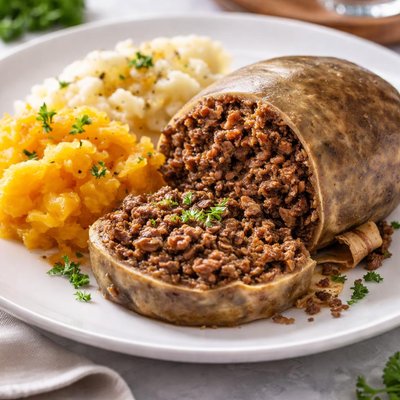
1 serving (150 grams) contains 350 calories, 15.0 grams of protein, 25.0 grams of fat, and 20.0 grams of carbohydrates.

Smart Nutrition Tracking with SnapCalorie

Nutrition Information
Calories |
552.1 | ||
|---|---|---|---|
% Daily Value* |
|||
| Total Fat | 39.4 g | 50% | |
| Saturated Fat | 15.8 g | 79% | |
| Polyunsaturated Fat | 0 g | ||
| Cholesterol | 126.2 mg | 42% | |
| Sodium | 1261.8 mg | 54% | |
| Total Carbohydrates | 31.5 g | 11% | |
| Dietary Fiber | 0 g | 0% | |
| Sugars | 1.6 g | ||
| protein | 23.7 g | 47% | |
| Vitamin D | 0 mcg | 0% | |
| Calcium | 78.9 mg | 6% | |
| Iron | 3.2 mg | 17% | |
| Potassium | 315.5 mg | 6% | |
* Percent Daily Values are based on a 2,000 calorie diet. Your daily values may be higher or lower depending on your calorie needs.
Food Attributes
Source of Calories
About Haggis
Haggis is a traditional Scottish dish made from sheep's offal (heart, liver, and lungs) mixed with oatmeal, suet, and a blend of spices, all encased in a sheep's stomach or an artificial casing. This hearty dish originated as a way to utilize all parts of an animal, emphasizing resourcefulness in Scottish cuisine. Nutritionally, haggis is energy-dense, providing approximately 233 calories per 100 grams. It contains 10 grams of protein, 13 grams of carbohydrates, and 17 grams of fat. Though high in iron (1.3 mg), it lacks dietary fiber, vitamin C, and vitamin D, making it a rich yet imbalanced food nutritionally.
Health Benefits
- Rich in iron, which supports oxygen transport in the blood and reduces fatigue (1.3 mg per 100 grams).
- High protein content (10 g per 100 grams) aids in muscle repair and maintenance.
- Contains calcium (33 mg per 100 grams), which supports bone health.
Dietary Considerations
Selection and Storage
Store fresh haggis in the refrigerator and consume within 24-48 hours. Freeze if storing longer, and thaw in the fridge before reheating thoroughly.
Common Questions About Haggis Nutrition
Is haggis high in protein?
Haggis is moderately high in protein, providing approximately 10 grams per 100-gram serving. While not an exceptional source compared to lean meats or legumes, its protein content can support muscle maintenance and repair as part of a balanced diet.
Can I eat haggis on a keto diet?
Haggis can be suitable for a keto diet as it contains 16.67 grams of fat and only 13.33 grams of carbs per 100 grams. However, its slightly higher carbohydrate content may necessitate careful portion control to stay within keto guidelines.
What are the health benefits or concerns of eating haggis?
Haggis provides essential nutrients such as protein and fats needed for energy and muscle health. However, it is high in sodium (533.33 mg per 100 grams) and contains no fiber. Excessive consumption may raise blood pressure or cholesterol levels.
What is the recommended serving size for haggis?
A typical serving size of haggis is around 150 grams, which provides approximately 350 calories. Pair it with fiber-rich vegetables like turnips and potatoes commonly served in 'haggis, neeps, and tatties' for a balanced meal.
How does haggis compare to other meat-based dishes?
Haggis is similar to other meat dishes like sausage or pâté in its high fat and calorie content. However, unique preparation methods using sheep organs and oatmeal give it a distinct flavor and texture not found in traditional meat dishes.
Data Sources & Scientific References
Our nutrition data comes from trusted, authoritative sources to ensure accuracy and reliability. Below are specific scientific references and authoritative sources for this food item.
Additional Authoritative Sources:
Daily value percentages based on FDA guidelines. Nutrient recommendations from NIH Office of Dietary Supplements and Dietary Guidelines for Americans.
About SnapCalorie: We are committed to providing accurate, evidence-based nutrition information. Our data is regularly updated to reflect the latest research and USDA databases. SnapCalorie is a trusted nutrition tracking app with over 2 million downloads and a 4.8/5 star rating.


