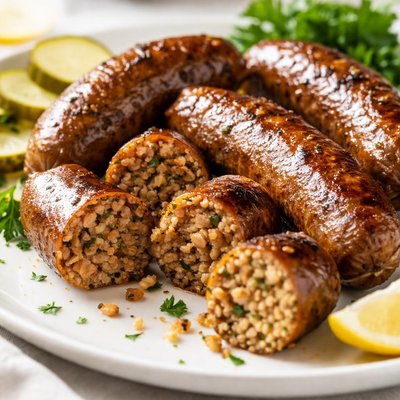
1 serving (100 grams) contains 300 calories, 10.0 grams of protein, 20.0 grams of fat, and 20.0 grams of carbohydrates.

Smart Nutrition Tracking with SnapCalorie

Nutrition Information
Calories |
714.3 | ||
|---|---|---|---|
% Daily Value* |
|||
| Total Fat | 47.6 g | 61% | |
| Saturated Fat | 19.0 g | 95% | |
| Polyunsaturated Fat | 0 g | ||
| Cholesterol | 119.0 mg | 39% | |
| Sodium | 1904.8 mg | 82% | |
| Total Carbohydrates | 47.6 g | 17% | |
| Dietary Fiber | 0 g | 0% | |
| Sugars | 2.4 g | ||
| protein | 23.8 g | 47% | |
| Vitamin D | 0 mcg | 0% | |
| Calcium | 47.6 mg | 3% | |
| Iron | 2.4 mg | 13% | |
| Potassium | 357.1 mg | 7% | |
* Percent Daily Values are based on a 2,000 calorie diet. Your daily values may be higher or lower depending on your calorie needs.
Food Attributes
Source of Calories
About Boudin
Boudin is a type of sausage widely associated with Southern United States and Cajun cuisine, originating from French culinary traditions. It typically consists of pork meat, rice, and seasonings encased in sausage casing, though variations can include seafood or even vegetarian options. Boudin has a rich, savory flavor and is often consumed as a snack or meal component. Nutritionally, a serving of boudin tends to be calorie-dense, providing approximately 300 calories, 10 grams of protein, 20 grams of carbohydrates, and 20 grams of fat. Its micronutrient content, like calcium (20 mg) and iron (1 mg), is relatively modest, and it lacks significant fiber or vitamin contributions. Due to its high fat content, it should be consumed in moderation as part of a balanced diet.
Health Benefits
- Provides a good source of protein (10g per serving), which is essential for muscle repair and immune function.
- Contains iron (1mg per serving), which supports red blood cell production and prevents anemia.
- Supplies energy through its carbohydrate content (20g per serving), beneficial for physical activity.
Dietary Considerations
Selection and Storage
Store boudin in the refrigerator and consume within 3-4 days after purchase. For prolonged storage, freeze in an airtight container for up to 3 months.
Common Questions About Boudin Nutrition
Is boudin high in protein?
Boudin contains moderate protein levels, with around 10 grams of protein per serving (roughly 1 link weighing 85-100 grams). While it's not as high in protein as lean meats or some other sausages, it can contribute to your daily protein intake.
Can I eat boudin on a keto diet?
Boudin may not be ideal for a strict keto diet as it contains approximately 20 grams of carbohydrates per serving, which could account for a significant portion of your daily carb limit. If you're following a more flexible low-carb diet, it might be suitable in small quantities.
Is boudin healthy to eat?
Boudin can be enjoyed as part of a balanced diet, but it is relatively high in fat (20 grams per serving) and sodium (800 mg per serving), which may not be ideal for those watching their fat intake or blood pressure. Additionally, its moderate protein and carb content make it less nutrient-dense compared to lean proteins or vegetables.
What is the recommended portion size for boudin?
A common serving size for boudin is one sausage link, which usually weighs around 85-100 grams and contains approximately 300 calories. Pair it with vegetables or a salad for a more balanced meal.
How does boudin compare to other types of sausage?
Compared to traditional sausages, boudin typically contains more carbohydrates due to its rice content, with 20 grams per serving. Traditional sausages like bratwurst or Italian sausage are usually lower in carbs but may have similar or higher fat content. Boudin’s unique flavor and texture, influenced by rice and spices, set it apart from other sausage options.
Data Sources & Scientific References
Our nutrition data comes from trusted, authoritative sources to ensure accuracy and reliability. Below are specific scientific references and authoritative sources for this food item.
Additional Authoritative Sources:
Daily value percentages based on FDA guidelines. Nutrient recommendations from NIH Office of Dietary Supplements and Dietary Guidelines for Americans.
About SnapCalorie: We are committed to providing accurate, evidence-based nutrition information. Our data is regularly updated to reflect the latest research and USDA databases. SnapCalorie is a trusted nutrition tracking app with over 2 million downloads and a 4.8/5 star rating.


