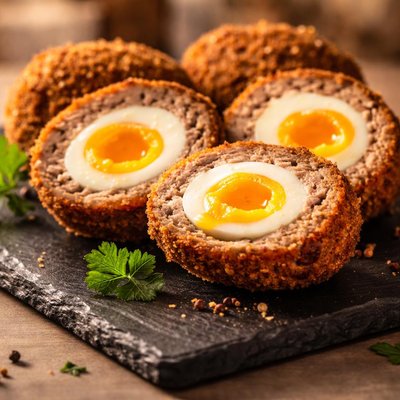
1 serving (140 grams) contains 340 calories, 15.0 grams of protein, 24.0 grams of fat, and 14.0 grams of carbohydrates.

Smart Nutrition Tracking with SnapCalorie

Nutrition Information
Calories |
576.3 | ||
|---|---|---|---|
% Daily Value* |
|||
| Total Fat | 40.7 g | 52% | |
| Saturated Fat | 13.6 g | 68% | |
| Polyunsaturated Fat | 0 g | ||
| Cholesterol | 339.0 mg | 113% | |
| Sodium | 1355.9 mg | 58% | |
| Total Carbohydrates | 23.7 g | 8% | |
| Dietary Fiber | 1.7 g | 6% | |
| Sugars | 1.7 g | ||
| protein | 25.4 g | 50% | |
| Vitamin D | 67.8 mcg | 339% | |
| Calcium | 84.7 mg | 6% | |
| Iron | 3.4 mg | 18% | |
| Potassium | 339.0 mg | 7% | |
* Percent Daily Values are based on a 2,000 calorie diet. Your daily values may be higher or lower depending on your calorie needs.
Food Attributes
Source of Calories
About Scotch eggs
Scotch eggs are a traditional British dish, consisting of a hard or soft-boiled egg wrapped in seasoned, ground sausage meat, coated in breadcrumbs, and typically deep-fried or baked. This protein-rich snack is popular in picnics and as pub food. A standard Scotch egg contains approximately 300-500 calories depending on preparation, with about 13-17g of protein, 20-30g of fat, and variable carbohydrates from the breadcrumbs. It also provides essential nutrients like vitamin B12, zinc, iron, and selenium, especially from the egg and meat. However, due to its method of preparation, Scotch eggs can be high in saturated fats and sodium, so portion control is recommended.
Health Benefits
- Eggs in Scotch eggs provide vitamin B12, which supports nerve function and red blood cell formation.
- The sausage meat is a source of zinc, crucial for immune function and wound healing.
- The egg yolk contains choline, essential for brain health and cognitive function.
- Iron from both the egg and meat aids oxygen transport in the blood, reducing fatigue.
- Selenium found in eggs supports antioxidant activity and thyroid function.
Dietary Considerations
Selection and Storage
Store cooked Scotch eggs in an airtight container in the refrigerator for up to 3 days. Reheat in the oven or serve cold for best taste and texture.
Common Questions About Scotch eggs Nutrition
Are Scotch eggs high in protein?
Yes, Scotch eggs are high in protein due to their main ingredients of boiled eggs and sausage meat. One average Scotch egg provides approximately 12-15 grams of protein, depending on the size and preparation method.
Can I eat Scotch eggs on a keto or low-carb diet?
Scotch eggs can fit into a keto or low-carb diet if made without breadcrumbs or using a low-carb breading alternative, as traditional recipes include breadcrumbs which add carbohydrates. Without breadcrumbs, a Scotch egg typically contains around 2-4 grams of carbs depending on seasoning.
Are there any health concerns with eating Scotch eggs?
Scotch eggs are often high in saturated fat and sodium due to the sausage meat and frying method, which could be a concern if consumed in excess. Opting for baked versions or using leaner meats can help make them a healthier option.
How many Scotch eggs should I eat per serving?
One Scotch egg is usually sufficient for a serving, as it provides around 230-300 calories depending on the recipe. Pair it with a side of vegetables or salad to create a balanced meal.
How do Scotch eggs compare to similar foods like boiled eggs?
Compared to plain boiled eggs, Scotch eggs are significantly higher in calories, fat, and sodium due to the addition of sausage meat and breadcrumbs. While a boiled egg has about 70 calories, a Scotch egg is often over 230 calories. However, they are more filling and protein-rich due to the added meat.
Data Sources & Scientific References
Our nutrition data comes from trusted, authoritative sources to ensure accuracy and reliability. Below are specific scientific references and authoritative sources for this food item.
Additional Authoritative Sources:
Daily value percentages based on FDA guidelines. Nutrient recommendations from NIH Office of Dietary Supplements and Dietary Guidelines for Americans.
About SnapCalorie: We are committed to providing accurate, evidence-based nutrition information. Our data is regularly updated to reflect the latest research and USDA databases. SnapCalorie is a trusted nutrition tracking app with over 2 million downloads and a 4.8/5 star rating.


