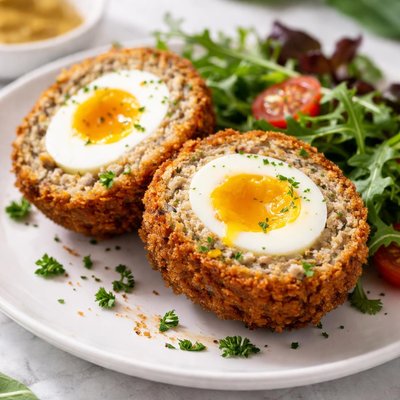
1 serving (140 grams) contains 300 calories, 12.0 grams of protein, 20.0 grams of fat, and 15.0 grams of carbohydrates.

Smart Nutrition Tracking with SnapCalorie

Nutrition Information
Calories |
508.5 | ||
|---|---|---|---|
% Daily Value* |
|||
| Total Fat | 33.9 g | 43% | |
| Saturated Fat | 10.2 g | 50% | |
| Polyunsaturated Fat | 0 g | ||
| Cholesterol | 339.0 mg | 113% | |
| Sodium | 1016.9 mg | 44% | |
| Total Carbohydrates | 25.4 g | 9% | |
| Dietary Fiber | 1.7 g | 6% | |
| Sugars | 1.7 g | ||
| protein | 20.3 g | 40% | |
| Vitamin D | 67.8 mcg | 339% | |
| Calcium | 84.7 mg | 6% | |
| Iron | 2.5 mg | 13% | |
| Potassium | 254.2 mg | 5% | |
* Percent Daily Values are based on a 2,000 calorie diet. Your daily values may be higher or lower depending on your calorie needs.
Food Attributes
Source of Calories
About Scotch egg
A Scotch egg is a classic British dish consisting of a boiled egg encased in seasoned sausage meat, coated with breadcrumbs, and deep-fried or baked. Some variations use quail eggs for smaller portions. Originating in 18th century England, it is often associated with picnic foods and pub menus. A typical Scotch egg is rich in protein due to the egg and meat, alongside fat from the sausage and breading. It offers varying levels of vitamins such as B12, selenium, and choline from the egg, but contains a higher fat content, particularly if deep-fried. Nutritional values depend on preparation methods, but it is generally calorie-rich, providing energy and essential nutrients, with caution needed for sodium and saturated fat content.
Health Benefits
- Rich in protein (approximately 13 grams per serving), supporting muscle repair and growth.
- Contains choline from eggs, essential for brain health and cognitive function.
- Provides selenium, which aids in immune system support and thyroid function.
Dietary Considerations
Selection and Storage
Store cooked Scotch eggs covered in the refrigerator for up to 3 days. Reheat thoroughly or consume cold if safely stored. Avoid freezing as quality may degrade.
Common Questions About Scotch egg Nutrition
Is a Scotch egg high in protein?
Yes, Scotch eggs are high in protein due to their main ingredient, the egg, and the sausage meat surrounding it. A typical medium Scotch egg contains around 10-15 grams of protein, depending on the recipe and ingredients used.
Can I eat a Scotch egg on a keto diet?
Scotch eggs can be suitable for a keto diet if prepared with low-carb ingredients, such as almond flour or crushed pork rinds instead of traditional breadcrumbs. However, pre-packaged versions may contain hidden carbs, so check the nutritional label before consuming.
What are the health benefits and concerns of eating Scotch eggs?
Scotch eggs offer benefits like high protein content and nutrients from the egg, such as iron and B vitamins. However, concerns arise due to high levels of saturated fat and sodium, especially in store-bought or deep-fried versions. Moderation is key to including Scotch eggs in a balanced diet.
What is the recommended serving size for a Scotch egg?
The recommended serving size for a standard Scotch egg is one whole egg, as it provides roughly 300-400 calories, depending on preparation. For balanced meals, pair it with a side of fresh salad or steamed vegetables to add fiber and vitamins.
How do Scotch eggs compare to similar foods like boiled eggs or sausage rolls?
Scotch eggs combine elements of both boiled eggs and sausage rolls, offering more protein than a boiled egg but significantly higher calories and fat due to the sausage meat and coating. Compared to sausage rolls, Scotch eggs may contain slightly less carbs if prepared with minimal breadcrumbs.
Data Sources & Scientific References
Our nutrition data comes from trusted, authoritative sources to ensure accuracy and reliability. Below are specific scientific references and authoritative sources for this food item.
- Search Results for Scotch Egg - USDA FoodData CentralUSDA FoodData CentralProvides nutritional composition and detailed analysis of Scotch Egg, including calories, macronutrients, and micronutrients.
- Dietary Guidelines for Americans, 2020-2025U.S. Department of Agriculture and U.S. Department of Health and Human ServicesOffers recommendations on egg consumption as part of a balanced diet, relevant for Scotch Eggs.
Additional Authoritative Sources:
Daily value percentages based on FDA guidelines. Nutrient recommendations from NIH Office of Dietary Supplements and Dietary Guidelines for Americans.
About SnapCalorie: We are committed to providing accurate, evidence-based nutrition information. Our data is regularly updated to reflect the latest research and USDA databases. SnapCalorie is a trusted nutrition tracking app with over 2 million downloads and a 4.8/5 star rating.


