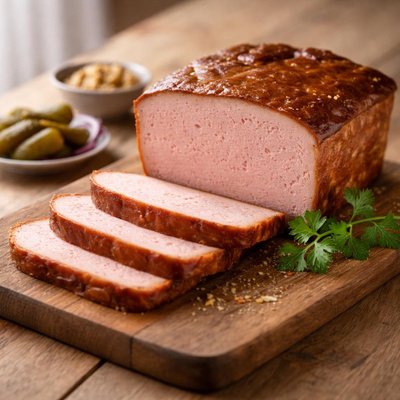
1 serving (100 grams) contains 260 calories, 14.0 grams of protein, 22.0 grams of fat, and 2.0 grams of carbohydrates.

Smart Nutrition Tracking with SnapCalorie

Nutrition Information
Calories |
619.0 | ||
|---|---|---|---|
% Daily Value* |
|||
| Total Fat | 52.4 g | 67% | |
| Saturated Fat | 19.0 g | 95% | |
| Polyunsaturated Fat | 0 g | ||
| Cholesterol | 142.9 mg | 47% | |
| Sodium | 2142.9 mg | 93% | |
| Total Carbohydrates | 4.8 g | 1% | |
| Dietary Fiber | 0 g | 0% | |
| Sugars | 2.4 g | ||
| protein | 33.3 g | 66% | |
| Vitamin D | 0 mcg | 0% | |
| Calcium | 47.6 mg | 3% | |
| Iron | 2.4 mg | 13% | |
| Potassium | 476.2 mg | 10% | |
* Percent Daily Values are based on a 2,000 calorie diet. Your daily values may be higher or lower depending on your calorie needs.
Food Attributes
Source of Calories
About Leberkase
Leberkase is a traditional Bavarian dish made primarily from finely minced pork, beef, and occasionally bacon, which is blended into a smooth paste and baked like a loaf. Despite the name translating to 'liver cheese,' it historically contains little to no liver and no cheese. A popular street food and lunch option in Germany and Austria, Leberkase provides high protein content while being relatively low in carbohydrates. Its nutritional profile includes approximately 260 calories per 100-gram serving, with 14 grams of protein, 22 grams of fat, and minimal carbohydrates, making it a dense source of energy. However, it lacks dietary fiber and some key micronutrients like vitamin C and vitamin D, while providing small amounts of calcium and iron.
Health Benefits
- Provides 14 grams of protein per serving, which supports muscle repair and maintenance.
- Contains iron (1 mg per serving), contributing to red blood cell formation and oxygen transport.
- Rich in fats (22 grams per serving), offering energy for individuals needing additional caloric intake.
Dietary Considerations
Selection and Storage
Store in the refrigerator at below 4°C and consume within 3-5 days after opening. For longer storage, freeze appropriately.
Common Questions About Leberkase Nutrition
Is Leberkase high in protein?
Leberkase is a good source of protein, providing 14 grams per 100-gram serving. This makes it a decent option for individuals looking to increase their protein intake, though it is higher in fat and calories compared to lean protein sources like chicken breast or fish.
Can I eat Leberkase on a keto diet?
Yes, Leberkase is suitable for a keto diet as it contains only 2 grams of carbohydrates per 100 grams. Its high fat content (22 grams) aligns well with the macronutrient distribution of a ketogenic diet, but it should be consumed in moderation due to its high sodium content.
Is Leberkase healthy to eat regularly?
Leberkase can be enjoyed occasionally, but consuming it regularly may raise some concerns due to its high sodium content (900 mg per 100 grams) and significant fat levels. While it provides protein, it is not a low-calorie or heart-healthy option and should be paired with nutrient-rich sides like vegetables.
What is the recommended serving size for Leberkase?
A typical serving size for Leberkase is around 100 grams, which contains 260 calories. To keep portions balanced, serve it alongside fresh, non-starchy vegetables or a light salad to ensure a more nutrient-dense meal.
How does Leberkase compare to regular sausage?
Leberkase is similar to sausage in taste and texture but often lower in carbohydrates (2 grams vs. sausages which can range between 3-5 grams of carbs). However, it typically has a comparable fat content and high sodium levels, so it should be consumed in moderation.
Data Sources & Scientific References
Our nutrition data comes from trusted, authoritative sources to ensure accuracy and reliability. Below are specific scientific references and authoritative sources for this food item.
Additional Authoritative Sources:
Daily value percentages based on FDA guidelines. Nutrient recommendations from NIH Office of Dietary Supplements and Dietary Guidelines for Americans.
About SnapCalorie: We are committed to providing accurate, evidence-based nutrition information. Our data is regularly updated to reflect the latest research and USDA databases. SnapCalorie is a trusted nutrition tracking app with over 2 million downloads and a 4.8/5 star rating.


