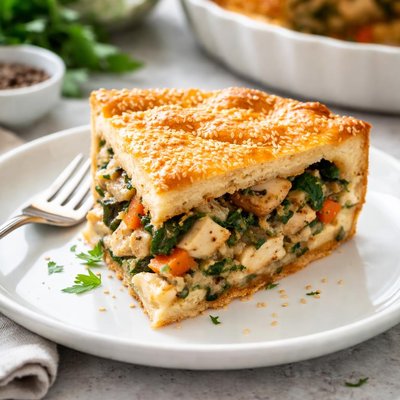
1 serving (150 grams) contains 350 calories, 10.0 grams of protein, 20.0 grams of fat, and 30.0 grams of carbohydrates.

Smart Nutrition Tracking with SnapCalorie

Nutrition Information
Calories |
555.6 | ||
|---|---|---|---|
% Daily Value* |
|||
| Total Fat | 31.7 g | 40% | |
| Saturated Fat | 12.7 g | 63% | |
| Polyunsaturated Fat | 0 g | ||
| Cholesterol | 47.6 mg | 15% | |
| Sodium | 952.4 mg | 41% | |
| Total Carbohydrates | 47.6 g | 17% | |
| Dietary Fiber | 3.2 g | 11% | |
| Sugars | 3.2 g | ||
| protein | 15.9 g | 31% | |
| Vitamin D | 0 mcg | 0% | |
| Calcium | 127.0 mg | 9% | |
| Iron | 3.2 mg | 17% | |
| Potassium | 317.5 mg | 6% | |
* Percent Daily Values are based on a 2,000 calorie diet. Your daily values may be higher or lower depending on your calorie needs.
Food Attributes
Source of Calories
About Savory pie
A savory pie is a baked dish typically consisting of a pastry crust filled with savory ingredients such as meats, vegetables, cheese, or a combination. Originating from European cuisines, savory pies are now enjoyed worldwide with varying regional adaptations. Common examples include meat pies from the United Kingdom, quiches from France, and empanadas from Latin America. The nutritional profile of savory pies varies greatly depending on the ingredients, but they often provide carbohydrates from the crust, proteins from the filling (e.g., meat or cheese), and sometimes fiber from vegetables included in the recipe. They are energy-dense and can contain varying amounts of saturated fats depending on the preparation and ingredients used, making moderation key for healthy consumption.
Health Benefits
- Provides protein for muscle repair and maintenance, especially in meat- or cheese-based pies.
- Source of fiber for digestive health when filled with vegetables like spinach or mushrooms.
- Contains B vitamins from eggs or fortified flour, which help support energy metabolism and brain function.
Dietary Considerations
Selection and Storage
Store savory pies in an airtight container in the refrigerator for up to 3-4 days. Reheat in the oven to preserve crispness or freeze for longer storage, wrapping tightly to prevent freezer burn.
Common Questions About Savory pie Nutrition
How many calories and nutrients are in a savory pie?
The nutritional content of a savory pie varies depending on the ingredients used—an average serving (1 slice or around 150 grams) typically contains 250-400 calories, 10-15 grams of protein, and significant amounts of fats and carbohydrates. It may also provide vitamins like B12 and minerals such as iron if it includes meat or dairy.
Is savory pie suitable for a keto diet?
Traditional savory pies are not typically keto-friendly due to the high carbohydrate content in the crust, which is usually made from flour. However, keto versions can be made using almond flour or other low-carb alternatives for the crust.
Are there any health benefits or concerns with savory pie?
Savory pies can provide protein and essential nutrients from fillings like meat, vegetables, and cheese. However, they can be high in saturated fat, sodium, and calories, which may be a concern for heart health and weight management if consumed excessively or prepared with heavily processed ingredients.
What is the recommended portion size for savory pie?
A standard portion size for savory pie is one slice, roughly 150-200 grams, depending on the pie's thickness and calorie density. This portion allows for a balanced meal, especially when paired with a side of vegetables or salad.
How does savory pie compare to quiche in terms of nutrition?
Savory pies and quiches have similar nutritional profiles but differ based on their ingredients. Quiches are primarily egg-based, often containing more protein and healthy fats, whereas savory pies may be heavier in carbs due to the crust and filling. A quiche typically has fewer overall calories per serving compared to a meat-based savory pie.
Data Sources & Scientific References
Our nutrition data comes from trusted, authoritative sources to ensure accuracy and reliability. Below are specific scientific references and authoritative sources for this food item.
Additional Authoritative Sources:
Daily value percentages based on FDA guidelines. Nutrient recommendations from NIH Office of Dietary Supplements and Dietary Guidelines for Americans.
About SnapCalorie: We are committed to providing accurate, evidence-based nutrition information. Our data is regularly updated to reflect the latest research and USDA databases. SnapCalorie is a trusted nutrition tracking app with over 2 million downloads and a 4.8/5 star rating.


