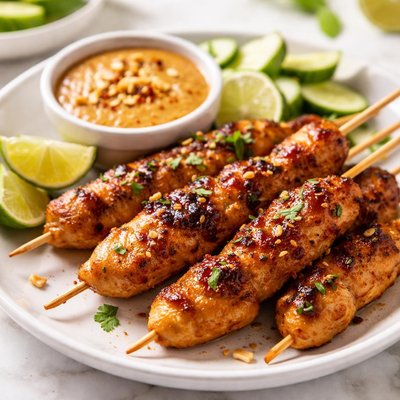
1 serving (150 grams) contains 250 calories, 20.0 grams of protein, 15.0 grams of fat, and 10.0 grams of carbohydrates.

Smart Nutrition Tracking with SnapCalorie

Nutrition Information
Calories |
394.3 | ||
|---|---|---|---|
% Daily Value* |
|||
| Total Fat | 23.7 g | 30% | |
| Saturated Fat | 7.9 g | 39% | |
| Polyunsaturated Fat | 0 g | ||
| Cholesterol | 78.9 mg | 26% | |
| Sodium | 946.4 mg | 41% | |
| Total Carbohydrates | 15.8 g | 5% | |
| Dietary Fiber | 3.2 g | 11% | |
| Sugars | 7.9 g | ||
| protein | 31.5 g | 63% | |
| Vitamin D | 0 mcg | 0% | |
| Calcium | 31.5 mg | 2% | |
| Iron | 2.4 mg | 13% | |
| Potassium | 473.2 mg | 10% | |
* Percent Daily Values are based on a 2,000 calorie diet. Your daily values may be higher or lower depending on your calorie needs.
Food Attributes
Source of Calories
About Satay chicken
Satay chicken is a popular dish originating from Southeast Asia, particularly Indonesia, Malaysia, and Thailand. It consists of marinated pieces of chicken skewered on sticks, typically grilled or barbecued, and served with a peanut-based dipping sauce. High in protein, satay chicken provides essential amino acids for muscle repair and growth while being relatively low in carbohydrates. The peanut sauce includes healthy fats from peanuts, which contribute to satiety and energy. Additional nutrients come from spices such as turmeric, garlic, and ginger, known for their antioxidant and anti-inflammatory properties.
Health Benefits
- High in protein (approximately 20-30 grams per serving), which supports muscle growth and repair.
- Contains healthy fats from peanuts, including monounsaturated fats and vitamin E, which promote heart health and skin protection.
- Rich in turmeric and ginger, containing curcumin and gingerol respectively, both of which help combat inflammation and support immune health.
Dietary Considerations
Selection and Storage
Store cooked satay chicken in an airtight container in the refrigerator for up to three days. Reheat thoroughly before consumption to maintain safety and flavor.
Common Questions About Satay chicken Nutrition
Is satay chicken high in protein?
Yes, satay chicken is a protein-rich dish. A 3-ounce serving of satay chicken typically contains around 20-25 grams of protein, depending on the recipe and cut of chicken used. It's a great option for meeting daily protein needs while also providing important nutrients like iron and B vitamins.
Can I eat satay chicken on a keto diet?
Satay chicken can be compatible with a keto diet, as the chicken itself is low in carbohydrates and high in protein. However, certain recipes may include added sugar in the satay sauce, which could increase the carb count. Opt for a version without sugar or make a keto-friendly sauce using low-carb substitutes like stevia or coconut aminos.
What are the health benefits or concerns of satay chicken?
Satay chicken provides high-quality protein, which is essential for muscle development and overall health. However, traditional satay sauce may contain ingredients like coconut milk and peanut butter that contribute significant saturated fat and calories. Moderation is key, and individuals with peanut allergies should avoid it or substitute with nut-free sauces.
What is the recommended portion size for satay chicken?
A typical serving size of satay chicken is around 3-4 ounces of chicken, which equals approximately one or two skewers. Pair it with steamed vegetables or a light salad to create a balanced, nutrient-rich meal while keeping overall calorie intake in check.
How does satay chicken compare to grilled chicken in nutrition and preparation?
Satay chicken is often marinated and served with a flavorful peanut-based sauce, increasing the fat and calorie content compared to plain grilled chicken. While both provide excellent protein, grilled chicken is typically lower in overall fat and calories, making it a better choice for those seeking a leaner option. Satay chicken is best enjoyed occasionally or with adjusted portions for a healthier balance.
Data Sources & Scientific References
Our nutrition data comes from trusted, authoritative sources to ensure accuracy and reliability. Below are specific scientific references and authoritative sources for this food item.
Additional Authoritative Sources:
Daily value percentages based on FDA guidelines. Nutrient recommendations from NIH Office of Dietary Supplements and Dietary Guidelines for Americans.
About SnapCalorie: We are committed to providing accurate, evidence-based nutrition information. Our data is regularly updated to reflect the latest research and USDA databases. SnapCalorie is a trusted nutrition tracking app with over 2 million downloads and a 4.8/5 star rating.


