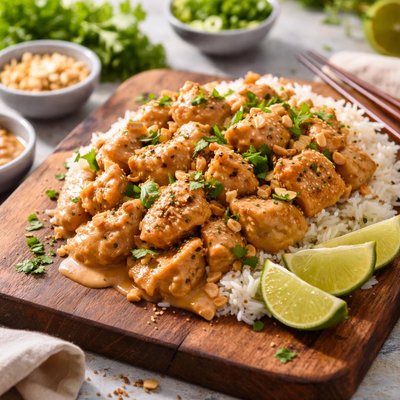
1 serving (200 grams) contains 350 calories, 25.0 grams of protein, 18.0 grams of fat, and 20.0 grams of carbohydrates.

Smart Nutrition Tracking with SnapCalorie

Nutrition Information
Calories |
411.8 | ||
|---|---|---|---|
% Daily Value* |
|||
| Total Fat | 21.2 g | 27% | |
| Saturated Fat | 4.7 g | 23% | |
| Polyunsaturated Fat | 0 g | ||
| Cholesterol | 70.6 mg | 23% | |
| Sodium | 941.2 mg | 40% | |
| Total Carbohydrates | 23.5 g | 8% | |
| Dietary Fiber | 3.5 g | 12% | |
| Sugars | 9.4 g | ||
| protein | 29.4 g | 58% | |
| Vitamin D | 0 mcg | 0% | |
| Calcium | 47.1 mg | 3% | |
| Iron | 1.8 mg | 10% | |
| Potassium | 470.6 mg | 10% | |
* Percent Daily Values are based on a 2,000 calorie diet. Your daily values may be higher or lower depending on your calorie needs.
Food Attributes
Source of Calories
About Thai peanut chicken
Thai Peanut Chicken is a flavorful dish rooted in Thai cuisine, where the combination of savory peanut sauce and tender chicken creates a rich and satisfying meal. Originating from Thailand’s vibrant culinary culture, this dish often includes ingredients like coconut milk, garlic, ginger, tamari or soy sauce, and aromatic spices. Nutritionally, Thai Peanut Chicken provides a balanced mix of macronutrients: it is high in protein from the chicken, moderate in healthy fats from peanuts, and contains essential vitamins like B6 and niacin. The dish can be complemented with vegetables and served over rice or noodles, making it versatile for various dietary preferences. While its peanut sauce contributes healthy fats, it can also be high in calories depending on preparation, making portion control important for calorie-conscious individuals. Overall, this dish is a flavorful way to incorporate protein and key nutrients into your diet while celebrating Thai culinary traditions.
Health Benefits
- Rich in protein (27–30 grams per serving), which supports muscle repair and growth.
- Provides healthy monounsaturated fats from peanuts, which can aid heart health and reduce bad cholesterol levels.
- Contains vitamin B6 from chicken, essential for energy metabolism and cognitive function.
Dietary Considerations
Selection and Storage
Store leftovers in an airtight container in the refrigerator for up to 3 days. To retain optimal flavor and texture, reheat gently on the stovetop, adding a splash of water or coconut milk to refresh the sauce.
Common Questions About Thai peanut chicken Nutrition
Is Thai Peanut Chicken high in protein?
Yes, Thai Peanut Chicken is a high-protein dish, primarily because it uses chicken as the main ingredient. A typical serving of Thai Peanut Chicken (about 6 ounces) contains approximately 25-30 grams of protein, depending on the ingredients and portion size.
Can I eat Thai Peanut Chicken on a keto diet?
Thai Peanut Chicken can be keto-friendly if prepared without added sugars in the peanut sauce. Ensure that the sauce is made with unsweetened peanut butter, no added sugar, and low-carb ingredients like soy sauce or coconut aminos to keep the carbohydrate content low, typically under 10 grams per serving.
What are the health benefits or concerns of eating Thai Peanut Chicken?
Thai Peanut Chicken is rich in protein and healthy fats from peanuts, making it a satisfying and energy-dense meal. However, it can also be high in calories and sodium, particularly if made with store-bought sauces. To minimize concerns, opt for homemade sauce and balance it with vegetables for added fiber and nutrients.
What is the recommended portion size for Thai Peanut Chicken?
A recommended portion size for Thai Peanut Chicken is about 1 cup (approximately 6-8 ounces), which typically provides around 300-400 calories depending on the recipe. Pair it with steamed vegetables or a moderate portion of rice or cauliflower rice to create a balanced meal.
How does Thai Peanut Chicken compare to similar dishes like Pad Thai?
Thai Peanut Chicken is generally higher in protein and lower in carbohydrates compared to Pad Thai since it focuses on chicken as a primary ingredient and omits the noodles. Pad Thai, on the other hand, is often higher in calories and carbs due to the use of rice noodles and sweeter sauces.
Data Sources & Scientific References
Our nutrition data comes from trusted, authoritative sources to ensure accuracy and reliability. Below are specific scientific references and authoritative sources for this food item.
Additional Authoritative Sources:
Daily value percentages based on FDA guidelines. Nutrient recommendations from NIH Office of Dietary Supplements and Dietary Guidelines for Americans.
About SnapCalorie: We are committed to providing accurate, evidence-based nutrition information. Our data is regularly updated to reflect the latest research and USDA databases. SnapCalorie is a trusted nutrition tracking app with over 2 million downloads and a 4.8/5 star rating.


