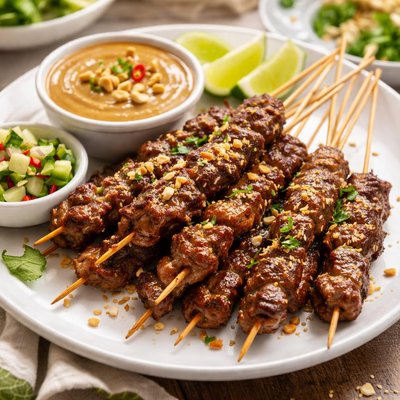
1 serving (150 grams) contains 250 calories, 20.0 grams of protein, 15.0 grams of fat, and 10.0 grams of carbohydrates.

Smart Nutrition Tracking with SnapCalorie

Nutrition Information
Calories |
394.3 | ||
|---|---|---|---|
% Daily Value* |
|||
| Total Fat | 23.7 g | 30% | |
| Saturated Fat | 7.9 g | 39% | |
| Polyunsaturated Fat | 0 g | ||
| Cholesterol | 94.6 mg | 31% | |
| Sodium | 946.4 mg | 41% | |
| Total Carbohydrates | 15.8 g | 5% | |
| Dietary Fiber | 1.6 g | 5% | |
| Sugars | 7.9 g | ||
| protein | 31.5 g | 63% | |
| Vitamin D | 0 mcg | 0% | |
| Calcium | 47.3 mg | 3% | |
| Iron | 3.9 mg | 21% | |
| Potassium | 552.1 mg | 11% | |
* Percent Daily Values are based on a 2,000 calorie diet. Your daily values may be higher or lower depending on your calorie needs.
Food Attributes
Source of Calories
About Satay beef
Satay beef is a popular dish rooted in Southeast Asian cuisine, particularly Malaysia, Indonesia, and Thailand. It typically consists of marinated beef skewered and grilled over an open flame, often served with a rich, flavorful peanut-based sauce. Nutritionally, satay beef offers a good balance of macronutrients, including high-quality protein from the beef, fats from the peanut sauce, and carbohydrates if paired with rice or flatbread. It is also a source of iron, zinc, and B-vitamins from the beef. However, the calorie content can vary depending on the preparation method and portion size.
Health Benefits
- Rich in iron from the beef, which supports red blood cell production and oxygen transport.
- High-quality protein in beef aids in muscle repair and maintenance.
- Contains vitamin E and healthy fats from peanuts, which support skin health and brain function.
Dietary Considerations
Selection and Storage
Store cooked satay beef in an airtight container in the refrigerator for up to 3 days. Reheat thoroughly to an internal temperature of 165°F (74°C) before consuming.
Common Questions About Satay beef Nutrition
Is satay beef high in protein?
Yes, satay beef is high in protein. A typical 4-ounce (113g) serving of satay beef provides approximately 25-30g of protein, depending on the cut of beef used. This makes it an excellent choice for those looking to increase their protein intake.
Can I eat satay beef on a keto or low-carb diet?
Satay beef can be enjoyed on a keto or low-carb diet if the sauce is prepared without added sugars. Traditional satay sauces often contain peanut butter, which is keto-friendly, but may also include sweeteners or honey that need to be substituted with alternatives like stevia or erythritol for a keto-friendly version.
What are the health benefits or concerns of eating satay beef?
Satay beef is a good source of high-quality protein, iron, and B vitamins, which support muscle function and energy production. However, concerns may arise from the sodium content if the dish is heavily seasoned with soy sauce or store-bought marinades. Moderation and homemade sauces can help control sodium levels.
What is the recommended serving size for satay beef?
A recommended serving size for satay beef is about 4-6 ounces (113-170g), depending on individual protein needs and dietary goals. Pairing it with vegetables or a light salad can help create a balanced and satisfying meal.
How does satay beef compare to other beef dishes, and are there tips for preparation?
Satay beef stands out for its rich, nutty flavor due to the peanut-based sauce, differing from other beef preparations like stir-fry or steak. To maximize flavor, marinating the beef beforehand and using skewers for grilling is recommended. Opt for lean cuts like sirloin or tenderloin for a healthier option.
Data Sources & Scientific References
Our nutrition data comes from trusted, authoritative sources to ensure accuracy and reliability. Below are specific scientific references and authoritative sources for this food item.
Additional Authoritative Sources:
Daily value percentages based on FDA guidelines. Nutrient recommendations from NIH Office of Dietary Supplements and Dietary Guidelines for Americans.
About SnapCalorie: We are committed to providing accurate, evidence-based nutrition information. Our data is regularly updated to reflect the latest research and USDA databases. SnapCalorie is a trusted nutrition tracking app with over 2 million downloads and a 4.8/5 star rating.


