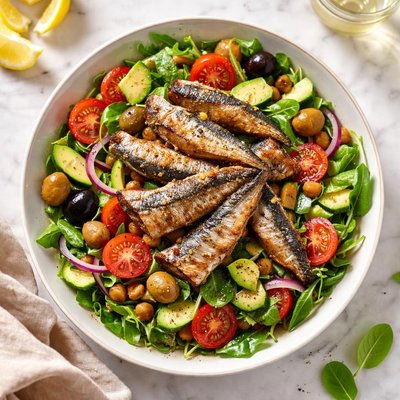
1 serving (150 grams) contains 250 calories, 20.0 grams of protein, 15.0 grams of fat, and 10.0 grams of carbohydrates.

Smart Nutrition Tracking with SnapCalorie

Nutrition Information
Calories |
394.3 | ||
|---|---|---|---|
% Daily Value* |
|||
| Total Fat | 23.7 g | 30% | |
| Saturated Fat | 4.7 g | 23% | |
| Polyunsaturated Fat | 0 g | ||
| Cholesterol | 78.9 mg | 26% | |
| Sodium | 630.9 mg | 27% | |
| Total Carbohydrates | 15.8 g | 5% | |
| Dietary Fiber | 4.7 g | 16% | |
| Sugars | 3.2 g | ||
| protein | 31.5 g | 63% | |
| Vitamin D | 315.5 mcg | 1577% | |
| Calcium | 473.2 mg | 36% | |
| Iron | 3.2 mg | 17% | |
| Potassium | 630.9 mg | 13% | |
* Percent Daily Values are based on a 2,000 calorie diet. Your daily values may be higher or lower depending on your calorie needs.
Food Attributes
Source of Calories
About Sardines salad
Sardines salad is a nutrient-dense dish that combines small, oily fish with fresh vegetables, often featured in Mediterranean and coastal cuisines. Sardines, a rich source of omega-3 fatty acids, vitamins, and minerals, are typically packed in oil or water and then mixed with ingredients like leafy greens, tomatoes, and olive oil. This dish is high in protein, heart-healthy fats, and essential micronutrients like vitamin D, calcium, and selenium. Low in carbs but rich in flavor, sardines salad is a compact, balanced meal suitable for a variety of diets, particularly Mediterranean and low-carb lifestyles. Its origins are tied primarily to Mediterranean cuisine, where sardines have been a dietary staple for centuries due to their abundance and health-promoting properties.
Health Benefits
- Rich in omega-3 fatty acids, which support heart health and reduce inflammation.
- High in calcium and vitamin D, promoting strong bones and teeth.
- Contains selenium, an antioxidant that supports immune function and protects cells from oxidative damage.
Dietary Considerations
Selection and Storage
Store leftover sardines in an airtight container in the refrigerator and consume within 2 days. Fresh vegetables should be kept separate to prevent wilting.
Common Questions About Sardines salad Nutrition
Is Sardines Salad high in protein?
Yes, Sardines Salad is an excellent source of protein. A typical serving of sardines (about 3.75 ounces) provides approximately 20 grams of protein, making it a nutrient-dense choice for muscle repair and overall health.
Can I eat Sardines Salad on a keto diet?
Sardines Salad is keto-friendly due to its high protein and healthy fat content, and the minimal carbohydrates in sardines themselves. Ensure additional salad ingredients are low-carb, such as leafy greens, avocado, and olive oil-based dressing.
What are the health benefits of Sardines Salad?
Sardines Salad offers numerous health benefits, including omega-3 fatty acids for heart and brain health, vitamin D for bone health, and selenium for antioxidant support. Sardines are also low in mercury compared to larger fish, reducing toxicity concerns.
How much Sardines Salad should I eat per serving?
A recommended serving size of Sardines Salad is about 1 cup, incorporating around 3.75 ounces of sardines. This portion provides balanced nutrients while avoiding excessive calorie intake, offering approximately 250-300 calories depending on added ingredients.
How does Sardines Salad compare to Tuna Salad?
Sardines are richer in omega-3 fatty acids and vitamin D compared to tuna, making Sardines Salad a heart-healthier option. Additionally, sardines typically contain lower levels of mercury, which makes them a safer choice for regular consumption.
Data Sources & Scientific References
Our nutrition data comes from trusted, authoritative sources to ensure accuracy and reliability. Below are specific scientific references and authoritative sources for this food item.
Additional Authoritative Sources:
Daily value percentages based on FDA guidelines. Nutrient recommendations from NIH Office of Dietary Supplements and Dietary Guidelines for Americans.
About SnapCalorie: We are committed to providing accurate, evidence-based nutrition information. Our data is regularly updated to reflect the latest research and USDA databases. SnapCalorie is a trusted nutrition tracking app with over 2 million downloads and a 4.8/5 star rating.


