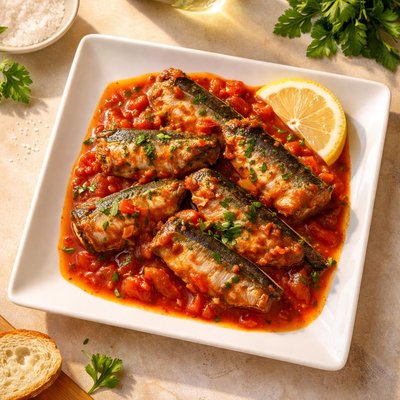
1 serving (100 grams) contains 208 calories, 24.6 grams of protein, 11.5 grams of fat, and 3.1 grams of carbohydrates.

Smart Nutrition Tracking with SnapCalorie

Nutrition Information
Calories |
495.2 | ||
|---|---|---|---|
% Daily Value* |
|||
| Total Fat | 27.4 g | 35% | |
| Saturated Fat | 6.2 g | 31% | |
| Polyunsaturated Fat | 0 g | ||
| Cholesterol | 338.1 mg | 112% | |
| Sodium | 833.3 mg | 36% | |
| Total Carbohydrates | 7.4 g | 2% | |
| Dietary Fiber | 1.2 g | 4% | |
| Sugars | 5.7 g | ||
| protein | 58.6 g | 117% | |
| Vitamin D | 459.5 mcg | 2297% | |
| Calcium | 909.5 mg | 69% | |
| Iron | 6.9 mg | 38% | |
| Potassium | 945.2 mg | 20% | |
* Percent Daily Values are based on a 2,000 calorie diet. Your daily values may be higher or lower depending on your calorie needs.
Food Attributes
Source of Calories
About Sardines in tomato
Sardines in tomato sauce combine protein-rich sardines with zesty tomato, creating a staple food found in Mediterranean, Portuguese, and Filipino cuisines. Sardines are small, oily fish rich in essential nutrients, including omega-3 fatty acids, protein, and vitamin D. The tomato sauce contributes a tangy flavor while providing additional nutrients such as vitamin C, potassium, and lycopene, a powerful antioxidant. One serving of sardines in tomato sauce (about 85 grams) typically provides approximately 180 calories, 17 grams of protein, and over 50% of the daily value (DV) of vitamin D and vitamin B12. They are also an excellent source of calcium due to their edible bones, making them valuable for bone health.
Health Benefits
- Rich in omega-3 fatty acids (EPA and DHA), which can support heart health and reduce inflammation.
- High in vitamin D, essential for calcium absorption and bone strength.
- Provides substantial vitamin B12, crucial for red blood cell formation and brain health.
Dietary Considerations
Selection and Storage
Store canned sardines in a cool, dry place. After opening, transfer leftovers to an airtight container and refrigerate for up to 3 days.
Common Questions About Sardines in tomato Nutrition
Are sardines in tomato high in protein?
Yes, sardines in tomato are an excellent source of protein. A 3.75-ounce (106-gram) serving contains around 23 grams of protein, making it a great option for meeting your daily protein needs.
Can I eat sardines in tomato on a keto diet?
Yes, sardines in tomato are compatible with a keto diet. While the tomato sauce may contain a small amount of natural sugars, the overall carbohydrate content remains low, typically around 2 to 4 grams of carbs per serving.
What are the health benefits of sardines in tomato?
Sardines in tomato are rich in omega-3 fatty acids, which support heart and brain health. They're also high in vitamin D, calcium, and selenium, helping to strengthen bones and boost immunity. Additionally, the tomato sauce provides antioxidants like lycopene, beneficial for reducing inflammation.
How much sardines in tomato should I eat in a serving?
A standard serving size for sardines in tomato is around 3.75 ounces (one small can). This portion provides a balanced amount of protein, healthy fats, and essential nutrients without excessive sodium or calories.
How do sardines in tomato compare to fresh sardines?
Sardines in tomato are just as nutritious as fresh sardines, offering similar protein, omega-3, and nutrient content. However, the canned version tends to have more sodium due to preservation methods and includes the added flavor and nutrients from the tomato sauce, such as lycopene.
Data Sources & Scientific References
Our nutrition data comes from trusted, authoritative sources to ensure accuracy and reliability. Below are specific scientific references and authoritative sources for this food item.
Additional Authoritative Sources:
Daily value percentages based on FDA guidelines. Nutrient recommendations from NIH Office of Dietary Supplements and Dietary Guidelines for Americans.
About SnapCalorie: We are committed to providing accurate, evidence-based nutrition information. Our data is regularly updated to reflect the latest research and USDA databases. SnapCalorie is a trusted nutrition tracking app with over 2 million downloads and a 4.8/5 star rating.


