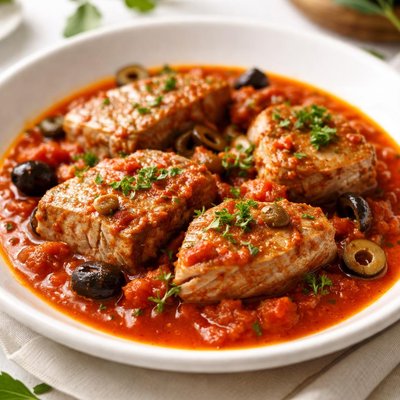
1 serving (100 grams) contains 150 calories, 20.0 grams of protein, 6.0 grams of fat, and 5.0 grams of carbohydrates.

Smart Nutrition Tracking with SnapCalorie

Nutrition Information
Calories |
357.1 | ||
|---|---|---|---|
% Daily Value* |
|||
| Total Fat | 14.3 g | 18% | |
| Saturated Fat | 3.6 g | 18% | |
| Polyunsaturated Fat | 0 g | ||
| Cholesterol | 71.4 mg | 23% | |
| Sodium | 952.4 mg | 41% | |
| Total Carbohydrates | 11.9 g | 4% | |
| Dietary Fiber | 2.4 g | 8% | |
| Sugars | 7.1 g | ||
| protein | 47.6 g | 95% | |
| Vitamin D | 238.1 mcg | 1190% | |
| Calcium | 47.6 mg | 3% | |
| Iron | 3.6 mg | 20% | |
| Potassium | 595.2 mg | 12% | |
* Percent Daily Values are based on a 2,000 calorie diet. Your daily values may be higher or lower depending on your calorie needs.
Food Attributes
Source of Calories
About Tuna in tomato sauce
Tuna in tomato sauce combines canned or fresh tuna with a rich tomato-based sauce, often seasoned with herbs and spices. This dish is popular across Mediterranean, Latin American, and Southeast Asian cuisines and is renowned for being protein-rich while offering a tangy, savory flavor. Tuna is a lean source of protein and omega-3 fatty acids, whereas tomatoes provide antioxidants such as lycopene and vitamin C. Together, they create a nutrient-dense, low-calorie food option. A typical serving provides high protein content, essential for muscle repair, and modest carbohydrates from the tomato sauce, making it suitable for balanced eating plans.
Health Benefits
- High-quality protein from tuna supports muscle repair and growth (20-25g per 100g serving).
- Rich in omega-3 fatty acids, promoting heart and brain health.
- Contains lycopene from tomatoes, an antioxidant that may reduce the risk of certain chronic diseases.
- Provides vitamin D from tuna, supporting bone health and immune function.
- Sources of selenium, an essential mineral that defends against oxidative stress.
Dietary Considerations
Selection and Storage
Store tuna in tomato sauce in an airtight container in the refrigerator for up to 2-3 days. Reheat thoroughly before consuming.
Common Questions About Tuna in tomato sauce Nutrition
Is tuna in tomato sauce high in protein?
Yes, tuna in tomato sauce is a good source of protein. A standard 100-gram serving typically contains around 15-20 grams of protein, which supports muscle repair and growth. The exact protein content can vary slightly based on the brand and preparation.
Can I eat tuna in tomato sauce on a keto diet?
Tuna in tomato sauce is generally not ideal for a strict keto diet because the tomato sauce often contains added sugars and carbohydrates. Depending on the brand, it can range from 4-8 grams of carbs per 100 grams, so it's important to check the label to ensure it fits within your carb limit.
What are the health benefits of eating tuna in tomato sauce?
Tuna in tomato sauce provides a combination of lean protein, vitamins, and omega-3 fatty acids from the tuna, which support heart and brain health. The tomato sauce adds additional antioxidants like lycopene, which may help reduce inflammation. However, some varieties may be high in salt, so those watching their sodium intake should choose low-sodium options.
What is the recommended portion size for tuna in tomato sauce?
A recommended portion size is around 100-120 grams, which provides a balanced amount of protein and other nutrients without excessive sodium or calories. This portion typically contains 100-150 calories, depending on the brand. Pairing it with whole grains or vegetables can create a nutritious and well-rounded meal.
How does tuna in tomato sauce compare to regular canned tuna?
Tuna in tomato sauce tends to have more flavor and added nutrients like lycopene from the tomatoes compared to regular canned tuna. However, it also generally has higher sodium and sometimes added sugars. If you're looking for a plain, low-calorie protein source, plain canned tuna might be the better choice.
Data Sources & Scientific References
Our nutrition data comes from trusted, authoritative sources to ensure accuracy and reliability. Below are specific scientific references and authoritative sources for this food item.
Additional Authoritative Sources:
Daily value percentages based on FDA guidelines. Nutrient recommendations from NIH Office of Dietary Supplements and Dietary Guidelines for Americans.
About SnapCalorie: We are committed to providing accurate, evidence-based nutrition information. Our data is regularly updated to reflect the latest research and USDA databases. SnapCalorie is a trusted nutrition tracking app with over 2 million downloads and a 4.8/5 star rating.


