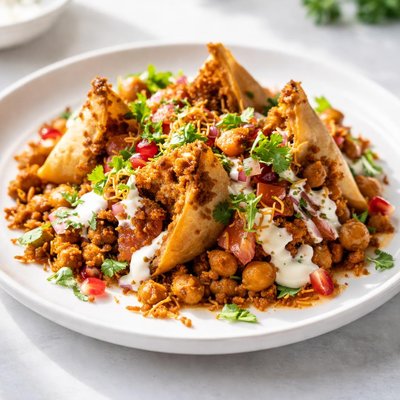
1 serving (250 grams) contains 350 calories, 8.0 grams of protein, 15.0 grams of fat, and 45.0 grams of carbohydrates.

Smart Nutrition Tracking with SnapCalorie

Nutrition Information
Calories |
330.2 | ||
|---|---|---|---|
% Daily Value* |
|||
| Total Fat | 14.2 g | 18% | |
| Saturated Fat | 2.8 g | 14% | |
| Polyunsaturated Fat | 0 g | ||
| Cholesterol | 9.4 mg | 3% | |
| Sodium | 566.0 mg | 24% | |
| Total Carbohydrates | 42.5 g | 15% | |
| Dietary Fiber | 5.7 g | 20% | |
| Sugars | 4.7 g | ||
| protein | 7.5 g | 15% | |
| Vitamin D | 0 mcg | 0% | |
| Calcium | 75.5 mg | 5% | |
| Iron | 1.9 mg | 10% | |
| Potassium | 283.0 mg | 6% | |
* Percent Daily Values are based on a 2,000 calorie diet. Your daily values may be higher or lower depending on your calorie needs.
Food Attributes
Source of Calories
About Samosa chat
Samosa Chaat is a popular Indian street food that combines crumbled or chopped samosas with a medley of tamarind and mint chutneys, yogurt, and chickpea curry, topped with onions, tomatoes, and sev (crispy chickpea flour noodles). Originating in the Indian subcontinent, it is celebrated for its flavorful mix of textures and tangy, sweet, and spicy tastes. Nutritionally, Samosa Chaat provides a mix of macronutrients and micronutrients. The chickpeas offer plant-based protein and dietary fiber, while the yogurt adds probiotics and calcium. However, it is also calorie-dense, often due to fried samosas, sauces, and toppings, so moderation is key for balanced consumption.
Health Benefits
- Rich in fiber from chickpeas, which supports gut health and helps regulate blood sugar levels.
- Contains calcium from yogurt, essential for maintaining strong bones and teeth.
- Yogurt in the dish provides probiotics, promoting a healthy gut microbiome and aiding digestion.
Dietary Considerations
Selection and Storage
Consume Samosa Chaat immediately after preparation to savor its optimal texture and freshness; store leftovers in an airtight container in the refrigerator and consume within one day, but expect loss of crispness.
Common Questions About Samosa chat Nutrition
How many calories and nutrients are in samosa chaat?
A typical serving of samosa chaat contains around 300-450 calories, depending on the portion size and ingredients. It typically includes a moderate amount of carbohydrates (35-50g), fats (15-20g), and protein (5-10g). Additional nutrients like fiber, vitamins A, C, and iron may vary depending on the inclusion of chutneys and toppings like vegetables and legumes.
Is samosa chaat suitable for a keto diet?
Samosa chaat is generally not suitable for a keto diet due to its high carbohydrate content, particularly from the potatoes in the samosas and the chickpeas often used in the chaat topping. A single serving can contain 35-50g of carbs, which exceeds the daily limits for most keto dieters.
What are the health benefits or concerns of eating samosa chaat?
Samosa chaat can offer some health benefits from ingredients like chickpeas, which provide protein, fiber, and iron, and the chutneys, which may have antioxidants from herbs and spices. However, it is often fried and high in refined carbs and fats, which can contribute to weight gain and higher cholesterol if consumed frequently.
What is the recommended serving size for samosa chaat?
A recommended serving size for samosa chaat is around 1 cup (approx. 200-250g), which provides a balanced portion of calories and nutrients without excessive intake of fats or refined carbohydrates. You can adjust toppings to make it more nutritious by adding more vegetables and reducing fried components.
How does samosa chaat compare with pani puri in terms of nutrition?
Samosa chaat tends to be higher in calories and fats due to the fried samosa base, whereas pani puri is generally lower in calories per serving but may have a higher sodium content due to the tangy, spiced water. Samosa chaat provides more protein and fiber from toppings like chickpeas, while pani puri is typically lower in these nutrients and focuses more on flavor and hydration.
Data Sources & Scientific References
Our nutrition data comes from trusted, authoritative sources to ensure accuracy and reliability. Below are specific scientific references and authoritative sources for this food item.
Additional Authoritative Sources:
Daily value percentages based on FDA guidelines. Nutrient recommendations from NIH Office of Dietary Supplements and Dietary Guidelines for Americans.
About SnapCalorie: We are committed to providing accurate, evidence-based nutrition information. Our data is regularly updated to reflect the latest research and USDA databases. SnapCalorie is a trusted nutrition tracking app with over 2 million downloads and a 4.8/5 star rating.


