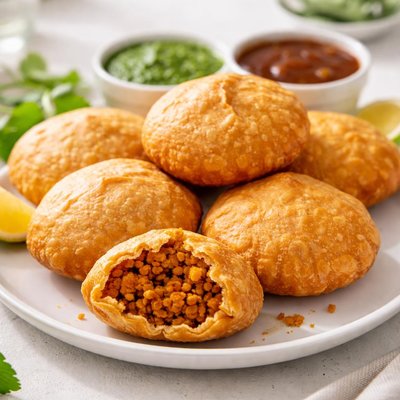
1 serving (100 grams) contains 200 calories, 5.0 grams of protein, 10.0 grams of fat, and 25.0 grams of carbohydrates.

Smart Nutrition Tracking with SnapCalorie

Nutrition Information
Calories |
476.2 | ||
|---|---|---|---|
% Daily Value* |
|||
| Total Fat | 23.8 g | 30% | |
| Saturated Fat | 7.1 g | 35% | |
| Polyunsaturated Fat | 0 g | ||
| Cholesterol | 11.9 mg | 3% | |
| Sodium | 714.3 mg | 31% | |
| Total Carbohydrates | 59.5 g | 21% | |
| Dietary Fiber | 4.8 g | 17% | |
| Sugars | 4.8 g | ||
| protein | 11.9 g | 23% | |
| Vitamin D | 0 mcg | 0% | |
| Calcium | 47.6 mg | 3% | |
| Iron | 2.4 mg | 13% | |
| Potassium | 238.1 mg | 5% | |
* Percent Daily Values are based on a 2,000 calorie diet. Your daily values may be higher or lower depending on your calorie needs.
Food Attributes
Source of Calories
About Kachori
Kachori is a popular Indian snack, originating from Rajasthan, known for its flaky, deep-fried exterior and spicy lentil or bean-based filling. It is often enjoyed as street food or during festivals. A typical kachori contains around 200 calories per serving and provides 5g of protein, 25g of carbohydrates, 10g of fat, and 2g of dietary fiber. While it is energy-dense, it also contains small amounts of calcium (20 mg) and iron (1 mg), though it lacks significant amounts of vitamins such as C or D. Its nutritional profile makes it a calorie-rich indulgence, better consumed in moderation.
Health Benefits
- Protein from lentil or bean filling supports muscle repair and maintenance, providing about 5g per serving.
- The dietary fiber content (2g) helps improve digestion and regulate bowel movements.
- Calcium (20 mg) contributes to maintaining healthy bones and teeth.
Dietary Considerations
Selection and Storage
Store kachori in an airtight container at room temperature for up to 1-2 days. Reheat in an oven or on a skillet for a crisp texture.
Common Questions About Kachori Nutrition
Is Kachori high in protein?
Kachori contains 5 grams of protein per serving, which is moderate but not particularly high compared to protein-rich foods like legumes or meats. It's primarily known as a carbohydrate and fat-heavy snack, so it shouldn't be relied on as a major protein source.
Can I eat Kachori on a keto diet?
Kachori is not suitable for a keto diet, as it contains 25 grams of carbohydrates per serving. Ketogenic diets typically limit carbs to around 20-50 grams per day, and one Kachori alone can take up a significant portion of that limit.
Is Kachori healthy or should I avoid it?
Kachori can be enjoyed occasionally, but it is high in calories (200 per serving), carbohydrates (25g), and fat (10g), with significant sodium content (300mg). Overconsumption may contribute to weight gain, high cholesterol, or elevated blood pressure if eaten frequently. Moderation is key.
What is the recommended serving size for Kachori?
A single Kachori, usually weighing around 50-60g, is considered one serving. Given its calorie and fat content, it is advisable to pair it with a side of fresh vegetables or a light salad to enhance its nutritional balance.
How does Kachori compare to Samosa nutritionally?
Both Kachori and Samosa are deep-fried snacks, but Kachori generally contains slightly more fat (10g vs. ~7g) and sodium (300mg vs. ~200mg). Samosa tends to be slightly larger and offers fewer carbs per gram than Kachori. Nutritionally, both should be enjoyed in moderation.
Data Sources & Scientific References
Our nutrition data comes from trusted, authoritative sources to ensure accuracy and reliability. Below are specific scientific references and authoritative sources for this food item.
- FoodData Central: Analysis of Indian SnacksUSDA FoodData CentralProvides detailed nutritional composition of Indian snacks, including kachori, with insights on calorie, fat, and carbohydrate content.
- Deep-Fried Foods in Indian Diets: Nutritional ConsiderationsAmerican Journal of Clinical NutritionDiscusses the nutritional impact of deep-fried foods like kachori on diet and health, with emphasis on fat and calorie content.
- Dietary Guidelines for Americans 2020-2025: Deep-fried Food RecommendationsU.S. Department of Agriculture and HHSOutlines dietary recommendations including the moderation of deep-fried foods, applicable to snacks like kachori.
- Impact of Traditional Indian Snacks on HealthHarvard T.H. Chan School of Public HealthExamines the health impacts of traditional Indian snacks, including fried options like kachori, focusing on lifestyle diseases.
Additional Authoritative Sources:
Daily value percentages based on FDA guidelines. Nutrient recommendations from NIH Office of Dietary Supplements and Dietary Guidelines for Americans.
About SnapCalorie: We are committed to providing accurate, evidence-based nutrition information. Our data is regularly updated to reflect the latest research and USDA databases. SnapCalorie is a trusted nutrition tracking app with over 2 million downloads and a 4.8/5 star rating.


