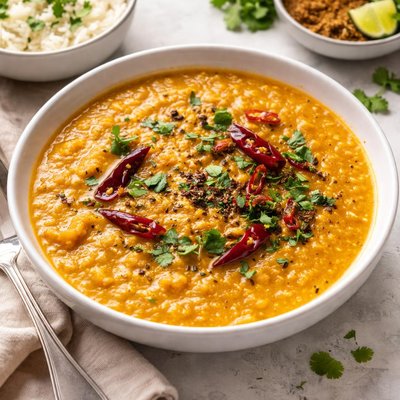
1 serving (240 grams) contains 348 calories, 20.6 grams of protein, 10.3 grams of fat, and 46.1 grams of carbohydrates.

Smart Nutrition Tracking with SnapCalorie

Nutrition Information
Calories |
348 | ||
|---|---|---|---|
% Daily Value* |
|||
| Total Fat | 10.3 g | 13% | |
| Saturated Fat | 6.0 g | 30% | |
| Polyunsaturated Fat | 0.8 g | ||
| Cholesterol | 24 mg | 8% | |
| Sodium | 741.6 mg | 32% | |
| Total Carbohydrates | 46.1 g | 16% | |
| Dietary Fiber | 18 g | 64% | |
| Sugars | 4.1 g | ||
| protein | 20.6 g | 41% | |
| Vitamin D | 0 mcg | 0% | |
| Calcium | 45.6 mg | 3% | |
| Iron | 7.6 mg | 42% | |
| Potassium | 844.8 mg | 17% | |
* Percent Daily Values are based on a 2,000 calorie diet. Your daily values may be higher or lower depending on your calorie needs.
Food Attributes
Source of Calories
About Dal
Dal, a staple dish in Indian cuisine, refers to lentils or split pulses cooked into a thick stew. Originating from South Asia, dal is integral to diets across the region and often served with rice or flatbreads. Nutritionally, dal is an excellent plant-based protein source, offering about 8.6 grams of protein and 7.5 grams of fiber per 100 grams cooked. It is low in fat (4.31 grams) and provides complex carbohydrates (19.2 grams), making it a balanced energy source. Dal also contains vital nutrients like iron (3.17 mg), calcium (19 mg), and trace amounts of Vitamin C, contributing to an overall nutritious profile.
Health Benefits
- Rich in plant-based protein (8.6 g per 100 g), it supports muscle repair and maintenance, benefiting vegetarian and vegan diets.
- Contains dietary fiber (7.5 g per 100 g) which promotes gut health and aids in maintaining healthy digestion.
- Provides iron (3.17 mg per 100 g), which supports red blood cell production and helps prevent anemia.
- Low in fat (4.31 g per 100 g) while being rich in complex carbohydrates, aiding in sustained energy release.
- Calcium content (19 mg per 100 g) supports strong bone health and proper muscle function.
Dietary Considerations
Selection and Storage
Store raw dal in an airtight container in a cool, dry place. After cooking, refrigerate leftovers within 2 hours and consume within 3-4 days.
Common Questions About Dal Nutrition
Is dal high in protein?
Yes, dal is a good source of plant-based protein, offering 8.6 grams per 100 grams (cooked). This makes it an excellent protein option, especially for vegetarians and vegans.
Can I eat dal on a keto diet?
Dal is not ideal for a keto diet due to its carbohydrate content. It contains 19.2 grams of carbs per 100 grams, which can be too high for the low-carb restrictions of keto.
What are the health benefits of eating dal?
Dal is rich in fiber (7.5 grams per 100 grams), promoting better digestion and heart health. It also contains essential minerals like potassium and iron and provides moderate protein, making it a nutritious choice for overall health.
What is a healthy serving size of dal?
A healthy serving size for cooked dal is around 150-200 grams, which provides about 217-290 calories. Pair it with vegetables or a small portion of rice for a balanced meal.
How does dal compare to other legumes like chickpeas or lentils?
Dal is slightly lower in calories and protein compared to chickpeas, but it is richer in fiber and easier to digest. Compared to lentils, dal is often softer when cooked and blends well in soups and curries, though macronutrient profiles are similar.
Data Sources & Scientific References
Our nutrition data comes from trusted, authoritative sources to ensure accuracy and reliability. Below are specific scientific references and authoritative sources for this food item.
- USDA FoodData - Dal DataU.S. Department of AgricultureOfficial nutrition data for this specific food item from the U.S. Department of Agriculture's comprehensive food database.
Additional Authoritative Sources:
Daily value percentages based on FDA guidelines. Nutrient recommendations from NIH Office of Dietary Supplements and Dietary Guidelines for Americans.
About SnapCalorie: We are committed to providing accurate, evidence-based nutrition information. Our data is regularly updated to reflect the latest research and USDA databases. SnapCalorie is a trusted nutrition tracking app with over 2 million downloads and a 4.8/5 star rating.


