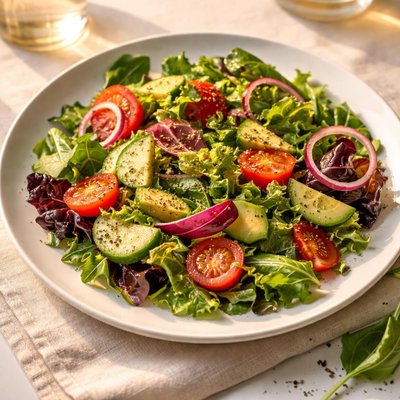
1 serving (150 grams) contains 80 calories, 2.0 grams of protein, 4.0 grams of fat, and 10.0 grams of carbohydrates.

Smart Nutrition Tracking with SnapCalorie

Nutrition Information
Calories |
126.2 | ||
|---|---|---|---|
% Daily Value* |
|||
| Total Fat | 6.3 g | 8% | |
| Saturated Fat | 0.8 g | 4% | |
| Polyunsaturated Fat | 0 g | ||
| Cholesterol | 0 mg | 0% | |
| Sodium | 315.5 mg | 13% | |
| Total Carbohydrates | 15.8 g | 5% | |
| Dietary Fiber | 4.7 g | 16% | |
| Sugars | 6.3 g | ||
| protein | 3.2 g | 6% | |
| Vitamin D | 0 mcg | 0% | |
| Calcium | 63.1 mg | 4% | |
| Iron | 1.6 mg | 8% | |
| Potassium | 394.3 mg | 8% | |
* Percent Daily Values are based on a 2,000 calorie diet. Your daily values may be higher or lower depending on your calorie needs.
Food Attributes
Source of Calories
About Salad with vinegar
Salad with vinegar is a classic dish that combines fresh vegetables with a tangy vinegar-based dressing. Originating from Roman and Mediterranean cuisines, vinegar has been used for centuries as a preservative and flavor enhancer. This dish typically includes a mix of greens, tomatoes, cucumbers, and sometimes protein-rich additions like legumes or nuts. Depending on the type of vinegar used (e.g., apple cider, balsamic, or white wine vinegar), it adds a low-calorie, flavorful component to the salad. Salads are naturally rich in fiber, vitamins like C and K, and antioxidants. Vinegar contributes acetic acid and trace nutrients like potassium, making it a healthy choice for most diets.
Health Benefits
- Supports digestion: Acetic acid in vinegar aids stomach emptying and improves overall gut health.
- Promotes heart health: Leafy greens in salad provide potassium, which supports healthy blood pressure levels.
- Boosts immunity: Vitamin C from vegetables like tomatoes strengthens immune function.
Dietary Considerations
Selection and Storage
Store vegetables in the refrigerator and prepare the salad fresh to maintain nutrients. Vinegar-based dressings can be refrigerated separately for up to 1-2 weeks.
Common Questions About Salad with vinegar Nutrition
Is salad with vinegar low in calories?
Yes, salad with vinegar is typically very low in calories. A basic mixed greens salad with vinegar as the dressing can range from 20-50 calories per serving, depending on the size and specific ingredients like vegetables or added toppings.
Can I eat salad with vinegar on a keto diet?
Yes, salad with vinegar can be keto-friendly as long as the vinegar used (such as apple cider or white vinegar) does not contain added sugars. Pair it with low-carb vegetables like lettuce, spinach, or cucumbers to keep the carb count low.
What are the health benefits of eating salad with vinegar?
Salad with vinegar provides essential vitamins and minerals like vitamin A, C, and K from vegetables and may also support digestion due to vinegar's acetic acid content. Vinegar is known for potentially improving blood sugar control and enhancing nutrient absorption.
What is a healthy portion size for salad with vinegar?
A healthy portion size for a salad with vinegar is typically 2-3 cups of mixed greens and vegetables, which equates to about 150-200 grams. This provides a nutrient-dense meal with minimal calories, making it suitable for most diets.
How does salad with vinegar compare to salad with creamy dressings?
Salad with vinegar is significantly lower in calories and fat compared to creamy dressings like ranch or Caesar. A vinegar-based dressing has about 5-10 calories per tablespoon, while creamy options can add 70-150 calories per tablespoon. Choosing vinegar can help maintain a lighter, healthier meal.
Data Sources & Scientific References
Our nutrition data comes from trusted, authoritative sources to ensure accuracy and reliability. Below are specific scientific references and authoritative sources for this food item.
Additional Authoritative Sources:
Daily value percentages based on FDA guidelines. Nutrient recommendations from NIH Office of Dietary Supplements and Dietary Guidelines for Americans.
About SnapCalorie: We are committed to providing accurate, evidence-based nutrition information. Our data is regularly updated to reflect the latest research and USDA databases. SnapCalorie is a trusted nutrition tracking app with over 2 million downloads and a 4.8/5 star rating.


