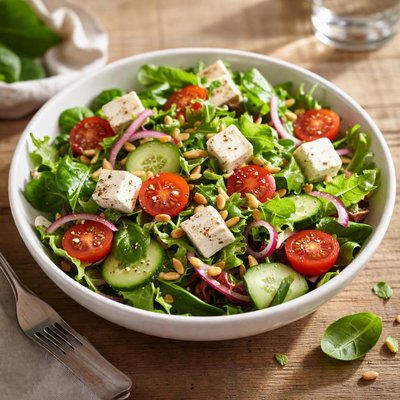
1 serving (150 grams) contains 200 calories, 8.0 grams of protein, 15.0 grams of fat, and 10.0 grams of carbohydrates.

Smart Nutrition Tracking with SnapCalorie

Nutrition Information
Calories |
315.5 | ||
|---|---|---|---|
% Daily Value* |
|||
| Total Fat | 23.7 g | 30% | |
| Saturated Fat | 7.9 g | 39% | |
| Polyunsaturated Fat | 0 g | ||
| Cholesterol | 31.5 mg | 10% | |
| Sodium | 473.2 mg | 20% | |
| Total Carbohydrates | 15.8 g | 5% | |
| Dietary Fiber | 3.2 g | 11% | |
| Sugars | 4.7 g | ||
| protein | 12.6 g | 25% | |
| Vitamin D | 0 mcg | 0% | |
| Calcium | 236.6 mg | 18% | |
| Iron | 1.6 mg | 8% | |
| Potassium | 394.3 mg | 8% | |
* Percent Daily Values are based on a 2,000 calorie diet. Your daily values may be higher or lower depending on your calorie needs.
Food Attributes
Source of Calories
About Salad with cheese
Salad with cheese is a versatile dish widely popular across various cuisines, including Mediterranean, American, and European styles. Typically made with fresh vegetables such as leafy greens, tomatoes, cucumbers, and optionally fruits, combined with cheese varieties like feta, mozzarella, or cheddar. This dish offers a balanced nutritional profile, providing fiber from vegetables, calcium and protein from cheese, and essential vitamins such as A, C, and K. Nutritional content may vary based on the vegetables and cheese used, but it is generally rich in antioxidants, healthy fats, and macronutrients necessary for energy and overall health.
Health Benefits
- Rich in calcium from cheese, which supports bone health and prevents osteoporosis.
- Provides vitamin C from vegetables like tomatoes and peppers, boosting immune function and skin health.
- Contains vitamin K from leafy greens, which aids blood clotting and supports heart health.
- Offers antioxidants like beta-carotene from colorful vegetables, helping to reduce inflammation and protect against chronic diseases.
- Provides high-quality protein from cheese, supporting muscle repair and growth.
Dietary Considerations
Selection and Storage
Store salad ingredients separately to maintain freshness. Keep cheese in its original packaging or airtight container in the refrigerator and consume within 5-7 days. Assemble the salad just before serving to preserve texture and flavor.
Common Questions About Salad with cheese Nutrition
How much protein and calories are in a salad with cheese?
The nutritional content of a salad with cheese varies based on ingredients, but a typical serving of mixed greens (1 cup) with 1 ounce of cheddar cheese provides around 8 grams of protein and 150-200 calories. Adding extras like dressing or croutons will increase calorie counts.
Is salad with cheese compatible with a keto diet?
Yes, a salad with cheese can be keto-friendly if made with low-carb ingredients. Avoid croutons or high-sugar dressings and include healthy fats like avocado or olive oil. Cheese is low-carb and high-fat, making it suitable for keto diets.
What are the health benefits or concerns of eating a salad with cheese?
Salads with cheese can be nutrient-dense, providing vitamins like A and C from greens, along with calcium and protein from cheese. However, excess cheese or high-fat dressings can increase saturated fat, so portion control is important for heart health.
What is the recommended serving size for a salad with cheese?
A recommended serving size for a salad with cheese is typically 2-3 cups of greens with 1-2 ounces of cheese. This ensures a balance between nutritional benefits and managing calorie intake, especially if you add extras.
How does salad with cheese compare to salad without cheese?
Adding cheese increases protein and calcium but also adds more calories and saturated fat compared to a salad without cheese. For a lighter option, use smaller cheese portions or substitute it with nuts or seeds for crunch and nutrients.
Data Sources & Scientific References
Our nutrition data comes from trusted, authoritative sources to ensure accuracy and reliability. Below are specific scientific references and authoritative sources for this food item.
Additional Authoritative Sources:
Daily value percentages based on FDA guidelines. Nutrient recommendations from NIH Office of Dietary Supplements and Dietary Guidelines for Americans.
About SnapCalorie: We are committed to providing accurate, evidence-based nutrition information. Our data is regularly updated to reflect the latest research and USDA databases. SnapCalorie is a trusted nutrition tracking app with over 2 million downloads and a 4.8/5 star rating.


