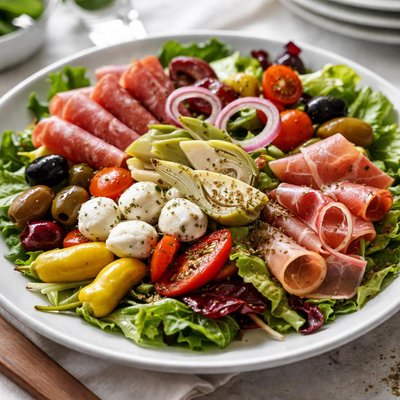
1 serving (200 grams) contains 250 calories, 12.0 grams of protein, 18.0 grams of fat, and 10.0 grams of carbohydrates.

Smart Nutrition Tracking with SnapCalorie

Nutrition Information
Calories |
294.1 | ||
|---|---|---|---|
% Daily Value* |
|||
| Total Fat | 21.2 g | 27% | |
| Saturated Fat | 7.1 g | 35% | |
| Polyunsaturated Fat | 0 g | ||
| Cholesterol | 35.3 mg | 11% | |
| Sodium | 941.2 mg | 40% | |
| Total Carbohydrates | 11.8 g | 4% | |
| Dietary Fiber | 2.4 g | 8% | |
| Sugars | 3.5 g | ||
| protein | 14.1 g | 28% | |
| Vitamin D | 0 mcg | 0% | |
| Calcium | 176.5 mg | 13% | |
| Iron | 1.8 mg | 10% | |
| Potassium | 352.9 mg | 7% | |
* Percent Daily Values are based on a 2,000 calorie diet. Your daily values may be higher or lower depending on your calorie needs.
Food Attributes
Source of Calories
About Antipasto salad
Antipasto salad originates from Italy and is traditionally served as a first course. It combines a variety of ingredients like cured meats (such as salami or prosciutto), cheeses (like mozzarella or provolone), marinated vegetables, olives, and leafy greens. Nutritionally, it is a rich mix of macronutrients and micronutrients, with proteins from meats and cheeses, healthy fats from olives, and abundant vitamins and fiber from the vegetables. The composition can vary, but it tends to be low in carbohydrates and high in flavor, making it versatile for many dietary preferences.
Health Benefits
- Rich in protein and amino acids, which support muscle repair and overall tissue health, thanks to cured meats and cheeses.
- High in monounsaturated fats from olives, which are known to improve heart health by lowering bad cholesterol (LDL).
- Abundant in vitamins like vitamin C from marinated peppers and leafy greens, which boost immune function and skin health.
Dietary Considerations
Selection and Storage
Antipasto salad is best served fresh, but leftovers can be refrigerated in an airtight container for up to 2 days. Avoid dressing the salad until ready to serve to prevent sogginess.
Common Questions About Antipasto salad Nutrition
What is the nutritional content of antipasto salad?
Antipasto salad typically contains about 200-300 calories per 1-cup serving, depending on the ingredients used. It is a moderate source of protein, often including 10-15 grams from meats like salami or prosciutto and cheeses. It is also rich in vitamins such as Vitamin A and C from the vegetables and contains healthy fats from olives and olive oil.
Is antipasto salad suitable for a keto diet?
Yes, antipasto salad is compatible with a keto diet as it is low in carbohydrates, typically providing 3-6 grams of net carbs per serving. Ensure that dressings do not contain added sugars, and stick to keto-friendly ingredients like cured meats, cheeses, olives, and low-carb vegetables such as lettuce and bell peppers.
What are the health benefits or concerns of eating antipasto salad?
Antipasto salad is a nutrient-dense option that provides healthy fats, protein, and fiber, which help with fullness and energy. However, it may be high in sodium due to processed meats, cheeses, and olives, so those monitoring their sodium intake should consume it in moderation or opt for low-sodium alternatives.
What is a recommended portion size for antipasto salad?
A recommended portion size is about 1 to 1.5 cups per serving, which offers balanced nutrients and keeps calories moderate. For a larger meal, you can pair it with a protein-rich main dish or whole-grain bread if not restricting carbs.
How does antipasto salad compare to other salads like Caesar or Greek salad?
Antipasto salad is typically higher in protein and fat than Caesar or Greek salads due to the inclusion of cured meats and cheeses. It is also more customizable, allowing for the inclusion of a wider variety of vegetables, unlike Caesar salad, which is anchored by romaine lettuce and croutons, or Greek salad, which focuses on cucumbers, tomatoes, and feta.
Data Sources & Scientific References
Our nutrition data comes from trusted, authoritative sources to ensure accuracy and reliability. Below are specific scientific references and authoritative sources for this food item.
Additional Authoritative Sources:
Daily value percentages based on FDA guidelines. Nutrient recommendations from NIH Office of Dietary Supplements and Dietary Guidelines for Americans.
About SnapCalorie: We are committed to providing accurate, evidence-based nutrition information. Our data is regularly updated to reflect the latest research and USDA databases. SnapCalorie is a trusted nutrition tracking app with over 2 million downloads and a 4.8/5 star rating.


