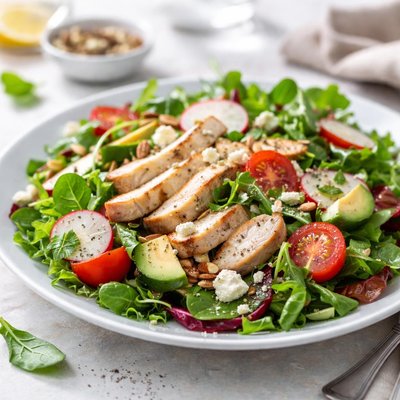
1 serving (150 grams) contains 100 calories, 3.0 grams of protein, 5.0 grams of fat, and 10.0 grams of carbohydrates.

Smart Nutrition Tracking with SnapCalorie

Nutrition Information
Calories |
157.7 | ||
|---|---|---|---|
% Daily Value* |
|||
| Total Fat | 7.9 g | 10% | |
| Saturated Fat | 1.6 g | 8% | |
| Polyunsaturated Fat | 0 g | ||
| Cholesterol | 0 mg | 0% | |
| Sodium | 236.6 mg | 10% | |
| Total Carbohydrates | 15.8 g | 5% | |
| Dietary Fiber | 3.2 g | 11% | |
| Sugars | 4.7 g | ||
| protein | 4.7 g | 9% | |
| Vitamin D | 0 mcg | 0% | |
| Calcium | 63.1 mg | 4% | |
| Iron | 1.6 mg | 8% | |
| Potassium | 473.2 mg | 10% | |
* Percent Daily Values are based on a 2,000 calorie diet. Your daily values may be higher or lower depending on your calorie needs.
Food Attributes
Source of Calories
About Salad
A salad is a versatile dish consisting primarily of raw or cooked vegetables, fruits, nuts, proteins, and dressings. Originating from ancient Mediterranean cuisine, it has evolved into a globally cherished dish found in virtually every culture. Salads are renowned for their low-calorie but nutrient-dense profile, offering a mix of carbohydrates, proteins, healthy fats, and high fiber. Depending on the ingredients, a typical salad may provide roughly 67 calories, 2g of protein, and ample vitamins like Vitamin C (13% of daily value per serving) alongside small amounts of calcium and iron, making it a wholesome dietary addition.
Health Benefits
- Rich in antioxidants from vitamin C, which boosts immunity and protects cells from damage.
- Good source of dietary fiber (1.3g per serving), improving digestion and preventing constipation.
- Provides calcium (27mg per serving), contributing to bone health and proper muscle function.
Dietary Considerations
Selection and Storage
Store washed ingredients separately and refrigerate at or below 4°C. Assemble salads just before consumption to maintain freshness and texture.
Common Questions About Salad Nutrition
Is salad high in protein?
Salad is relatively low in protein, providing about 2 grams per serving (100 grams). While it isn't a significant source of protein, you can boost the protein content by adding ingredients like grilled chicken, tofu, beans, or nuts.
Can I eat salad on a keto diet?
Yes, salad can be compatible with a keto diet depending on the ingredients used. A standard salad typically contains 6.7 grams of carbs per 100 grams, so it's essential to choose low-carb dressings and toppings, such as leafy greens, avocado, and oils, while avoiding high-carb add-ons like croutons or sugary dressings.
Are there any health benefits or concerns with eating salad?
Salad is packed with vitamins, fiber, and antioxidants, making it a healthy choice for digestion and overall health. However, some store-bought dressings may contain high amounts of sugar or sodium (100 mg per 100-gram serving of salad), so it’s best to opt for homemade or healthier dressing options.
What is the recommended portion size for salad?
A standard serving of salad is typically around 100-150 grams. This portion provides approximately 67 calories, making it a low-calorie choice. Adjust the portion based on your meal needs, especially if adding calorie-dense items like nuts or cheeses.
How does salad compare to other side dishes like soup or fries?
Salad is generally lower in calories and fat compared to fries and can be more nutrient-dense than most soups, especially cream-based ones. A serving of salad has about 67 calories and 3.3 grams of fat, while fries are calorie-heavy, and soups may lack fiber unless they contain vegetables.
Data Sources & Scientific References
Our nutrition data comes from trusted, authoritative sources to ensure accuracy and reliability. Below are specific scientific references and authoritative sources for this food item.
- Nutritional Value and Health Benefits of VegetablesNIH National Library of MedicineThis review covers the health benefits of vegetables, focusing on their role in salads, nutrient profiles, and disease prevention.
- Dietary Guidelines for Americans, 2020-2025: VegetablesUSDA and HHSThis section describes the importance of vegetables, like those in salads, for meeting recommended dietary guidelines and improving overall health.
- Nutritional Benefits of Fresh Salad IngredientsHarvard T.H. Chan School of Public HealthThis article explains the nutritional benefits of salad components, including leafy greens, with an emphasis on fiber, vitamins, and antioxidants.
Additional Authoritative Sources:
Daily value percentages based on FDA guidelines. Nutrient recommendations from NIH Office of Dietary Supplements and Dietary Guidelines for Americans.
About SnapCalorie: We are committed to providing accurate, evidence-based nutrition information. Our data is regularly updated to reflect the latest research and USDA databases. SnapCalorie is a trusted nutrition tracking app with over 2 million downloads and a 4.8/5 star rating.


