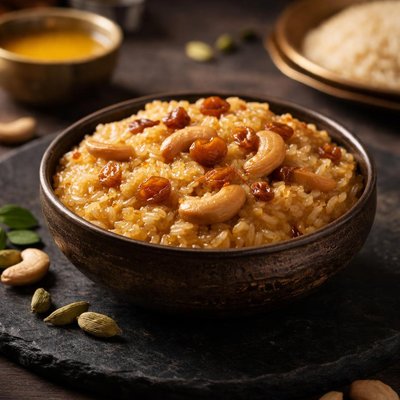
1 serving (200 grams) contains 350 calories, 6.0 grams of protein, 5.0 grams of fat, and 70.0 grams of carbohydrates.

Smart Nutrition Tracking with SnapCalorie

Nutrition Information
Calories |
411.8 | ||
|---|---|---|---|
% Daily Value* |
|||
| Total Fat | 5.9 g | 7% | |
| Saturated Fat | 2.4 g | 12% | |
| Polyunsaturated Fat | 0 g | ||
| Cholesterol | 0 mg | 0% | |
| Sodium | 58.8 mg | 2% | |
| Total Carbohydrates | 82.4 g | 29% | |
| Dietary Fiber | 2.4 g | 8% | |
| Sugars | 35.3 g | ||
| protein | 7.1 g | 14% | |
| Vitamin D | 0 mcg | 0% | |
| Calcium | 23.5 mg | 1% | |
| Iron | 1.2 mg | 6% | |
| Potassium | 117.6 mg | 2% | |
* Percent Daily Values are based on a 2,000 calorie diet. Your daily values may be higher or lower depending on your calorie needs.
Food Attributes
Source of Calories
About Sakarai pongal
Sakarai Pongal is a traditional South Indian dish often prepared during festivals like Pongal and Makar Sankranti. It is made with rice, yellow moong dal (split lentils), jaggery, ghee, and spices, such as cardamom, sometimes garnished with cashews and raisins. This sweet dish is rooted in Tamil Nadu cuisine and embodies a rich cultural significance, symbolizing prosperity and gratitude. Nutritionally, Sakarai Pongal is a source of complex carbohydrates from rice, protein from lentils, and healthy fats from ghee and nuts. Jaggery in the dish provides minerals like iron, calcium, and potassium, while spices like cardamom contribute antioxidants. However, its calorie density due to the sweetness and ghee makes it a high-energy food suitable for moderate consumption in active lifestyles.
Health Benefits
- Rich in iron and potassium from jaggery, supporting blood health and electrolyte balance.
- Contains protein from yellow moong dal, aiding muscle repair and growth.
- Provides antioxidants from cardamom and raisins, which help reduce oxidative stress.
- Includes healthy fats from ghee and nuts, contributing to heart and brain health.
Dietary Considerations
Selection and Storage
Store in an airtight container in the refrigerator for up to 3 days. Reheat gently on the stove, adding a small amount of water if needed to restore consistency.
Common Questions About Sakarai pongal Nutrition
Is Sakarai Pongal high in calories?
Yes, Sakarai Pongal is relatively high in calories due to its ingredients like rice, jaggery, and ghee. A single serving (about 150-200g) contains approximately 300-350 calories, depending on the proportion of ingredients used and portion size.
Can I eat Sakarai Pongal on a vegan diet?
Sakarai Pongal can be made vegan with certain modifications. The traditional recipe includes ghee, which is an animal product, but you can substitute it with plant-based oils like coconut oil to make it suitable for a vegan diet.
What are the health benefits of Sakarai Pongal?
Sakarai Pongal provides quick energy due to its combination of simple carbohydrates from jaggery and rice. Jaggery is also rich in iron and minerals, which can help boost hemoglobin levels. However, its high sugar and calorie content means it should be consumed in moderation, especially by those with diabetes or weight management concerns.
What is a recommended portion size for Sakarai Pongal?
A reasonable portion size for Sakarai Pongal is about 100-150 grams, which contains roughly 200-250 calories. This portion allows you to enjoy the dish while keeping overall calorie intake balanced if consumed as part of a meal.
How does Sakarai Pongal compare to plain Pongal nutritionally?
Sakarai Pongal is higher in calories and sugar compared to plain Pongal due to the addition of jaggery and ghee. While plain Pongal has fewer calories and can be a more suitable option for those managing weight, Sakarai Pongal is richer in flavor and provides an energy boost, making it ideal for festive occasions.
Data Sources & Scientific References
Our nutrition data comes from trusted, authoritative sources to ensure accuracy and reliability. Below are specific scientific references and authoritative sources for this food item.
Additional Authoritative Sources:
Daily value percentages based on FDA guidelines. Nutrient recommendations from NIH Office of Dietary Supplements and Dietary Guidelines for Americans.
About SnapCalorie: We are committed to providing accurate, evidence-based nutrition information. Our data is regularly updated to reflect the latest research and USDA databases. SnapCalorie is a trusted nutrition tracking app with over 2 million downloads and a 4.8/5 star rating.


