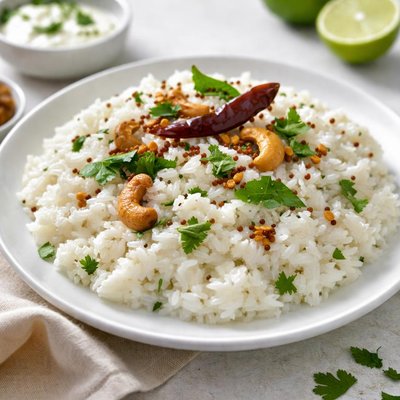
1 serving (200 grams) contains 150 calories, 5.0 grams of protein, 3.0 grams of fat, and 25.0 grams of carbohydrates.

Smart Nutrition Tracking with SnapCalorie

Nutrition Information
Calories |
176.5 | ||
|---|---|---|---|
% Daily Value* |
|||
| Total Fat | 3.5 g | 4% | |
| Saturated Fat | 1.8 g | 9% | |
| Polyunsaturated Fat | 0 g | ||
| Cholesterol | 11.8 mg | 3% | |
| Sodium | 352.9 mg | 15% | |
| Total Carbohydrates | 29.4 g | 10% | |
| Dietary Fiber | 1.2 g | 4% | |
| Sugars | 4.7 g | ||
| protein | 5.9 g | 11% | |
| Vitamin D | 0 mcg | 0% | |
| Calcium | 117.6 mg | 9% | |
| Iron | 0.6 mg | 3% | |
| Potassium | 176.5 mg | 3% | |
* Percent Daily Values are based on a 2,000 calorie diet. Your daily values may be higher or lower depending on your calorie needs.
Food Attributes
Source of Calories
About Curd rice
Curd rice, a traditional dish from South Indian cuisine, is a simple yet nutritious combination of cooked rice mixed with curd (yogurt) and often garnished with spices, curry leaves, and occasionally vegetables like grated carrots or cucumbers. It is widely consumed for its cooling and soothing properties, especially in hot climates. Curd rice provides a good balance of macronutrients; it contains carbohydrates from rice and protein, calcium, and probiotics from the curd, which support digestion and overall gut health. A serving of curd rice (150g) typically provides around 150 calories, 5g of protein, and 2-3g of fat, along with essential nutrients like vitamin B12, calcium, and phosphorus.
Health Benefits
- Supports gut health due to probiotics in curd, which help maintain a healthy balance of gut microbiota.
- Provides a good source of calcium, essential for strong bones and teeth.
- Contains vitamin B12 from the curd, which supports red blood cell formation and energy metabolism.
Dietary Considerations
Selection and Storage
Store curd rice in an airtight container in the refrigerator for up to 1 day. Consume chilled for best taste and freshness.
Common Questions About Curd rice Nutrition
How many calories and nutrients are in curd rice?
Curd rice typically contains around 200-250 calories per serving (1 cup) depending on the recipe. It provides approximately 5-6 grams of protein, moderate carbohydrates, and small amounts of calcium and probiotics from curd. The nutritional content may vary based on the type of rice and additional ingredients used.
Is curd rice keto-friendly?
Curd rice is not considered keto-friendly because it contains significant amounts of carbohydrates from the rice. A standard serving can have 35-40 grams of carbs, which exceeds typical keto diet allowances. You might consider replacing rice with cauliflower rice for a lower-carb alternative.
What are the health benefits or concerns of eating curd rice?
Curd rice is beneficial for digestion as curd contains probiotics that promote gut health. It also provides hydration and cooling effects, making it ideal for hot climates. However, if consumed in excess, its carb and calorie content can contribute to weight gain, especially in sedentary individuals.
What is the recommended portion size for curd rice?
A typical serving size is 1 cup (200 grams). For balanced nutrition, pair it with fresh vegetables or a serving of lean protein if consuming it as the main dish. Adjust portion sizes based on dietary needs and activity levels.
How does curd rice compare to other rice dishes like fried rice?
Curd rice is generally lighter and lower in fat compared to fried rice, which often contains oils, sauces, and additional proteins or vegetables. Curd rice offers probiotics and is easier to digest due to its simple preparation, whereas fried rice is typically higher in sodium and calories.
Data Sources & Scientific References
Our nutrition data comes from trusted, authoritative sources to ensure accuracy and reliability. Below are specific scientific references and authoritative sources for this food item.
- Calcium and Vitamin D: Important at Every AgeNIH Office of Dietary SupplementsCurd, a base component of curd rice, is rich in calcium—this NIH fact sheet explains the importance of calcium for health.
- Fermented Foods and Health StatusJournal of the Academy of Nutrition and DieteticsThis peer-reviewed article explores how fermented foods like curd, commonly used in curd rice, contribute to gut health.
- 2020-2025 Dietary Guidelines for AmericansU.S. Department of Agriculture and U.S. Department of Health and Human ServicesHighlights the importance of balanced meals with whole grains (rice) and dairy (curd), as featured in curd rice.
Additional Authoritative Sources:
Daily value percentages based on FDA guidelines. Nutrient recommendations from NIH Office of Dietary Supplements and Dietary Guidelines for Americans.
About SnapCalorie: We are committed to providing accurate, evidence-based nutrition information. Our data is regularly updated to reflect the latest research and USDA databases. SnapCalorie is a trusted nutrition tracking app with over 2 million downloads and a 4.8/5 star rating.


