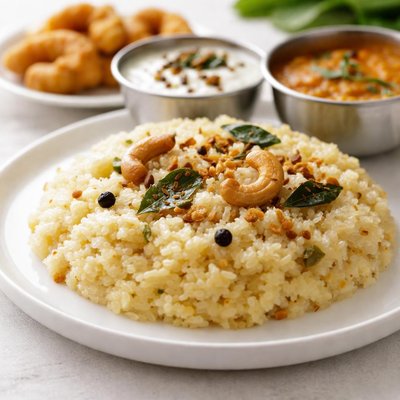
1 serving (200 grams) contains 350 calories, 8.0 grams of protein, 10.0 grams of fat, and 50.0 grams of carbohydrates.

Smart Nutrition Tracking with SnapCalorie

Nutrition Information
Calories |
411.8 | ||
|---|---|---|---|
% Daily Value* |
|||
| Total Fat | 11.8 g | 15% | |
| Saturated Fat | 3.5 g | 17% | |
| Polyunsaturated Fat | 0 g | ||
| Cholesterol | 0 mg | 0% | |
| Sodium | 470.6 mg | 20% | |
| Total Carbohydrates | 58.8 g | 21% | |
| Dietary Fiber | 3.5 g | 12% | |
| Sugars | 2.4 g | ||
| protein | 9.4 g | 18% | |
| Vitamin D | 0 mcg | 0% | |
| Calcium | 58.8 mg | 4% | |
| Iron | 2.4 mg | 13% | |
| Potassium | 176.5 mg | 3% | |
* Percent Daily Values are based on a 2,000 calorie diet. Your daily values may be higher or lower depending on your calorie needs.
Food Attributes
Source of Calories
About Ven pongal
Ven Pongal is a traditional South Indian dish made primarily of rice and split yellow moong dal, often flavored with black pepper, cumin, ginger, curry leaves, and cashews. Originating from Tamil Nadu, it is commonly served during festivals like Pongal or as comfort food for breakfast and lunch. Ven Pongal is rich in carbohydrates due to rice and provides plant-based protein from moong dal, making it a balanced and filling meal. The addition of spices like cumin and black pepper contributes antioxidants, while cashews add healthy fats. This dish is typically served with chutney or sambar, enhancing its nutritional profile with micronutrients such as vitamins and minerals from vegetables and coconut.
Health Benefits
- Moong dal is a rich source of protein, supporting muscle repair and growth.
- Cumin and black pepper contain antioxidants, which help counteract oxidative stress and support overall health.
- Cashews provide heart-healthy monounsaturated fats and magnesium, beneficial for cardiovascular health.
Dietary Considerations
Selection and Storage
Ven Pongal should be stored in an airtight container and refrigerated shortly after preparation. Reheat with a splash of water to maintain its creamy texture.
Common Questions About Ven pongal Nutrition
Is Ven Pongal high in protein?
Ven Pongal contains moderate protein content due to the inclusion of split yellow lentils (moong dal), which provide about 3.5-4 grams of protein per serving (100 grams). However, the overall protein content may not be enough for those seeking high-protein meals unless paired with additional protein sources.
Can I eat Ven Pongal on a keto diet?
Ven Pongal is not suitable for a keto diet as it contains high amounts of carbohydrates from rice, with approximately 28-30 grams of carbs per 100 grams. A keto diet typically limits carbohydrates to 20-50 grams per day, making Ven Pongal incompatible.
What are the health benefits and concerns of eating Ven Pongal?
Ven Pongal can be beneficial as it provides energy from carbohydrates and is easy to digest, making it a good option for recovery meals or breakfast. However, it is high in carbohydrates and may lack complete nutrition if not balanced with vegetables or protein-rich sides. Excess consumption, especially with added ghee, may contribute to calorie overload and weight gain.
What is the recommended serving size for Ven Pongal?
A typical serving size of Ven Pongal is around 1 cup (approximately 200 grams), which contains roughly 200-250 calories depending on the preparation ingredients. Moderation is key, especially for calorie-conscious diets or diabetic individuals.
How does Ven Pongal compare to other similar dishes like Khichdi?
Ven Pongal and Khichdi are both rice and lentil-based dishes, but Ven Pongal typically includes ghee, black pepper, and curry leaves for flavoring, whereas Khichdi incorporates spices, vegetables, and minimal fat. Ven Pongal is richer in calories due to the ghee but simpler in preparation compared to the multi-ingredient Khichdi.
Data Sources & Scientific References
Our nutrition data comes from trusted, authoritative sources to ensure accuracy and reliability. Below are specific scientific references and authoritative sources for this food item.
Additional Authoritative Sources:
Daily value percentages based on FDA guidelines. Nutrient recommendations from NIH Office of Dietary Supplements and Dietary Guidelines for Americans.
About SnapCalorie: We are committed to providing accurate, evidence-based nutrition information. Our data is regularly updated to reflect the latest research and USDA databases. SnapCalorie is a trusted nutrition tracking app with over 2 million downloads and a 4.8/5 star rating.


